Young Sherlock on Prime Video: Guy Ritchie's Gritty Origin Story Redefines the Game
There’s a moment a few episodes into Guy Ritchie’s Young Sherlock where you realise this isn’t your grandfather’s Baker Street detective. This isn’t even the deerstalker-wearing sage of yore. We’re in the gutter, quite literally, watching a 19-year-old reprobate get hauled out of a Newgate prison cell. It’s 1857, and the game—as they say—is most certainly afoot, but the rules have been completely rewritten. Having spent the weekend binge-watching the screener of all eight episodes, I can tell you this: the conversation about the world’s most famous fictional detective just got a hell of a lot more interesting.
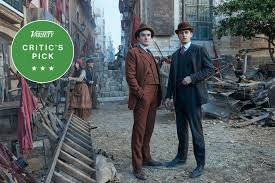
The Ritchie-verse Expands
Let’s get the obvious out of the way. If you loved Ritchie’s Sherlock Holmes films with Robert Downey Jr., you are the target demographic. But here’s the kicker: this isn’t a prequel to those movies. It’s a re-calibration. Ritchie, directing the first two episodes and holding the reins as executive producer, has taken the template he perfected—the snappy banter, the bone-crunching fisticuffs, the slow-motion deductions—and injected it with the raw, anarchic energy of youth. The result is a series that feels both comfortingly familiar and bracingly new. It’s less about the finished article of Holmes and entirely about the chaos that forged him.
Hero Fiennes Tiffin steps into the role, and he brings a physicality that’s crucial. This Sherlock isn't just thinking his way out of trouble; he's fighting, running, and bleeding through the cobbled streets of a Victorian England that feels authentically grimy. And speaking of those streets, a nod has to go to the location scouts. Bristol is absolutely magnificent, doubling for 1870s Oxford with a gritty authenticity that London just can't muster anymore without a million pounds of CGI. Walking through Broad Street or watching a hand-to-hand duel staged at the Underfall Yard, you feel the weight of the setting. It’s a smart bit of business, too; screen tourism is a real economic driver, and you can bet the West Country is about to see an influx of fans wanting to walk in Sherlock's footsteps.
More Than Just a Boy Detective
The narrative scope is where Young Sherlock: The Mystery of the Manor House ethos really stretches its legs. This isn't a "case of the week" procedural. It starts with a seemingly simple theft—a missing scroll for a Chinese princess (a terrific Zine Tseng)—and spirals out into a globe-trotting conspiracy that yanks Sherlock from the hallowed halls of Oxford to the bustling markets of Constantinople. It’s ambitious, and at times, the plot feels like it’s straining at the seams, but it never loses its grip on you. The show understands that the origin story isn't just about learning to deduce; it's about the people who shape you.
The casting across the board is a masterclass. Seeing Joseph Fiennes (Hero’s real-life uncle) play his father Silas, alongside Natascha McElhone as the troubled Cordelia, adds a layer of dynastic intrigue that the Holmes family has always deserved. But the real goldmine is the relationship with his brother. Max Irons’ Mycroft is a wonderful study in repressed authority, a man drowning in responsibility who sees his younger brother as both a liability and a reflection. And then there’s James Moriarty. Dónal Finn is simply superb, playing the scholarship student with a twinkle in his eye that hints at the darkness to come. Watching their friendship form, knowing the devastation it will eventually wreak, is the dramatic engine that keeps the later episodes humming.
A Calculated Gamble That Pays Off
From a commercial standpoint, Amazon Prime Video has placed a very savvy bet. The literary foundation, Andrew Lane’s Young Sherlock Holmes book series, provides a built-in roadmap and a ready-made audience. But by filtering it through Ritchie’s distinct lens, they’ve avoided the stuffy, period-drama trap. They’ve essentially created a young adult action thriller that just happens to wear a corset. The fight choreography is brutal and inventive, the pacing is propulsive, and the dialogue crackles with a modern wit that stops it from ever feeling like a museum piece.
Is it for the purist? The one who clutches their leather-bound copy of Dracula: Penguin Classics and insists on absolute fidelity to Conan Doyle? Absolutely not. They’ll likely hate it. There are moments where the deductive reasoning takes a backseat to a good old-fashioned punch-up. But for the rest of us—the ones who devour European Travel for the Monstrous Gentlewoman for its clever pastiche and love seeing classic characters twisted into new shapes—this is pure catnip. It’s messy, it’s loud, and it’s unapologetically fun.
Here is why you should carve out the time this week:
- The Action: Ritchie hasn't lost his touch. The set pieces are inventive and land with real impact.
- The Dynamic Duo (Enemies?): Fiennes Tiffin and Dónal Finn as Moriarty have a chemistry that crackles. It’s the heart of the show.
- The Vibe: It’s a rocking good adventure that doesn't take itself too seriously, even when the stakes are global.
In the end, Young Sherlock succeeds because it understands a fundamental truth: icons aren’t born; they’re made. They’re forged in the fires of family secrets, first friendships, and catastrophic failure. By the time the final episode lands, you won’t just want more; you’ll be desperate to see how this anarchic adolescent eventually becomes the man who moves into 221B Baker Street. The game is most definitely afoot, and for the first time in a long time, it feels wide open.