Ángel Víctor Torres, the Decree and the Canary Islands Power Play: Beyond Politics, an Analysis of Power and Business
What is unfolding these days in Canarian politics transcends mere parliamentary debate. The power struggle between Ángel Víctor Torres and the current president, Fernando Clavijo, over the infamous decree, is not just another anecdote in the islands' turbulent chronicle. It is, for those who can read between the lines, a masterstroke on the chessboard of power that redefines alliances, lays bare ambitions, and, most importantly for us, opens a scenario of uncertainty that directly impacts investor confidence.
I've covered dozens of political crises throughout my career, and when I see the Socialist Group in San Sebastián de La Gomera accusing CC of imposing a "unilateral decree" that doesn't reflect the "Canarian Agenda," I know we're dealing with more than a simple squabble. We are witnessing the chronicle of a death foretold: that of stability. And in business, stability is everything. It's not about political sympathies; it's about predictability. A decree born without sufficient consensus is a millstone for any project requiring medium to long-term legal certainty.
The Former President's Strategy: Much More Than a 'No'
Ángel Víctor Torres's move is straight out of the political film school playbook. He hasn't just opposed it; he's extended a hand, or rather, he's invited Clavijo to present his decree in the Congress so he can "see the level of support." Translation: "Go through the exercise of transparency, prove you have the numbers, and we'll see who really backs you." It's a brilliant manoeuvre because it forces into the light what many were cooking up in the dark.
The Socialist, knowing the terrain he treads, is aware that shifting alliances in parliament are a dying art. What he's essentially proposing is a public exposure of the other side's weaknesses. And in this game, the one who shows cracks, loses. Not just in politics, but also in the confidence of markets and productive sectors that need to know where they stand.
The Price of Governability: Who Foots the Bill?
This is where my financial analyst side wins over the political scientist. The Canary Islands aren't a deserted island in the middle of the Atlantic; it's an outermost region with a constant flow of European funds, pressing structural needs, and a business community that depends on certainty. The "irresponsibility and lack of dialogue" that the PSOE denounces isn't just a slogan. When a regional government digs in its heels on a decree without sufficient backing, what it's doing is mortgaging the future.
Let's think about the key sectors:
- Tourism: Needs stable frameworks and joint promotion. A political dispute diverts attention from what's urgent.
- Renewable Energies: Require multi-million-pound investments over 20 or 30-year horizons. Legislative instability brings them to a grinding halt.
- Primary Sector: Depends on aid and subsidies, the processing of which grinds to a halt in a climate of confrontation.
The cost of this lack of harmony isn't paid by the politicians in their seats; it's paid by the businessmen who don't dare invest, the entrepreneurs who see their licences delayed, and, at the end of the chain, the workers. And mark my words, this is a breeding ground for social discontent that, ultimately, always ends up taking its toll at the ballot box.
Culture and Power: What the Latest Exhibition Catalogue Reveals
While the parties get tangled up in decrees and majorities, civil society continues its march, oblivious to these power games. This very week, at an event away from the political spotlight, the exhibition catalogue for a show that precisely portrays the evolution of power on the islands over the last century was presented in Santa Cruz. It's rather curious how, in those photographs and documents, one can sense the same tension between island centralism and peripheral demands that Torres and Clavijo are acting out today. It's a mirror reminding us that these power struggles aren't new, but each generation fights them with its own weapons. History, and that exhibition's catalogue, teach us that when leadership becomes isolated, the territory ends up suffering.
A Touch of Sanity in a Sea of Noise
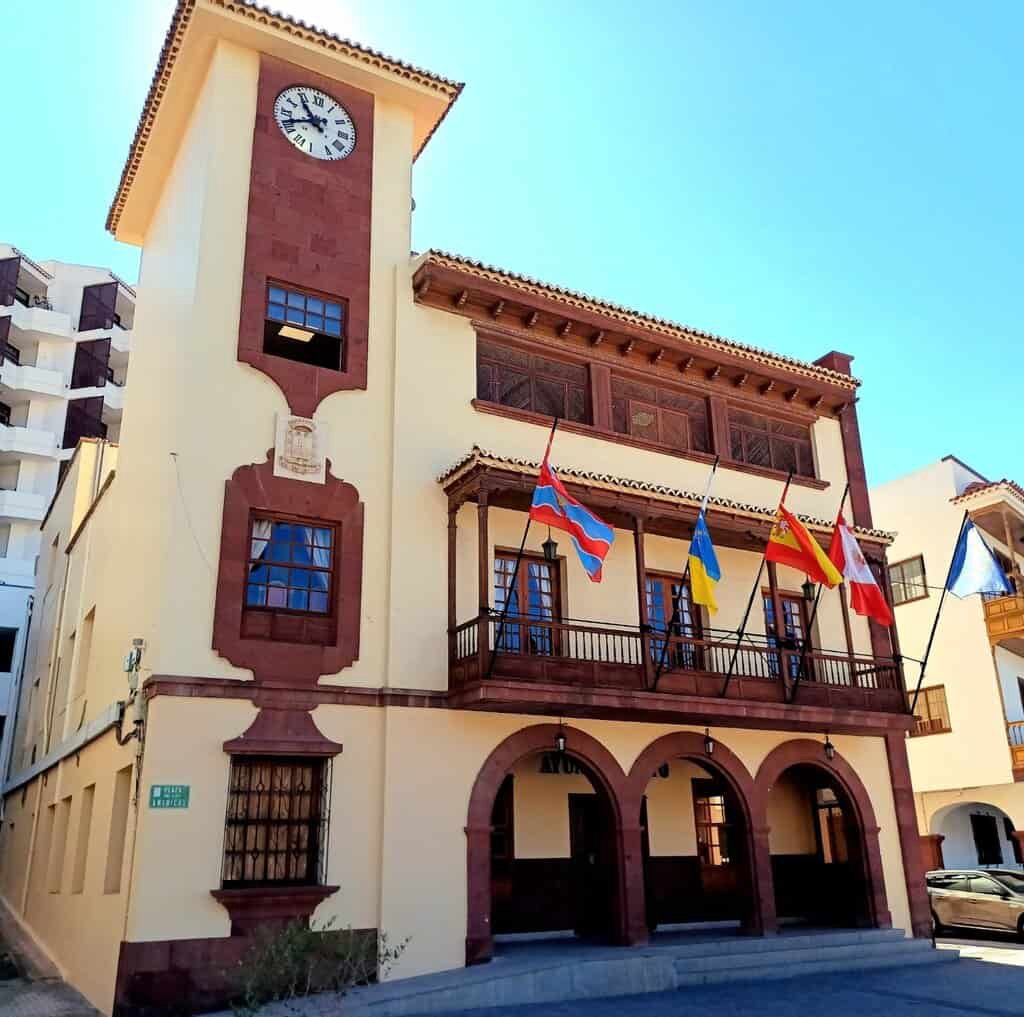
While the political sabre-rattling continues, it's telling that some town councils, like the one in San Sebastián de La Gomera (the image opening this analysis), carry on with their day-to-day business. Local politics – the politics of water management, public works, and licences – is often the real thermometer of a territory. But when storms brew from above, the councils, regardless of who's in power, end up getting splashed. The responsibility of island and municipal leaders is enormous to shield their citizens from these high-level battles, although we know it's an almost impossible mission.
Conclusion: The Board Resets
What we have on the table is much more than a disagreement over a legal text. It's confirmation that the governing pact in the Canary Islands is, to say the least, fragile. Ángel Víctor Torres's move has been clever: he's put Clavijo on the ropes, forcing him to demonstrate his leadership and ability to rally support. If the decree falls in Congress, the damage to the current president will be immense. If it survives, Torres can claim it was a "miracle" propped up by support that doesn't represent the will of the Canaries.
For those of us watching this with an investor's eye and a long-term perspective, the signal is clear: political risk in the Canary Islands has increased. And in a globalised world where capital seeks safe havens, instability comes at a high price. The era of backroom deals is over; now it's time to dance in the Congress, and as with any dance, a misstep can be very costly. We'll see who ends up stepping on whose toes.