2026 Referendum: When do we vote on the Justice referendum? Dates, times, and how to do it
Here we are. After months of watercooler talk, heated debates in the chamber, and protests outside courthouses, the big day is just around the corner. If you've also been wondering when we vote on this referendum, grab a red marker and circle these dates on your calendar: voting takes place on Sunday, March 22 and Monday, March 23, 2026.
I know, voting on a Monday seems a bit odd, but it happened for the last European elections too. They stretched it out to give everyone a chance to have their say, especially since this is a pretty significant constitutional reform. You can cast your ballot from 7 a.m. to 11 p.m. on Sunday, and from 7 a.m. to 3 p.m. on Monday. So, if you have an early start on Monday morning, you can practically swing by the polling station before heading into the office. Convenient, right?
And while we're at it, let's skip the boring technical jargon: today, I'll try to break it down for you like we're chatting over coffee, starting with a memory that came back to me while reading the headlines these days.
When voting makes history: From South Sudan to Italy
Every time I hear about a referendum, my mind flashes back to 2011. I was glued to the TV, following the 2011 South Sudanese independence referendum. Serious stuff, one of those moments where the slip of paper in the polling booth actually changes the map of the world. Nearly 4 million South Sudanese, after decades of civil war, turned out to vote from January 9 to 15. The result? A landslide: 98.83% voted for independence. The birth certificate of a nation.
Now, our referendum certainly won't create a new country, but on a smaller scale, it aims to shake up a part of the Constitution that's close to everyone's hearts: the Justice system. That's why, when it comes to voting in this referendum, it's not something to take lightly.
What changes if the Yes (or No) side wins
I won't pretend to be a professor here, but just so you understand what we'll be marking on that light green ballot: the reform introduces the separation of careers for judges and public prosecutors. In plain English: those who judge and those who prosecute will follow two distinct paths, with two separate High Councils of the Judiciary. Members won't just be elected by internal factions anymore; some will also be chosen by lot to prevent those infamous "old boys' clubs."
It also establishes a new High Court for disciplinary proceedings. In short, a real overhaul. Supporters of the Yes side talk about judges being more impartial and rights-focused, as Arturo Parisi has been reminding us lately. Those saying No, on the other hand, warn about "prosecutor-sheriffs" and costs potentially doubling (an estimated extra 50 million a year).
The practical voting guide: documents and tips
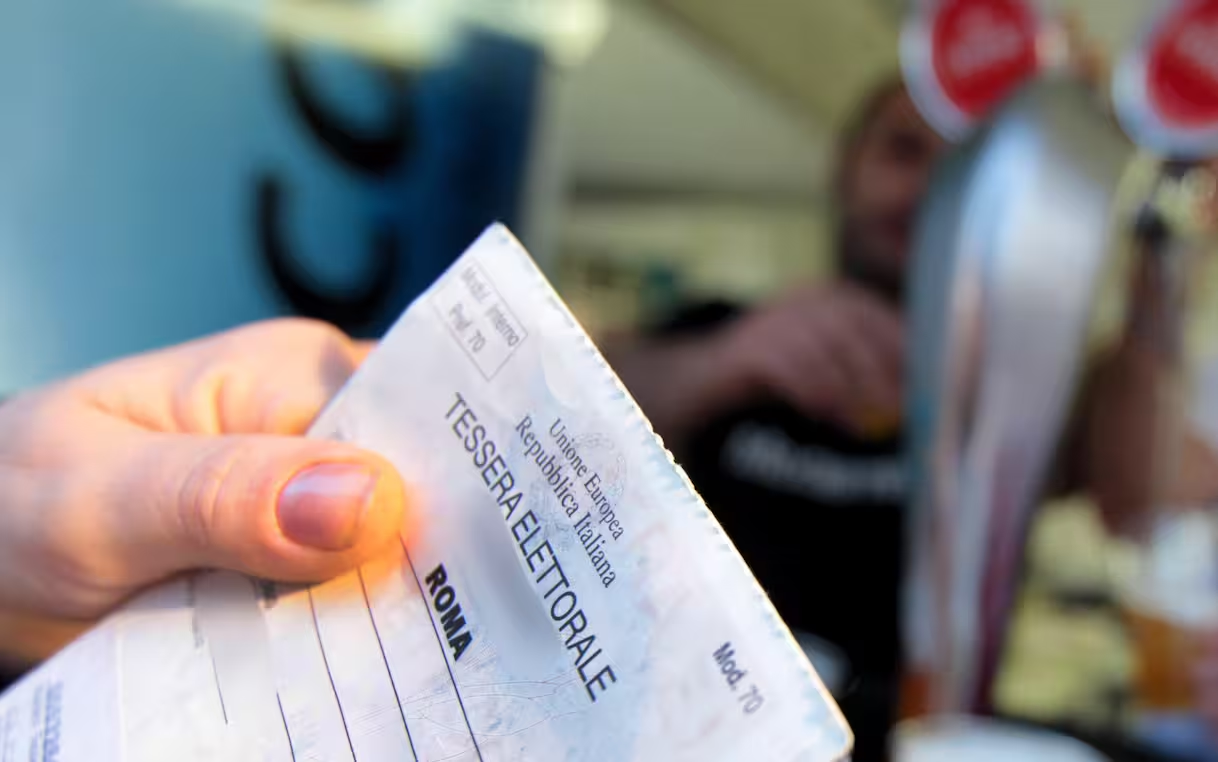
Let's get down to brass tacks. To vote, you need your voter card. That old one you usually keep in your wallet along with your grocery store receipts. If it's run out of space for stamps or you've lost it, no need to panic: the electoral office at your local municipality stays open with extended hours. On the days leading up to the vote (Friday, March 20 and Saturday, March 21) they're open from 9 a.m. to 6 p.m., and throughout the entire voting period while polls are open. Bring some ID, and they'll issue you a duplicate in two minutes flat.
Pay attention to these details so you don't end up looking like a rookie:
- ID: Your ID card, driver's license, or passport works fine. As long as it has a photo and is valid.
- Pencil: Forget your pen. At the polling station, they'll give you a special pencil that leaves a permanent mark.
- Assisted voting: If you have mobility or vision issues, you can be accompanied by another voter. No one can accompany more than one person with a disability.
Italians abroad? Here's how it works
For our compatriots outside the country, the process is a bit different. Those registered with AIRE (the registry of Italians residing abroad) will receive an electoral package directly at home, containing the ballot and a pre-paid return envelope. They need to mail it back by 4 p.m. on March 19 (local time) to the relevant consular office.
For those temporarily abroad for work, study, or medical treatment (for at least three months), you had to request it by last February 18. If you did, keep an eye on your mailbox: the package will be delivered right there.
No excuses: there's no quorum requirement
I know a lot of people think: "If I don't go, it won't pass anyway." But that's not the case here: for constitutional referendums, there's no quorum requirement. The side with the most votes between Yes and No wins, regardless of how many people turn out to vote. In other words: if you stay home, others decide for you. And since this is about changing the Constitution, it's probably worth making a trip to the polling station, even just to mark the choice you prefer.
So, between a card game and your Sunday outing, carve out half an hour. The future of Italy's justice system is also in your hands. And at the coffee shop the next day, you'll be the only one who can say "I was there" with real knowledge of the subject.