2026 Referendum: When is the Justice referendum? Dates, times, and how to vote
Here we are. After months of water cooler chatter, heated debates in parliament, and protests outside courthouses, the big day is just around the corner. If you've also been wondering when we actually vote in this referendum, grab a red marker and circle these dates: voting is on Sunday 22 and Monday 23 March 2026.
I know, voting on a Monday seems a bit odd, but they did the same for the last European elections. They've stretched the voting period to give everyone a fair go, especially since we're talking about a pretty significant constitutional reform. Polls are open from 7 am to 11 pm on Sunday, and from 7 am to 3 pm on Monday. So, if you've got an early start on Monday, you can duck in and cast your vote before heading to the office. Handy, right?
And while we're at it, let's skip the boring technical jargon: today I'll try to explain it like we're catching up over a coffee, starting with a memory that popped into my head reading the headlines lately.
When voting makes history: from South Sudan to Italy
Whenever I hear about a referendum, my mind goes straight back to 2011. I was glued to the TV watching the 2011 South Sudanese independence referendum. Serious stuff, the kind where that piece of paper in the polling booth actually redraws the world map. Nearly 4 million South Sudanese, after decades of civil war, turned out to vote from January 9 to 15. The result? A landslide: 98.83% voted for independence. The birth of a nation.
Look, our referendum won't create a new country, but in its own way, it's aiming to shake up a part of the Constitution that's close to everyone's hearts: the Justice system. That's exactly why, when it's time to vote in this referendum, you can't just take it lightly.
What changes if the Yes (or No) vote wins
I won't pretend to be a professor here, but just so we're clear on what we're ticking on that light green ballot paper: the reform introduces the separation of careers for judges and public prosecutors. In plain English: the people who judge and the people who prosecute will follow completely different career paths, with two separate High Councils for the Judiciary. Members won't just be elected by the internal factions anymore; some will actually be chosen by lot to get rid of those infamous old-boy networks.
It also sets up a new High Court to handle disciplinary proceedings. So, a pretty big overhaul, basically. The Yes campaign talks about judges being more impartial and focused on fair trials, something Arturo Parisi has been stressing lately. The No camp, on the other hand, is warning about "super-sheriff prosecutors" and the risk of doubling running costs (they're estimating an extra 50 million a year).
The practical guide to voting: documents and tips
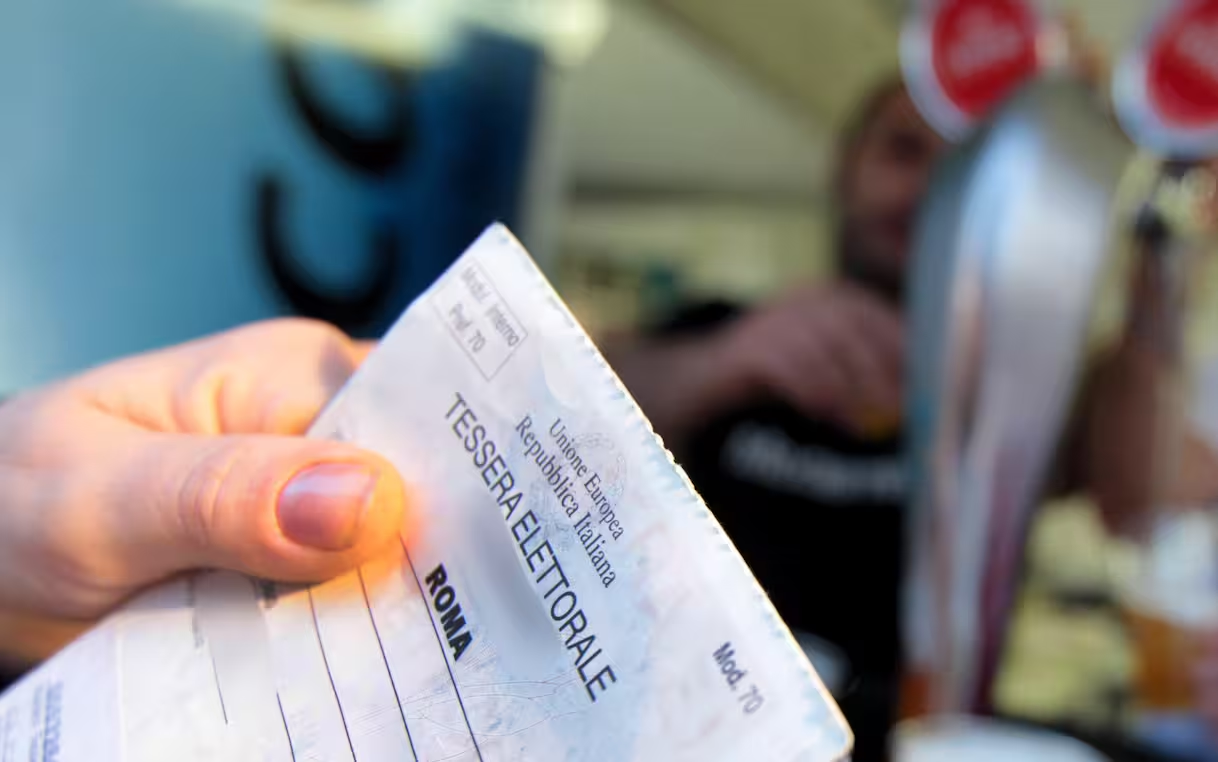
Now, let's get down to business. To vote, you'll need your electoral card. You know the one, that little card you usually keep in your wallet with your supermarket receipts. If you've run out of space for stamps or you've lost it, don't stress: your local council's electoral office will be open with extended hours. In the days before the vote (Friday 20 and Saturday 21) from 9 am to 6 pm, and then for the whole time polling stations are open. Just bring some ID and they'll sort you out with a replacement in two minutes flat.
Keep these points in mind so you're not caught out:
- ID: Your driver's licence, passport, or proof of age card (as long as it has your photo and is current) are all fine.
- Pencil: Leave the biro at home. At the polling station, they'll give you a special copy pencil that makes an indelible mark.
- Assisted voting: If you have trouble getting around or seeing, you can be accompanied by another voter. Just remember, no one can accompany more than one person with a disability.
Italians abroad? Here's how it works
For our compatriots outside Italy, it's a bit different. Those registered with the AIRE (register of Italians residing abroad) will receive an electoral pack directly at home, containing the ballot paper and a pre-paid return envelope. You need to send it back by 4 pm on March 19 (local time) to the relevant consular office.
If you're temporarily abroad for work, study, or medical treatment (for at least three months), you had to apply by last February 18. If you did, keep an eye on your mailbox: the pack will be delivered straight there.
No excuses: there's no minimum turnout required
I know a lot of people think: "If I don't bother, it won't pass anyway." Well, no: for constitutional referendums, there's no minimum turnout requirement. The side with the most votes, Yes or No, wins, regardless of how many people actually turn out to vote. In other words, if you stay home, you're letting everyone else decide for you. And since it's about changing the Constitution, it's probably worth making the trip to the polling booth, even if just to tick the box you prefer.
So, between the footy on Sunday and the family barbecue, find half an hour. The future of Italy's justice system is in your hands, too. And the next day, when you're chatting at work, you'll be the only one who can genuinely say, "I had my say."