Benjamin Netanyahu's Tightrope: Between Corruption Trial and Operation Lion's Roar
This past weekend was no ordinary weekend in the Middle East. While we here in Canada were scrolling through our Sunday morning news, Benjamin Netanyahu decided to rewrite the history books. The announcement of Operation Lion's Roar is more than just a military update; it's the masterpiece of a political survivor who, against all odds, still has his hand on the wheel. But let's not kid ourselves: the man positioning himself as the people's statesman is caught between a brutal multi-front war and the 79th session of his own corruption trial in Tel Aviv.
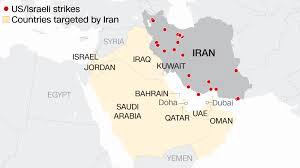
The Lion Roars from the Bunker
When Netanyahu delivered his statement Saturday, he didn't do it from some neutral location. The operation, carried out with the Americans, is according to him "much more powerful" than the war last June. He wasn't just speaking to Israelis, but directly addressed the citizens of Iran. "Take your fate into your own hands," he said, urging them to throw off the regime of the Ayatollahs. This is classic Netanyahu: linking existential threat with a moral appeal. But the echo of his words was almost drowned out by the sound of the drones that targeted his own Caesarea residence less than six months ago. The drone attack on his home in October 2024 was a security shock he's never fully recovered from. The fact that Hezbollah managed to breach his personal security up to three times, while he and his family were away, remains a stain on his security apparatus's record.
Home Front vs. War Front
And then there's the domestic battlefield. It's bizarre to think that while Netanyahu tells the world he's dismantling the regional axis of evil, he's sitting in the defendant's chair every few weeks. We're now up to the 79th day of proceedings in the case against Benjamin Netanyahu. The charges range from fraud and breach of trust in Case 4000 – where he's accused of offering regulatory benefits to a telecom giant in exchange for positive coverage on the Walla news site – to accepting pricey cigars and champagne from billionaire buddies.
His legal strategy is transparent but effective: stall for time and politicize everything. His request for a presidential pardon, filed last November, is still sitting with President Herzog. Herzog has tasked the Ministry of Justice with looking into it and refuses to be rushed, even by his friend in the White House. And that's another bizarre twist: Donald Trump openly waded into it, calling Herzog "shameful" for not granting the pardon yet. That's the world we live in: the U.S. president acting like a campaign manager for the release of a friendly prime minister who might be convicted.
The Washington Connection
Let's hold onto that connection for a second, because it's crucial for the weeks ahead. Netanyahu was recently sitting across from Trump again at the White House. It was his sixth visit to the U.S. since Trump's re-election. Officially, it was about negotiations with Iran, where Netanyahu wanted to lay down "principles" to keep Trump from going soft. Unofficially, it was about lifelines. Netanyahu knows full well his political survival is directly tied to Washington's support. And Trump, well, he enjoys playing the strongman hosting Netanyahu like he's an ally, not a client asking for support.
It leads to bizarre scenarios. While Netanyahu was in Washington, Israel was bombing targets in Iran, and Trump was threatening a "second armada" if the Iranians didn't back down. This isn't diplomacy anymore; this is a joint show of force. But the big question is: what happens when that muscle flexing loses its strength? Or when Herzog finally makes a decision on that pardon?
Who Exactly is Kobby Barda?
In the shadow of these titans stands a name you might not know yet: Kobby Barda. To most, he's just a detail, but for those who've watched the game for twenty years, you know he's Netanyahu's military secretary. In times of war, he's the one briefing the PM, outlining the options, guarding the red lines. But in times of trials, he's also the one managing documents, preparing testimonies. Barda symbolizes the untenable double role everyone in Netanyahu's inner circle has to play: guardian of the nation and protector of the man. The pressure on him and his team right now is unimaginable. They have to prep the PM for the next move in the war against Iran, while simultaneously working on the legal defence in a trial that could end his career.
The Commercial Angle: What Does This Mean for the Region?
Let's put on our investor hats for a minute. Because behind the headlines and legal dramas, real money is on the move. The instability in the region has a flip side we need to watch:
- Energy Markets: The direct strikes on Iran, and the rhetoric about taking out nuclear and missile facilities, are keeping oil and gas prices elevated. For Canadian companies involved in energy trading, this means extreme volatility, but also opportunities in alternative supply routes.
- Defence-Tech: Operation Lion's Roar is a showroom for Israeli military tech. The collaboration with the U.S. on drone countermeasures and cyber warfare is opening the door wide for defence contracts. Canadian players in the aerospace and cybersecurity sectors should be paying close attention.
- Stability Risk: As long as Netanyahu's position depends on prolonging the war (because unity in a crisis is his lifeline), the region remains unpredictable. This scares off long-term investments in infrastructure and tourism, except for those willing to bet on post-war reconstruction.
The Future of the Teflon Man
Netanyahu has always had something magical about him: wars came and went, legal cases piled up, but he stuck around. This time, however, the cocktail is more explosive. The combination of a physical threat (Iran), a legal time bomb (the trial), and dependence on an unpredictable American ally (Trump) is new. He's burnished his image as Mr. Security with the airstrikes, but it's a thin coat of varnish over a foundation that's rotting. In the coming weeks, as the smoke from Operation Lion's Roar clears and the court in Tel Aviv calls him back, we'll see if the tightrope he's walking is strong enough to keep him from falling into the abyss. For now, he's still in the cockpit. But the navigation is getting trickier by the minute.