Euro Dollar Caught Between Geopolitics and Central Banks: Analysis and Outlook for the Exchange Rate
Folks, if you glanced at the euro-dollar exchange rate charts yesterday, you saw it wasn't a day for the faint of heart. As I write, the greenback is putting pressure on all currencies, and the surge in tensions in the Middle East has reignited the safe-haven bid. But let's break it down, because the tune we're hearing in the forex market today is the result of a volatile mix of geopolitics and central bank expectations.
The Middle East Front and the Euro's Retreat
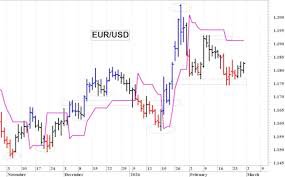
The news that sent a chill through markets in recent hours is the coordinated attack by Israel and the United States against Iran. Right now, the international community is holding its breath, and markets are doing the same. The escalation is pushing investors into the arms of the U.S. Dollar, perceived as the ultimate safe haven. The result? The euro, which closed last Friday around 1.1812, opened this morning at 1.1775 only to quickly slide below the 1.1750 level, a key support that didn't hold. By late morning, we touched lows of 1.1722, a 0.74% drop that stings for those who bet on an immediate rebound.
It's not just a "risk-off" story. Adding fuel to this flight from risk are the macro numbers. Friday's U.S. Producer Price Index (PPI) reinforced that inflation in the United States is still sticky. This creates a real puzzle for Jerome Powell and his colleagues at the Federal Reserve: they can't cut rates too quickly for fear of re-igniting prices, but keeping them high risks further slowing an economy showing signs of weakness. A "stagflation" scenario that, paradoxically, is putting a cap on the dollar's rally, but not enough to reverse the course.
All Eyes on the Central Banks
Looking beyond the geopolitical emergency, the true driver of the exchange rate remains the interest rate differential. The ECB, with Christine Lagarde, maintains a watchful waiting stance. Eurozone inflation in January fell to 1.7%, a level that technically would allow for consideration of easing. But Lagarde was clear: this single piece of data isn't enough to start a rate cut cycle. The fear is that such low inflation could be a flash in the pan, and restarting from there would be an uphill battle.
Across the ocean, the U.S. labor market is still in the spotlight. This week will be crucial: we're awaiting the ADP report on private sector employment and, most importantly, Friday's Nonfarm Payrolls. A hot number could convince the market that the Fed is being too timid on cuts, giving the dollar fresh oxygen. For now, futures are pricing in just one 25-basis-point cut by year-end, a far cry from the 4-5 cuts priced in just a few months ago.
The Contagion to "Commodity" Currencies: Aussie and Kiwi in Focus
In this chaos, no one is spared, but some currencies react in particular ways. Take the Australian dollar. AUD/USD is having a textbook session: after testing support around 0.7030, it bounced quickly back above 0.7100. Why? Because the Reserve Bank of Australia (RBA) is seen as one of the few central banks still in "hawkish" mode. The market is betting on a possible further rate hike in May, following the last CPI report in January. But caution: the Aussie is the currency most exposed to risk, and any escalation in the Middle East immediately curbs its momentum.
A similar story for the New Zealand dollar (kiwi), which moves in tandem with its Australian cousin. In a risk-off environment, the kiwi and aussie are among the first to suffer, but if stagflation fears take hold, they could find unexpected support precisely in their nature as commodity-linked currencies. For anyone using an online Euro - Dollar Converter, the advice is to keep an eye not only on the main chart but also on these crosses, as they often set the tone for broader moves.
Where Are We Headed? Levels and Outlook
Now, let's get down to business: what should we expect in the coming sessions?
- Support and Resistance: The key levels for the euro dollar are clearly defined. On the downside, watch 1.1720-1.1700. A daily close below this zone would open the door to a test of 1.1606. To the upside, to breathe again, the euro needs to reclaim 1.1750 and then aim straight for 1.1790-1.1820.
- The PMI Variable: This afternoon, all eyes will be on the ISM Manufacturing PMI in the U.S. A reading below expectations could curb the dollar's rally and give the euro some breathing room. Later this week for the Eurozone, speeches by Lagarde and the Q4 growth data will be crucial.
- Strategies and Opportunities: This is the time to look at the bigger picture. Today's correction is sharp, but if you're a long-term investor, the question to ask is different: is the euro's weakness an opportunity to hedge or a trend reversal signal? Personally, I wouldn't panic. Long-term dynamics, like the growth differential and fiscal policies, haven't changed over a weekend. The current dollar strength is an emotional reaction, but fundamentals, like the weight of U.S. debt, will continue to make themselves felt.
In conclusion, this week is a minefield. The combination of escalating conflict and key macroeconomic data can generate violent and sudden moves. My advice? Ignore the noise, keep your eyes on the key levels of the euro-dollar exchange rate, and be ready to ride the volatility. In chaos, for those who can read the map, there are always opportunities. Let's circle back at the end of the week, after the U.S. payrolls report. Happy trading.