Iran-Qatar Conflict: The Escalation Igniting the Middle East and Sending Shockwaves Through Europe
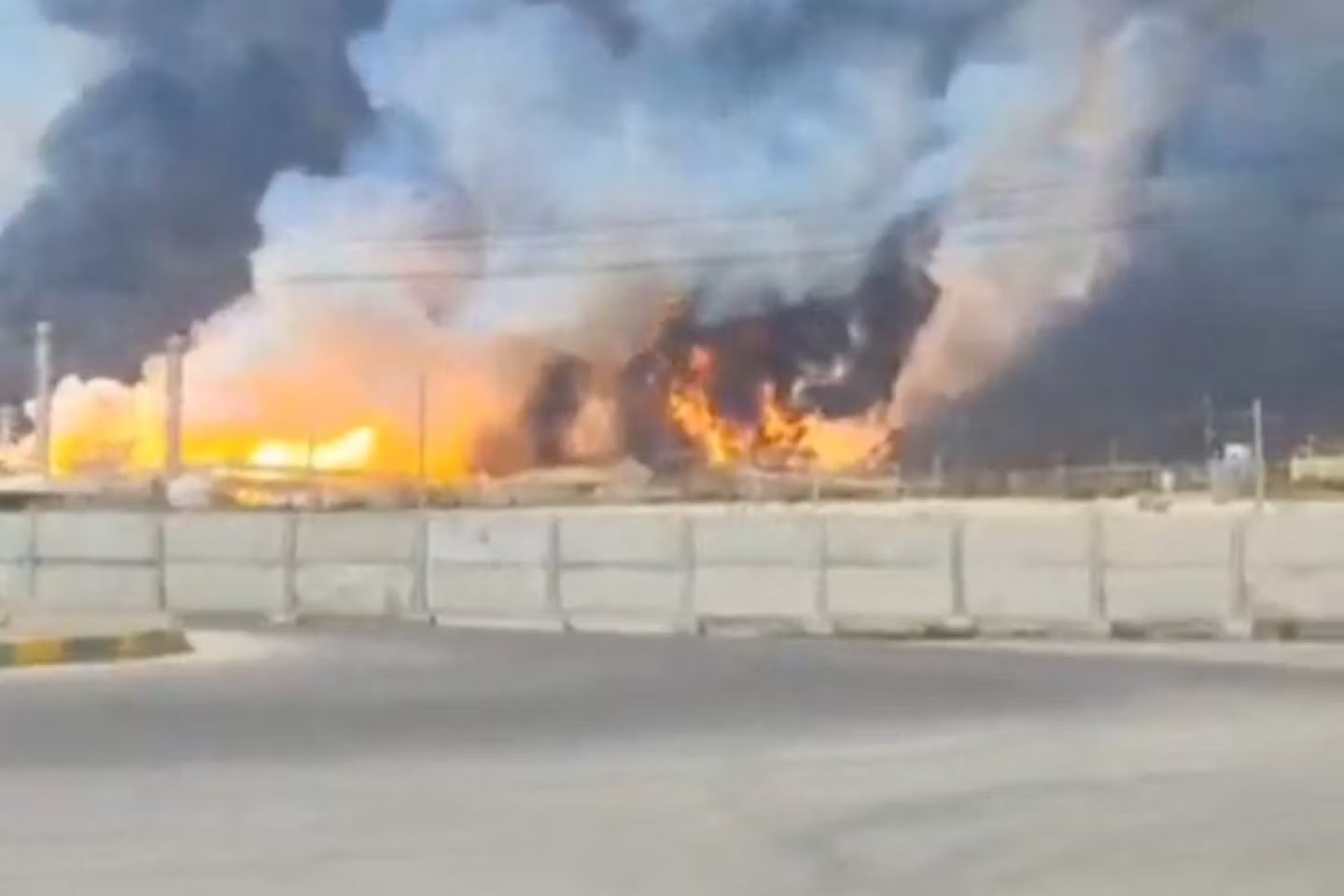
The flames consuming the South Pars field, straddling the border between Iran and Qatar, are no simple industrial accident. In diplomatic circles, it's understood that last night's strikes were aimed precisely at crippling the region's energy heartland. As the Iran-Israel conflict bogs down, a new front line has just opened, and this time, Qatar is on the front lines. A seasoned French diplomat confided in me this morning: "We haven't seen strikes on Ras Laffan since the Gulf War. This is unprecedented."
Iran and Qatar: Same Enemy, Same Fight?
They were thought to be on opposite sides of every issue: Tehran the theocracy, Doha the mediator. But since the lightning attack on the Ras Laffan terminal, the two neighbours share a common pain. The world's largest gas liquefaction site is at a standstill, and with it, a significant part of Europe's supply chain is teetering. Amsterdam and London exchanges overheated in hours: the price per megawatt-hour surged 30% this morning. For Europe, just emerging from a harsh winter, it's a rude shock.
The Iran-Israel Ceasefire: A Diplomatic Illusion
Privately, Western envoys acknowledge that a ceasefire in the Iran-Israel conflict has never seemed more hypothetical. Israel is threatening to strike Qatari oil infrastructure if Tehran continues to arm Hezbollah via Syria. Meanwhile, the Syrian civil war is seeing a brutal resurgence: columns of pro-Iranian militias are converging on the border, and the Israeli air force responds almost daily. It's a vicious cycle that no one seems able to stop.
- Iran: South Pars ablaze, gas production down by 40%.
- Qatar: Ras Laffan paralysed, 60% of global LNG exports threatened.
- Europe: Strategic reserves tapped, energy bills poised to skyrocket.
Emmanuel Macron Under Pressure
In Paris, the Élysée Palace immediately went into high gear. Officials are denouncing a "reckless escalation" and demanding a "return to dialogue." But behind the official statements, technical teams are scrambling: our supply contracts with Doha are in jeopardy, and LNG terminals in Dunkirk or Fos-sur-Mer could slow to a crawl if the crisis drags on. In the corridors of the Ministry of Economy, a forced energy-saving plan by autumn is no longer off the table.
Syria: The Volcano Reawakens
Make no mistake: Syria's fate is tied to this chaos. Bashar al-Assad's regime, backed by Tehran, serves as a logistics hub. Every convoy destroyed by Israel reignites the embers of civil war. And the refugees continue to stream towards our borders. It's a chronic disease festering across the Levant. I tell you: until the Syrian fire is put out, the wider blaze won't be controlled.
As markets heat up and diplomats scramble, one certainty remains: the Iran-Israel conflict has consumed Qatar. And Europe, a helpless spectator, is rediscovering its energy fragility. If this inferno isn't extinguished before winter, our heating bills will be a painful reminder.