The Complete Guide to "Gachi-Chuka": Japan's Authentic Chinese Hotspots and How to Enjoy Them
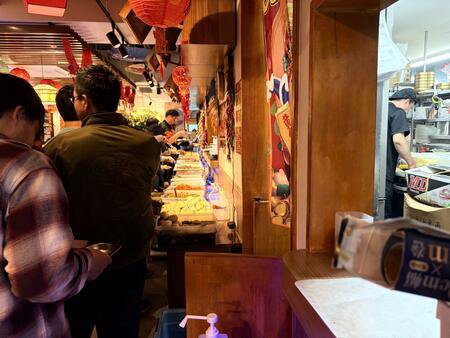
Lately, while walking through the streets of Tokyo and Osaka, you've probably heard the term "Gachi-Chuka" popping up everywhere. It's gone beyond just being another category of ethnic food; it's firmly establishing itself as a new pillar of Japanese food culture. But when it comes to actually figuring out "Okay, where should I go?" or "What should I eat?", the sheer amount of information can be overwhelming.
This time, I'm going to give you my personal, in-depth take on the latest trends in "Gachi-Chuka" and the foolproof ways to enjoy it, even if you're a first-timer. From the transformation of "New-Okubo" in recent years to some slightly off-the-beaten-path gems. Read this like you're getting insider tips from a local senpai.
It's Not "For Japanese", It's the Real Deal
The reason it's called "Gachi-Chuka" is precisely because of how "authentic" it is. Menus might have Japanese written in small letters in a corner, or they might be entirely in Chinese. It's common for staff to speak more Chinese than Japanese. But this is exactly what makes it incredibly real.
Ikebukuro and Ueno are still buzzing, but the hottest spot right now has to be Nishikawaguchi. Shaking off its old image, the area has transformed into a kind of "microcosm of China". Here, you'll find shops specialising in Peking duck, and places where you can slurp down authentic Biang Biang noodles made by a owner from Xi'an. It's reached a level where you can go on a full-fledged local food tour of China without leaving Japan.
3 Golden Rules for Savoring "Gachi-Chuka" to the Fullest
For those stepping into the world of Gachi-Chuka for the first time, let me share my personal golden rules.
- Don't just trust the reviews, trust your nose: Sure, places with high ratings on Japanese review sites are good, but the real legendary spots go viral on Chinese social media (like WeChat or Little Red Book). Stand outside a shop. If over 90% of the chatter you hear from inside is in Chinese, that place is a guaranteed winner. Don't hesitate; just walk right in.
- Gauge the chef's skill with a classic dish: The strategy is to order the simplest dish first at any new place. For example, at a Sichuan restaurant, order the "Mapo Tofu". At a Xi'an place, order the "Lamb Biang Biang noodles". If these are good, you can be pretty sure everything else on the menu will be a hit.
- Communicate with body language and a smile: Expect that language might be a barrier. Point at something on the menu, or point at what the person at the next table is enjoying. That's usually enough to get by, and the staff will often smile back, appreciating that you "get it". Trust me, this works way smoother than pulling out a translation app on your phone.
The Latest Trends: The Evolution of "Hot Pot" and "Dim Sum"
You can't talk about the recent Gachi-Chuka scene without mentioning the constantly evolving hot pot and dim sum. It's not just about the traditional spicy broths anymore. More and more places are offering Tom Yum-flavoured broths or herbal medicinal soups. There's also a quiet boom in specialty shops where you can take out fresh, "raw" dim sum hand-wrapped by authentic chefs from back home—a world apart from the frozen gyoza you find in Japanese supermarkets. These are absolute lifesavers when you want to treat yourself a little at home.
For this kind of latest info, the best sources are networks of regulars like us who actually go to these spots, or the local free papers. If you're thinking of starting your own "Gachi-Chuka guide", the first step is to just get out there. Just chasing information online won't get you to the real fun of it.
Find Your Own Go-To Spot
Calling it "how to use Gachi-Chuka" might sound a bit formal, but it's really about how you fit it into your own lifestyle. Whether it's heading out for a hearty weekend lunch, or dropping by after work to enjoy a beer and some fried dumplings (though authentic spots often specialise in boiled dumplings) in a cosy corner of the shop.
It might take a bit of courage at first. But once you step inside, you'll find a place that's undeniably Japan, yet also a little pocket of China. This "Gachi-Chuka" movement isn't just about food diversity; it's about adding a bit of adventure and excitement to your everyday life. So, how about next weekend, instead of your usual chain restaurant, you duck under the noren curtain of that intriguing "Gachi-Chuka" spot near the station?