SpaceX Rocket Launch Today Delivers 29 Starlinks as Starship V3 Looms and IPO Buzz Hits $1.75 Trillion
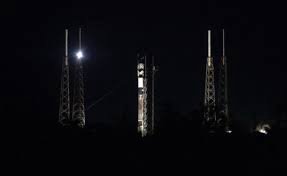
You wouldn't have needed a telescope to catch it—just a clear view of the Atlantic and a 1:58 a.m. alarm clock. At that hour, a Falcon 9 thundered off pad 40 at Cape Canaveral Space Force Station, arcing eastward with 29 Starlink satellites tucked inside its fairing. For the thousands who line the Space Coast beaches for these events, it's become a familiar spectacle. But for those watching the business of space, this particular rocket launch today carried more weight than just another batch of internet-beaming hardware.
The booster flying this mission had already logged 24 previous flights—a record that would have been unthinkable a decade ago. After separation, it dropped back through the atmosphere, executed a pinpoint burn, and settled onto the droneship A Shortfall of Gravitas with the casual grace of a commuter parking a car. That level of reusability is the financial lubricant allowing SpaceX to dominate the global launch market while simultaneously pouring billions into its next act: Starship.
While the Falcon 9 was performing its nocturnal ballet, attention in the industry was already shifting 1,000 miles southwest, to the sprawling Starbase complex near Brownsville, Texas. For months, the giant crane that usually stacks Starship prototypes has been quiet. The last test flight—a dramatic ascent followed by a controlled ocean impact—occurred back in October. Since then, the buzz among technicians and local officials has been about what's coming next. Starship Version 3 is nearly ready to roll out.
V3 isn't a minor tweak. It stretches taller, packs upgraded Raptor engines, and is designed from the ground up for orbital refueling—a prerequisite for any serious lunar or Martian campaign. Elon Musk has hinted that the next launch could happen within weeks, though anyone who follows the program knows that "weeks" in SpaceX time can stretch. What's clear is that when it does fly, the vehicle will look noticeably different from its predecessors. It's the version that NASA hopes will land astronauts on the moon, and that Musk privately refers to as the first true interplanetary spacecraft.
That kind ambition requires not just engineering brilliance but also capital—lots of it. Which brings us to the financial chatter that has quietly electrified the investor community. Over the weekend, entrepreneur Peter Diamandis floated a figure on X: a potential SpaceX IPO valuation of $1.75 trillion. Musk's response was a single word: "Yes". While the company has made no formal filing, insiders suggest that internal discussions about going public have intensified, driven by the need to fund Starship's development and the audacious plan to orbit commercial data centers.
Critics like Jim Chanos have dismissed the data center concept as "AI snake oil," pointing to the immense power requirements that even orbital solar arrays couldn't easily satisfy. But skepticism has never deterred Musk. The same voices that scoffed at reusable rockets now watch Falcon 9 landings with yawns. The question isn't whether the technology works—it's whether the market will value SpaceX as the transformative infrastructure play it claims to be.
Amid these high-stakes maneuvers, it's worth stepping back to consider the knowledge base that underpins this new space age. For engineers and enthusiasts alike, certain texts have become foundational. Rocket Propulsion Elements—now in its 10th edition—remains the go‑to reference for understanding the physics that make missions like today's possible. For historical perspective, Space Race - Unabridged Guide offers a comprehensive look at how Cold War rivalries shaped the technology we now take for granted. And for those focused on the entrepreneurial side, Tamara Monosoff's work on innovation and intellectual property provides a blueprint for turning space‑age concepts into viable businesses. In an era where every launch is streamed and every setback dissected on social media, the chorus of Voices—from Musk's own tweets to the critiques of veteran astronauts—creates a rich, sometimes chaotic, public dialogue about where we're headed. SpaceX Starship: Elon Musk's Rocket to Mars has become shorthand for the entire endeavor, capturing both the promise and the peril of betting the company on a single, colossal machine.
That machine's next test flight can't come soon enough for the thousands of employees and contractors whose livelihoods depend on Starship's success. At Starbase, the pace of construction has accelerated in recent weeks, with new sections of the launch tower rising and the orbital launch mount being reinforced. Word among the welders and engineers is that the upcoming static fire campaign will be brief—a sign that SpaceX is eager to get back to flight.
Meanwhile, the contrast with other players in the global launch industry grows starker. Across the Pacific, Japanese startup Space One was forced to abort a launch just 30 seconds before liftoff this week, its third consecutive failure to reach orbit. The 18‑meter Kairos rocket, carrying five small satellites, never left the pad—a reminder that even after decades of progress, rocketry remains brutally unforgiving. SpaceX's ability to fly missions every few days, using boosters that have been to space and back two dozen times, is the result of relentless iteration and a culture that treats failure as data, not defeat.
Back in Florida, as the final Starlink satellites deployed from the upper stage and the last spectators headed home, the broader implications of this rocket launch today settled in. Each new Starlink mission adds capacity to a constellation that already beams internet to remote corners of the globe, generating revenue that fuels the Starship program. It's a virtuous cycle—one that has transformed SpaceX from a plucky startup into the dominant force in space transportation.
What comes next will determine whether that dominance extends to the moon, Mars, and beyond. The V3 Starship, if it performs as advertised, could open an era of heavy‑lift capability that no other nation or company can match. The IPO, if it happens, would provide the financial firepower to sustain that lead for years. And the intellectual foundation—the books, the guides, the diverse voices—ensures that the next generation of engineers and entrepreneurs will have the tools to carry the torch even further.
For now, the countdown clocks at Cape Canaveral will keep ticking, and the Falcon 9 will keep flying. But the real action is elsewhere: in the Texas high bay where a stainless‑steel giant is being readied for its most important test yet.
- Falcon 9 reusability milestone: 25th flight for a single booster, landing on droneship after today's Starlink mission.
- Starship V3 imminent: Upgraded vehicle designed for orbital refueling, expected to roll out within weeks.
- IPO valuation buzz: Musk confirms $1.75 trillion figure as internal discussions intensify.
- Essential reading: Rocket Propulsion Elements (10th ed.), Space Race - Unabridged Guide, and Tamara Monosoff's insights on innovation remain key resources.
- Voices shaping the narrative: From Musk's tweets to Chanos's skepticism, public discourse reflects the stakes of the Starship program.