Fire on Board USS Gerald R. Ford: World's Most Powerful Aircraft Carrier Tested by Flames in the Red Sea
Some images speak louder than any official press release. This one, taken from the flight deck of the USS Gerald R. Ford as an MH-60 Knighthawk takes off in the fading light, exudes power. But behind the scenes, the American giant is weathering a very different storm.
A Laundry Room on Fire, 600 Sailors on Deck
It's March 12, 2026. The USS Gerald R. Ford (CVN-78) is deployed in the Red Sea as part of Operation Epic Fury, the massive military response against Iran. Suddenly, the alarm sounds. Smoke detectors go off. Corridors begin to fill with smoke. The fire started in the ventilation systems of the main laundry room. Nothing "glamorous," just an outbreak that could have turned into a tragedy.
What the US Navy's initial statements presented as a minor incident – "two sailors with minor injuries, the ship is fully operational" – actually lasted over thirty hours. Thirty hours of battling embers smoldering in the air ducts. The toll: more than 600 sailors evacuated from their berths, some forced to sleep on the floor in workshops or under the flight decks converted into makeshift dormitories. No serious casualties, but morale was severely tested.
The Nuclear Monster and Its Vulnerabilities
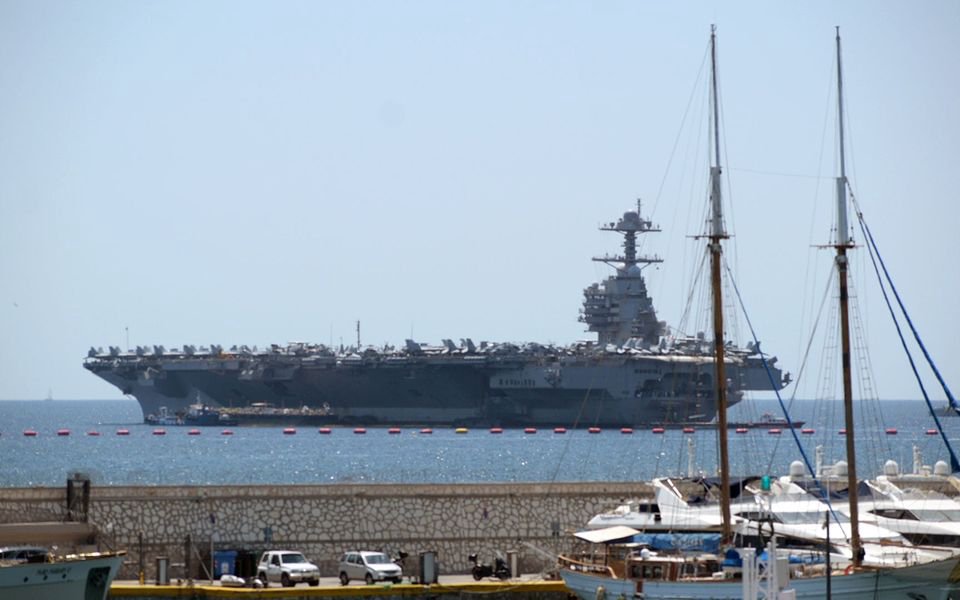
The USS Gerald R. Ford is the most expensive and advanced aircraft carrier ever built. Nuclear propulsion, 100,000 tons, 75 aircraft, and the famous EMALS system to launch fighters. A technological showcase. But this complexity comes at a price. The fire highlighted the fragilities of its integrated architecture: once flames get into the ventilation network, the entire ship is connected. A real challenge for damage control teams.
And this isn't its first glitch. The current mission seems endless – nearly ten straight months at sea, a record in decades. Not to mention recurring sanitary issues. The vacuum toilet system, a technology borrowed from cruise ships, regularly gets clogged. Technicians have found bits of cloth and even rope in the pipes. Crew members pull 19-hour shifts just to unblock the toilets. The image of an all-powerful Uncle Sam takes a hit.
From the Red Sea to the Caribbean, the Iranian Hunt
What makes this vessel so strategic is its mobility. Before hunting down Iranian influence in the Gulf, the Ford carrier strike group was off the coast of Venezuela for counter-narcotics operations. It transited the Suez Canal, made a port call in Crete, and is now patrolling the Red Sea to prevent any blockade attempt of the Strait of Hormuz.
The context is explosive. The US and Israel are officially at war with Tehran, and the Ford is the centerpiece of the strategy. Unsurprisingly, the Iranians were quick to comment on the fire: "This is just the beginning, your problems are internal." War propaganda, sure, but it strikes a chord with an exhausted crew.
The Ghost of the USS John D. Ford
Digging a little into history, you find that the name "USS Ford" isn't new. Back in the 1920s, a destroyer named USS John D. Ford (DD-228) was patrolling the China seas. This small Clemson-class ship, armed with just four guns, stood up to the Japanese fleet in 1942 during the disastrous Battle of the Java Sea. It survived, took hits, and ended its career as a troop transport.
There's a striking parallel between this scrappy "little Ford" and today's giant. Both faced fire, fatigue, and the enemy. It's as if, in the DNA of the US Navy, the name Ford is synonymous with resilience. The old destroyer was sold for scrap in 1947. The aircraft carrier, meanwhile, has just proven it can take a hit and stay in the fight.
The Washing Machine, the Pentagon's Achilles' Heel?
In the end, this episode reminds us of a simple but often forgotten truth: an aircraft carrier, even nuclear-powered, is still a floating city of 5,000 souls. With its plumbing, its washing machines, its breakdowns, and its dirty laundry. The difference is that here, the dirty laundry is done in the middle of a war zone, under the threat of ballistic missiles and drones. The fire in the Ford's laundry room isn't just a juicy detail; it's a wake-up call. It shows the limits of hyper-technology when the human factor – and its exhaustion – comes into play. And it brings back to the forefront a question that only this ship can pose: how far can you push the machine before it breaks?
In short, what you need to know:
- The Incident: Major fire in the laundry room ventilation on March 12, brought under control after 30 hours.
- Human Cost: Two sailors with minor injuries, but over 600 personnel displaced from their berthing areas.
- The Context: The USS Gerald R. Ford has been on a combat mission against Iran (Operation Epic Fury) for nearly 10 months.
- Previous Issues: The ship already suffers from recurring problems with its wastewater treatment system.
- The Legacy: Another USS Ford, the destroyer John D. Ford, survived fierce combat in 1942.