Oscar 2026, the Statuette and the Wall: Motaz Malhees, the Palestinian Filmmaker Who Called Out America
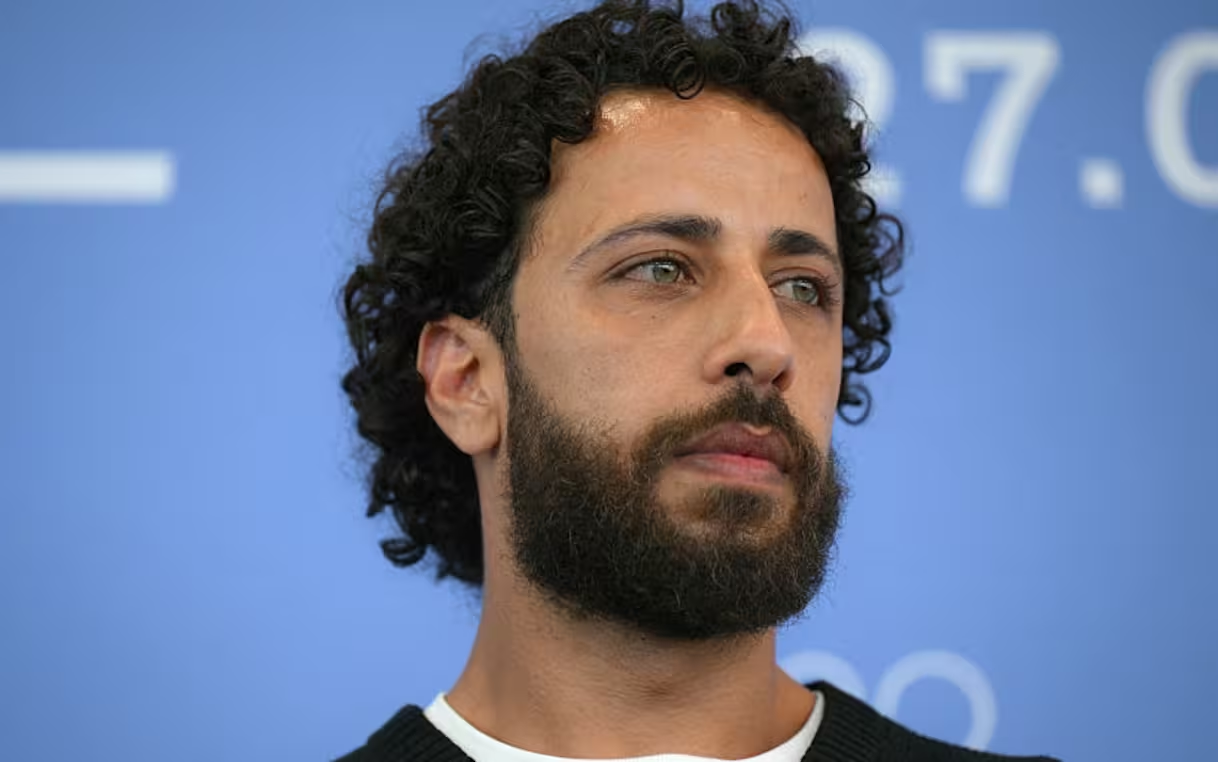
There are those who dream their whole lives of a golden statuette, and then there are those who dream simply of crossing a border. The night of the 2026 Oscars reminded us of that with a script's cruel twist: while Oscar Isaac glided down the red carpet with his modern-day Gatsby smile, on the other side of the world, someone watched the same ceremony over a stream, with the bitter taste of a denied visa. That someone is Motaz Malhees, the director behind "The Voice of Hind Rajab"—the documentary that was supposed to make half the world angry.
Instead, the world—the one in stilettos and diamonds—chose to look the other way. Or rather, it chose to let only the smiles in. The story is simple: Malhees, a Palestinian filmmaker with an Oscar nomination in his pocket, had the door slammed in his face by the U.S. Embassy. The reason? "Security concerns," they said. But when your film tells the story of a young girl named Hind Rajab, lost in a conflict that’s anything but Hollywood, "security" just feels like a hollow excuse.
And while the other Oscar Isaac—who, to be clear, has nothing to do with this—basked in the spotlight, the real drama was unfolding outside the theatre. Because Hollywood is great at crying over the world's tragedies when they're far away, but when that pain shows up at the door, invitation in hand? Well, then it's better not to answer.
A Silence Heavier Than a Thousand Speeches
The most baffling part isn't so much the U.S. government's decision—they've had a blind spot on these issues for decades. It's the silence from the Academy. No official statement, no taking a stand. Just a void. As if "The Voice of Hind Rajab" were an awkward title to utter into a microphone. But that voice—the voice of a Palestinian child—is exactly what deserved to echo through the chandeliers of the Dolby Theatre.
Here’s what this 2026 Oscars edition leaves us with:
- A virtual statuette for Motaz Malhees, for the courage to speak out even when no one's listening.
- The stench of hypocrisy rising from the red carpet, while the real protagonists are left outside.
- Confirmation that for some filmmakers, a U.S. entry visa is harder to get than an Oscar.
In the end, as the cameras panned over the winners and the losers, one chair stayed empty. Motaz Malhees's chair. And in that emptiness, maybe we all saw a little piece of ourselves. Because sometimes, the real injustice isn't losing an award—it's being denied the right to exist, to tell your story, to just be there. And that, unfortunately, is something we just don't talk about enough.