Gwanghwamun Square's 'Private Sector Opening' After 20 Years: Why Did Governance Fail?
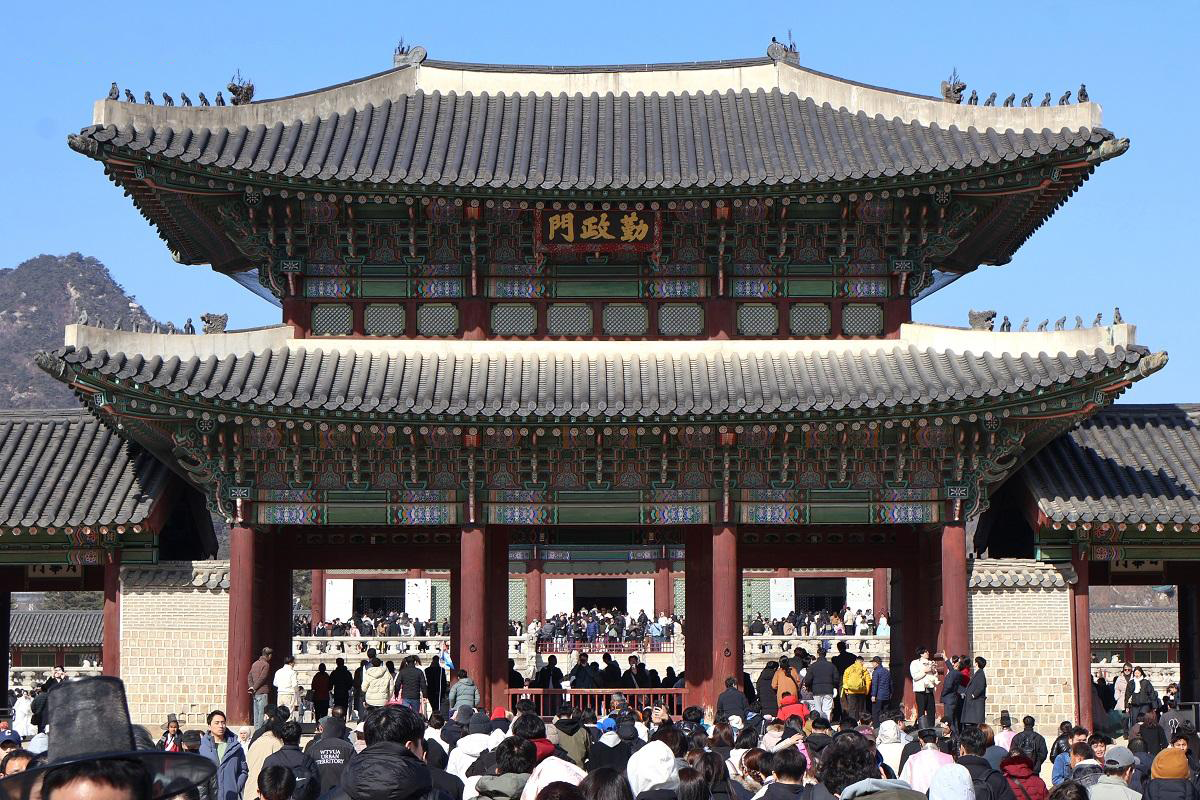
March 2026: Gwanghwamun Square, the heart of Seoul, has returned to the citizens after another major transformation. While it might appear to be a simple remodelling at first glance, this reopening holds a much more complex story simmering beneath the surface. It’s more than just swapping out benches and landscaping. It is the result of the Seoul Metropolitan Government's attempt to answer a fundamental question that has been persistently raised over the past two decades: 'Why did governance fail?'
In truth, Gwanghwamun Square has been plagued by the dilemma of 'disconnect between planning and operation' from the very beginning. Despite its immense symbolic significance, the blueprint for who would be responsible for this space, how, and for what purpose, was always ambiguous. The results were devastating. With each successive administration, Gwanghwamun Square degenerated into a 'performance stage' to showcase their political will, reducing citizens to mere extras in a grand political spectacle. It was no coincidence that in a 'Square Usage Satisfaction' survey released by a civic group last January, 'reduced accessibility due to political rallies' was cited as the biggest complaint.
A Square for the People, But Whose Square Is It?
The undisputed core keyword of this reopening is a 'complete overhaul of operational governance.' The Seoul Metropolitan Government has made the bold move to open up a significant portion of the planning and operational authority, previously monopolized by the public sector, to private enterprises. This isn't simply about adding more commercial facilities. The strategy is to have a specialized private operator oversee the space with a long-term vision—planning, curating content, and managing maintenance. This is effectively an admission of the failures produced by the uniform administrative logic of the 'public sector' over the past 20 years, and a declaration to borrow the more flexible and creative 'hands of the private sector.'
Learning from 20 Years of Failure: 'Why Did Governance Fail?'
Over the last two decades, we have witnessed countless conflicts surrounding Gwanghwamun Square. Why did this keep happening? Based on my analysis, the reasons for this failure can be summarized into three main points.
- Failure to Separate Ownership and Operation: As a nationally symbolic space, Gwanghwamun Square had too many stakeholders, including the National Police Agency, Jongno-gu District Office, and the Seoul Metropolitan Government. This created a 'classic tragedy of the commons,' where no single entity took proper responsibility.
- Lack of Expertise: Under the civil service's rotational posting system, establishing a long-term master plan spanning 5 or 10 years was nearly impossible. 'Incident-free' and 'complaint-free' management became the top priorities, overshadowing cultural and artistic expertise.
- Politicization: With every change in government, renovations to Gwanghwamun Square were packaged as national projects reflecting the new administration's 'governing philosophy.' From the 2016 candlelight vigils to the 2024 impeachment crisis, the square swung between being a space of popular resistance and a rallying point for conservatives, maximizing 'political fatigue' for the public.
A prime example illustrating how the lack of governance led to an absurd situation occurred in late 2024, when National Assembly Speaker Woo Won-shik's planned press conference at Gwanghwamun Square fell through. Specific groups 'occupying the square' blurred the lines between legal and illegal activities, neutralizing law enforcement. Ultimately, the square became a 'space where no one felt free.' This is precisely the headache for the Seoul Metropolitan Government. Regardless of how impressive the facilities are, the biggest challenge of this project is figuring out how to transform this 'uncontrollable political space' into a neutral space for 'everyday life.'
Gwanghwamun Square Through a Business Lens
Now, it's time to view this story not just as urban planning, but through a 'business' lens. The entry of a private operator signifies that Gwanghwamun Square is being reborn as an 'asset that needs to generate profit.' Beyond simply saving on maintenance costs, the core challenge is creating synergy by connecting with the surrounding commercial districts.
The industry is already buzzing with this decision. The Gwanghwamun area is the heart of Seoul's 'office and culture scene,' home to Kyobo Book Centre, the Sejong Center for the Performing Arts, and numerous corporate headquarters. Adding a 'premium public space' operating 365 days a year is bound to have an enormous ripple effect. In fact, rumours suggest that global luxury brands are already fiercely competing to open flagship stores near Gwanghwamun Square. Marketing leveraging the square's 'symbolism' and 'traffic' guarantees immense advertising impact in itself.
The challenge lies in how to balance the two objectives of 'publicness' and 'profitability.' Excessive commercialization will face backlash for undermining the 'square's identity,' while overly conservative management will boomerang back as 'deficits' for the private operator. Success in this delicate balancing act will ultimately depend on the operator's capabilities. The key will be planning compelling 'killer content' that combines Gwanghwamun's historical significance with a modern sensibility, going beyond simply adding cafes or pop-up stores.
Ultimately, Gwanghwamun Square's transformation after 20 years is not just a simple park renovation. It is an experiment in resolving 'failed public governance' through 'market logic.' Whether this experiment succeeds or leads to a different kind of failure will be written on the faces of citizens visiting the square one year, or even five years, from now. What is clear is that this wave of change in the heart of Seoul will draw a new map of opportunities, extending beyond mere urban aesthetic improvement to impact the real estate, retail, and cultural content industries as a whole. And I, for one, am already listening closely for the first movements to be detected on that map.