Kim Jong-un and the future of the dynasty: His daughter, the firing range photos, and North Korea's new course
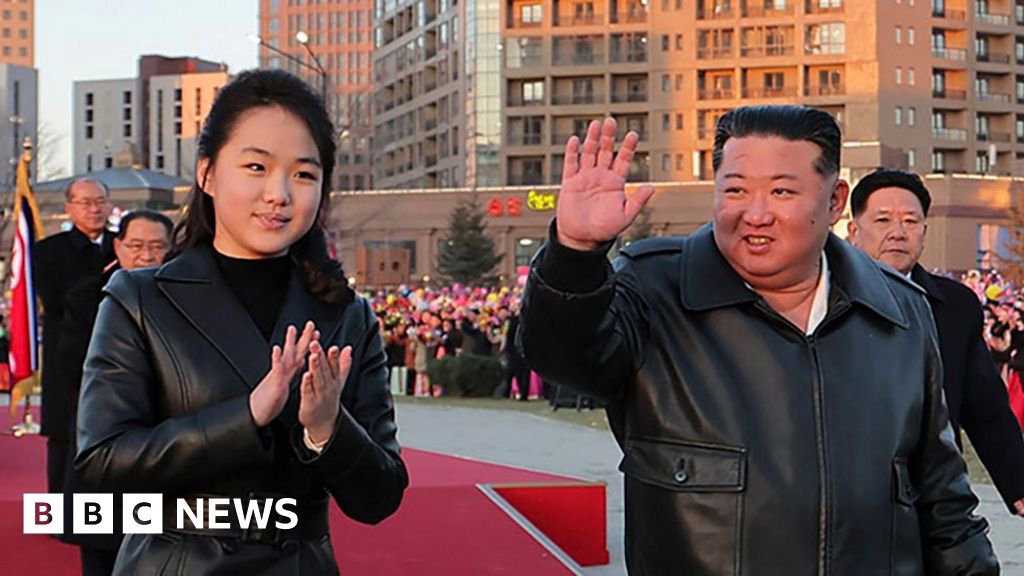
Among the twenty-seven images released by the North Korean state news agency late Saturday night, there is one that speaks louder than any policy speech. It's the shot capturing Kim Jong-un alongside his daughter, the teenager likely destined to inherit the planet's most isolated and impenetrable throne. In the photo, the girl—whom insiders refer to as Kim Ju Ae—is holding a new-generation sniper rifle, the very same one her father just gifted to top military brass. Smoke drifts from the barrel, her gaze focused. It's a snapshot that screams "future" louder than a thousand official statements.
Like anyone who has followed the Korean peninsula for years, I've learned to read between the lines of Pyongyang's propaganda machine. And in these weeks, following the conclusion of the 9th Congress of the Workers' Party, the message is clear: the Kim dynasty isn't just preparing for the next five years of geopolitical challenges; it's meticulously staging the inaugural act of its fourth chapter. Forget the old analyses: this isn't just about nuclear warheads; it's a full-blown dynastic rebranding with immense commercial and media potential.
Ju Ae's Rise: From "Beloved Daughter" to the Centre of Power
The first time she was seen in public was in November 2022, during the launch of an intercontinental ballistic missile. Back then, she was the "beloved daughter." Today, at just thirteen, her presence has become pervasive. From the nighttime military parade in Pyongyang that closed the congress, to the firing range where she handled a weapon, her image is everywhere. Whispers in the corridors of power now openly suggest that Kim Ju Ae has been internally designated as the successor. This is no longer about a cameo; she is an active presence, participating in key events and, sources close to the regime murmur, even beginning to weigh in on policy.
From the perspective of power marketing, this visual escalation is a downright brilliant move. For a regime that has built its strength on dynastic longevity, showcasing a young, charismatic heir, pictured in the same hyper-masculine poses as her father (black leather jackets, decisive gestures), is an unprecedented "brand extension" operation. And, believe it or not, it opens up unexpected commercial avenues. Lately, specialized political memorabilia sites have seen a surge in requests for items depicting the dictator.
- North Korea Table Flag with Kim Jong-un 21 x 14 cm: A collector's item becoming a must-have for enthusiasts of vexillology and contemporary history.
- Hipstory Artist Print - 'Kim Jong un' Hipster Version (50*50cm): Pop-art applies a "cool" filter to the Supreme Leader, transforming him into a pop icon for modern living rooms and trendy offices.
These aren't just gadgets. They're proof of how the figure of Kim Jong-un is permeating the global collective imagination, moving beyond news reports to become a cultural—and consequently commercial—phenomenon. The new focus on his daughter will only amplify this effect.
The Pivotal Congress: Between Nuclear Arms and Foreign Relations
But while we in the West focus on family dynamics, a much more concrete game was playing out at the congress. Kim Jong-un presented a new five-year plan, laying out Pyongyang's ambitions in black and white. The message is twofold: on one hand, the intention to "exponentially" expand the nuclear arsenal, developing intercontinental ballistic missiles (ICBMs) launched from both land and submarines, AI-powered drones, and electronic warfare systems. On the other, a clear and definitive redefinition of relations with the South: "The Republic of Korea is our principal and irrevocable enemy," he thundered. No more reunification, no more dialogue. Just two states in perpetual conflict.
This dual approach—military might and total isolation—creates a geopolitical tension that, for someone in my line of work, is like catnip. It means instability, certainly, but also huge defense investment flows from neighbouring countries, renewed attention on alternative energy routes, and a frenzied interest in every tiny signal coming from that country. This is where my analysis intersects with your interests as readers and investors.
The Family Axis and Real Power
We also can't ignore the other key figure to emerge from the congress: Kim Yo-jong, the leader's powerful sister. Her promotion to director of general affairs for the central committee is no formality. After years as a fierce spokesperson against Washington and Seoul, she will now manage the entire operational machinery of the party. This reshuffle creates a solid, cohesive family power core: the leader at the helm, his sister controlling the apparatus, his daughter projected toward the future.
This triangulation of power is the real guarantee of stability (or controlled instability) for the coming years. And in a world desperately trying to figure out how to engage with Pyongyang, understanding these internal dynamics is the only way to make a successful diplomatic or commercial move.
So, while the world focuses on nuclear threats, North Korea is quietly (and in its own way) renewing its image and its organizational chart. The next time you see a photo of Kim Jong-un with his daughter, don't just look at the details. Ask yourself: what market is opening up? What message is being sent? And, above all, what will be the next cult object to end up in our homes?