Lithuania in the Eye of the Storm: Why a Drone Crash in Kaunas Is Reviving Tensions Across the EU
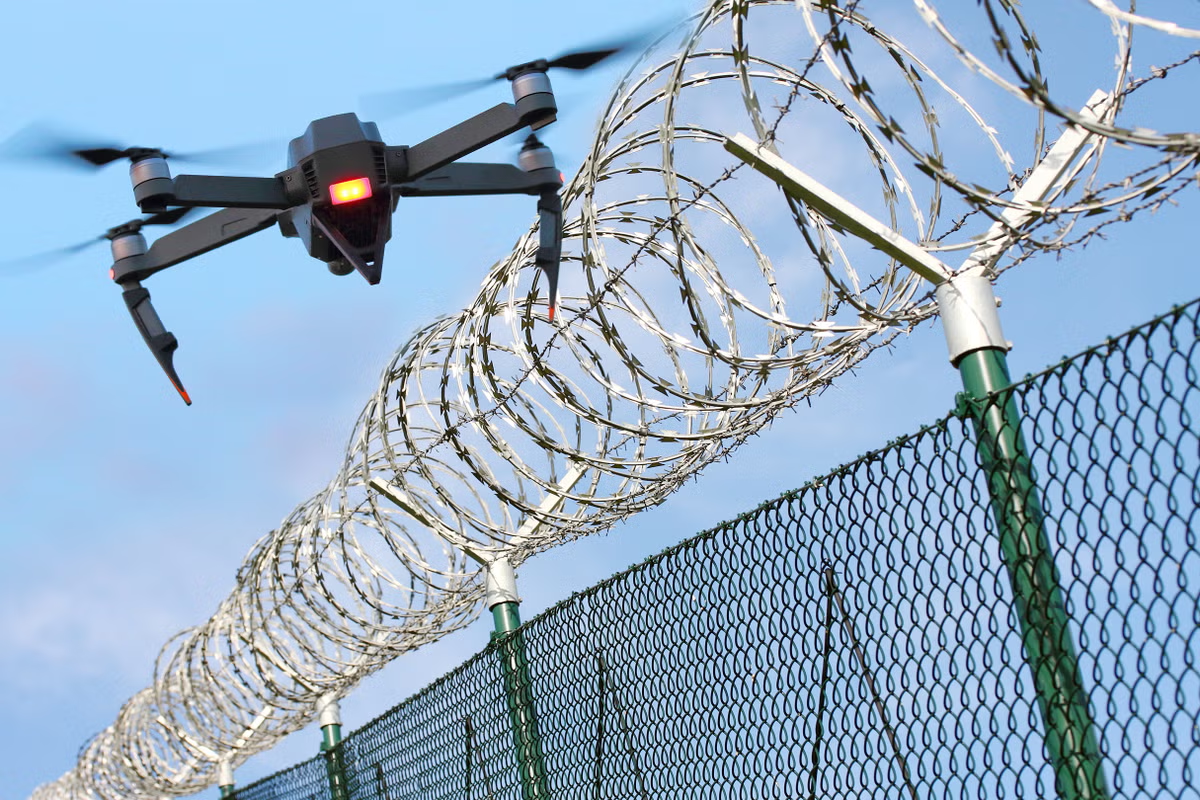
There are places in Europe that, due to their location, have always served as a barometer for the continent's stability. Lithuania is one of them. If you've been following the news lately, you know that a seemingly minor incident has once again put this Baltic nation front and center. A drone crashed on the outskirts of Kaunas, the country's second-largest city, and while some initially tried to downplay it, statements from the highest authorities have set off alarm bells. This isn't an isolated event; it's the latest piece in a geopolitical puzzle that's being reshaped at breakneck speed.
An Echo of War: Why This Drone Is Different
What strikes me about this event isn't just the crash itself, but the immediate reaction. According to sources close to the Lithuanian government, the device's origin pointed east, and the Baltic states have made it clear that incidents like this, along with others recorded in the region, are a direct consequence of Russian aggression. This is the new normal brought on by the war. When I talk to colleagues in the area, they tell me the mood on the streets of Vilnius isn't one of alarm, but of a tense calm. They know they're on the front line, and every unidentified object that enters their airspace is now scrutinized through a very different lens than it was three years ago.
Beyond Geopolitics: How Does This Affect Daily Life in Lithuania?
For those unfamiliar with the country, you might think this is something that only affects government officials. But that couldn't be further from the truth. Last week, as information about the incident was being processed, the Lithuanian job market saw a slight but significant uptick in inquiries about jobs related to civil defense and cybersecurity. That's no coincidence. Lithuanian society is incredibly resilient and pragmatic. Conversations at the local pub aren't just about the latest Lithuania national football team match (which, by the way, is still searching for that spark to get back to the big stage), but also about first-aid courses and how to put together an emergency kit.
- Civic Resilience: The public has internalized that security is no longer something they can take for granted. Talks at community centers about how to handle power outages are becoming increasingly common.
- Impact on the Local Economy: The uncertainty has led many companies, especially in tech, to place an even higher premium on stability. Job listings are adapting, seeking profiles that can ensure operational security.
- A Unifying Symbol: In times like these, it's inevitable to see the Flag of Lithuania—that yellow, green, and red tricolor—appearing more frequently on balconies. It’s not an act of belligerent defiance, but a gesture of unity. It's their way of saying, "We're here, this is what we stand for."
The Media Pulse: TV3 and a View from the South
For us here in Spain, understanding what's happening on Europe's eastern flank is crucial. Analysis programs on networks like TV3 have dedicated extensive coverage to dissecting this incident, connecting the dots between what happened in Kaunas and the implications for the European Union's energy and military security. This isn't "their" problem; it's a European issue. And Lithuania, with that blend of Nordic composure and Baltic determination, is offering a lesson in how to face this new reality. There’s no grandstanding, but no concessions either. Borders are being reinforced, defense spending is ramped up, and daily life goes on—because, ultimately, that's the best form of resistance.
We'll be keeping an eye on the next moves. But for now, one thing is clear: Lithuania has transformed from an exotic destination for lovers of medieval old towns into a cornerstone where the future of European security is being written. And from here, we're keeping our eyes fixed on that corner of the Baltics, where history, once again, is being made.