The Israel-Iran War: The UAE in the Crosshairs.. A Night of Terror in Dubai and Abu Dhabi
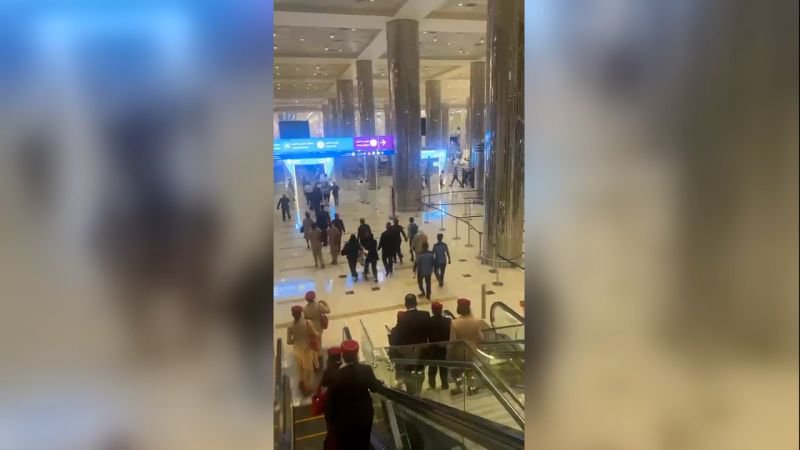
It was the night Dubai had been dreading for years. The night businessmen whisper about in councils and urban planners fear in their strategy meetings. Suddenly, the brilliant glow of Dubai's towers was replaced by the flickering shadows of fear. The Israeli-Iranian war was no longer just a breaking news alert on TV screens; it became live fire in the Gulf skies and the wail of sirens shaking the walls of Jumeirah villas. What happened in the last few hours was not just a "successful interception"; it was a strategic earthquake that rattled the entire region.
On the Ground: Fire Raining from the Sky
The people of Dubai don't hide their mix of anticipation and anxiety. Those who didn't personally see the flash of a missile interception over the Burj Khalifa didn't feel the nighttime tremors that shook the floors beneath their beds on the 17th floor. They say the night before last started as usual, until the UAE sky exploded with more than 165 ballistic missiles and 541 drones in the first wave alone, according to figures circulating in closed diplomatic circles.
These numbers aren't for show; they are evidence of the sheer volume of fire Tehran tried to ignite in the backyard of U.S. forces. Informed sources confirm that air defense systems handled the worst-case scenario, destroying the vast majority of targets. However, 35 drones and 13 missiles found their way to the ground, leaving behind three expatriate workers dead and dozens injured.
Iconic Landmarks in the Crosshairs
What's astonishing isn't just the quantity, but the targets. It wasn't just military bases in the danger zone; it was the symbols of progress and tourism that the youth of the UAE built their dreams upon. Picture the scene: the Address Hotel on the Palm Jumeirah catching fire, its guests fleeing in panic. Imagine Dubai International Airport, the world's busiest, with Terminal 3 filled with thick smoke from falling debris, forcing people to take shelter in the lower-level bunkers.
Most alarming were the widely circulated images of the Burj Al Arab, Dubai's icon, sustaining a limited but symbolically deafening hit. Iran wanted to send an unmistakable message: your safe haven is no longer safe, and your investments are now leverage in a fight for survival.
Paralysis at the World's Busiest International Airport
If you want to grasp the scale of the disaster on the ground, just look at the control tower at Dubai Airport. The global transit hub was turned into a war zone. Emirates, Etihad, and Air Arabia completely suspended their flights. Thousands of passengers were stranded in transit lounges while shrapnel scattered onto the runways.
The losses here aren't just counted in aircraft; they're measured in the trust of travelers and investors. The nation's airspace, the world's corridor between East and West, was closed to civil aviation for days, impacting over 2,000 flights in a single day—the region's biggest aviation crisis since the COVID-19 pandemic.
- Oil Infrastructure: Indirect targeting of export ports sent oil prices soaring immediately.
- Maritime Navigation: Shipping traffic through the Strait of Hormuz came to a near-complete halt for hours.
- Cybersecurity: Widespread attempts to hack into electricity grids and building management systems.
- Public Confidence: Unprecedented levels of panic among citizens and residents on this scale.
Iran Expands the Battlefield.. Why Now?
Observers noted that Tehran changed its tactics. In previous rounds, the focus was on Israel. But today, the map is completely different. All the Gulf states—from Kuwait to Bahrain, Qatar, Saudi Arabia, and Oman—took hits. The UAE was the most exposed. Strategic experts in the West say Iran realizes it cannot defeat the U.S. or Israeli military directly, so it's trying to raise the costs for everyone.
This is the "igniting all fronts" doctrine that Tehran adheres to. Strike oil infrastructure, threaten gas tankers, halt air travel, and make Dubai's economic life dependent on a moment's notice for missile launches. Their goal is clear: pressure the region's rulers to, in turn, pressure Washington for a ceasefire before the "oasis" turns into an unbearable inferno.
The Major Strategic Shift: What Comes Next?
But instead of dividing the region's states, the Iranian fire united them on a common front. The moment the first missile landed, statements of condemnation came from Riyadh, Abu Dhabi, and Manama, accusing Tehran of a blatant violation of sovereignty. This unified stance is a dramatic development. The days of neutrality and quiet dialogue with Iran are over.
What we are witnessing now is a reshaping of alliances. The "pivotal moment in the Middle East" that strategists talk about has arrived. We clearly see that the Gulf states, led by the UAE, are moving with a logic of "strategic autonomy". Not in the sense of abandoning allies, but in the sense of building immense self-deterrence power and strengthening their multifaceted partnerships—eastward with China and India, and westward with America—with one single goal: protecting their developmental achievements.
A Final Word from the Ground
As I write these words, swarms of drones are still flying in the region's skies, and sirens are still testing the strength of our nerves. But what I see in the eyes of Emirati youth isn't panic, it's determination. Yes, the skyscrapers shook, but they didn't fall. Yes, the hotels were hit, but they will shine again. The war in the region will leave scars, but it will also create a new awareness: that survival is for the strongest and most cohesive. The UAE has passed a difficult test and emerged with a stronger will and more united ranks. But the lesson learned from these harrowing nights is that a return to the time before February 26, 2026, is impossible.