Serbia Unveils MiG-29 Fighters Armed with Chinese Missiles: A Potential Game Changer in the Balkan Skies
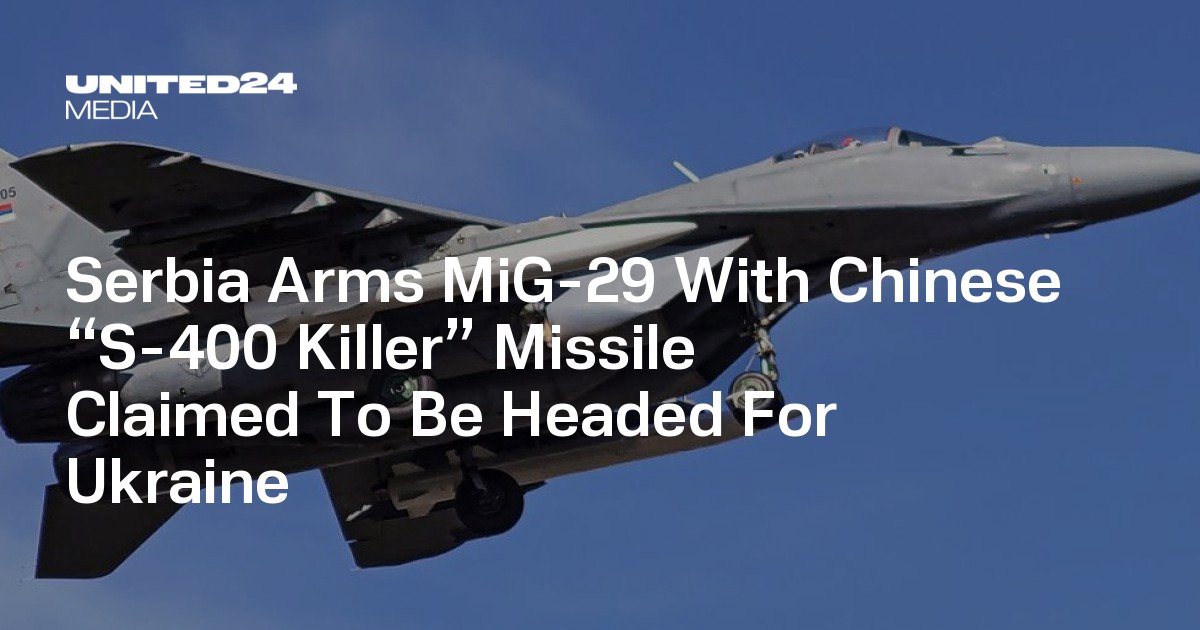
A quiet but significant rumble has come from the heart of the Balkans. Serbia's frontline MiG-29 fighter jets have been spotted sporting a new look, armed with weaponry that’s a clear departure from their usual arsenal. The head-turner? The Chinese-made CM-400AKG missiles. Typically, such developments might fly under the radar, but this time, the global community is sitting up and taking notice. It looks like Serbia is making a calculated move on the geopolitical chessboard.
MiG-29's Upgrade: Meeting Chinese Firepower
In recently released images, a Serbian Air Force MiG-29 is clearly visible carrying an air-to-ground missile under its wing, a Chinese import replacing the usual Russian-made ordnance. The model is the CM-400AKG, also known as the Chinese 'S-400 killer' missile. This missile gained notoriety when it was integrated into the Pakistani Air Force's JF-17 fleet. So, it raised more than a few eyebrows when it appeared in the skies over Serbia, a small nation in the Balkans.
These photos send a message that goes far beyond a simple equipment swap. When a Soviet-era icon like the MiG-29 is paired with cutting-edge Chinese technology, it's not just a 'hardware upgrade'; it's a powerful symbol of Serbia's intricate diplomatic and military balancing act. If you recall, it was only a few years ago that Serbia received these very MiG-29s for free from Russia and invested heavily in overhauling them to rebuild their air power.
Power Play in the Balkans: A 'Little Giant' Makes Its Choice
Why now, and why China? Serbia's choice is telling on multiple levels. With Russia's weapons supply chain becoming uncertain after the war in Ukraine, Serbia is playing the diversification card.
- Boosting Strategic Autonomy: By moving away from sole reliance on Russia and adding China to the mix, Serbia aims to increase its negotiating power and enhance its independent military capabilities.
- A Hypersonic Threat: The CM-400AKG is known for its speed, capable of flying at over Mach 5, and its high manoeuvrability. It can penetrate existing air defence systems to strike key ground targets, undoubtedly presenting a new challenge for neighbouring countries.
- Ties That Bind with China: This is more than just an arms deal. It's a powerful, tangible sign of the strong strategic partnership between Serbia and China, who often refer to each other as 'iron brothers'.
With this new weaponry, it seems the fighting spirit that the Serbia national football team shows on the pitch is now set to be channelled into securing their airspace. Just as they're known as the 'stars of the sky' on the football field, this missile upgrade reads like a clear intention to solidify their position in the actual skies above.
Experts Weigh In: Could They End Up in Ukraine?
Some analysts have tentatively suggested these missiles could be diverted to Ukraine, but such speculation seems to ignore the local realities. Serbia maintains a policy of military neutrality while consistently investing heavily in protecting its own sovereignty and airspace. Much like the tenacity the Serbia national basketball team displays on the court, they have a strong will to not be pushed around when it comes to their national security. These missiles are for defending Serbia's skies, not for shipment to a third party. This sentiment is echoed in Belgrade as well. This is, and will remain, a project focused on strengthening 'Serbia's shield'.
Writing a New Chapter in the Sky, in Serbian
Interestingly, there's also a linguistic angle to consider. Much like the complex Serbian language with its Cyrillic script, many argue that this weapons procurement process needs to be understood through Serbia's own unique code of navigating between the West, Russia, and China. An elderly man we met at a café in Belgrade, a military veteran, put it this way: "We've always had to learn how to survive between major powers. This decision is just an extension of that. The important thing is that we write our own future, in our own language, by our own hand."
Now, as Air Serbia passenger jets land at Belgrade's Nikola Tesla Airport, we might occasionally catch a glimpse of a MiG-29, armed with its new missiles, taking off. It won't just be a military parade; it will be a living snapshot of the complex geopolitical map of the 21st-century Balkans. Once again, Serbia seems determined to prove in the skies what it means to be a 'small but mighty' nation.