Serbia Unveils MiG-29 Fighter Jets Armed with Chinese Missiles – A Potential Game Changer in the Balkan Skies
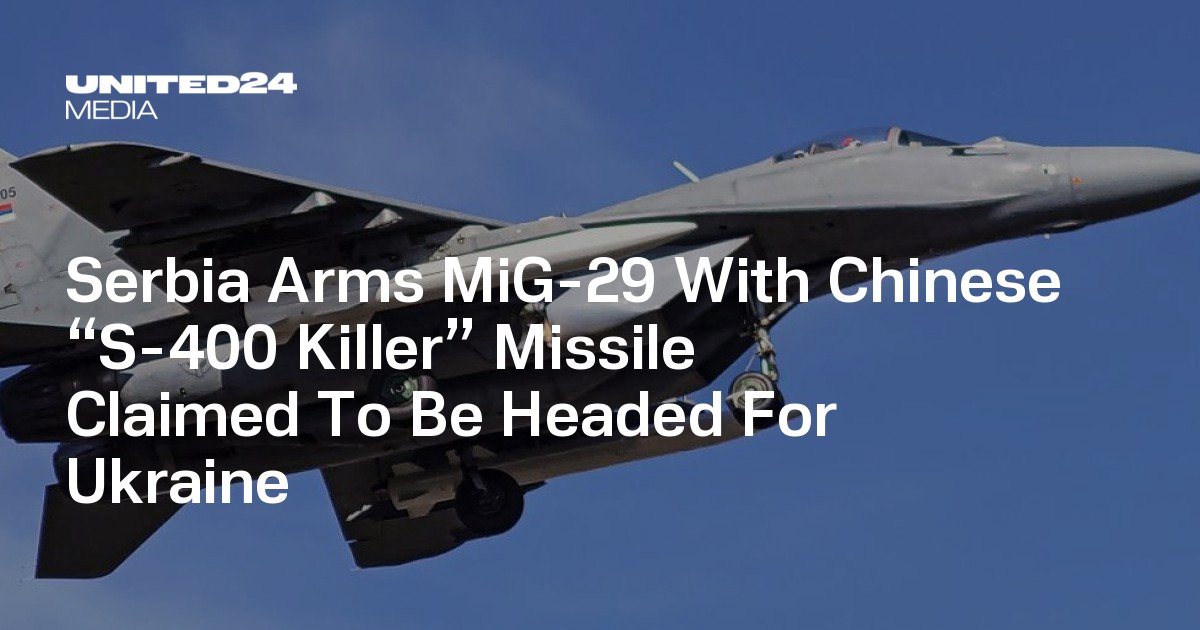
A quiet but significant ripple has moved through the heart of the Balkans. Serbia's frontline MiG-29 fighter jets have been spotted sporting a new look, armed with weaponry distinctly different from their usual payload. The head-turner is the Chinese-made CM-400AKG missile. While such developments often fly under the radar, the vibe this time is different. It seems the world is watching closely to see what move Serbia will make on the geopolitical chessboard.
MiG-29's Makeover: A Meeting with Chinese Missiles
In recently surfaced images, a Serbian Air Force MiG-29 is clearly fitted with an air-to-surface missile from China under its wing, a departure from its typical Russian-made arsenal. The model in question is the CM-400AKG, sometimes dubbed the Chinese 'S-400 killer'. This missile gained notoriety while being operated by the Pakistani Air Force on their JF-17 fighters. So, it came as a surprise when it popped up in the skies over Serbia, a small nation in the Balkans.
These images deliver a message far beyond a simple weapon swap. When a Soviet-era icon like the MiG-29 is paired with cutting-edge Chinese technology, it's more than just a 'hardware upgrade'; it's a symbolic snapshot of Serbia's complex diplomatic and military balancing act. It wasn't that long ago, as many will remember, that Serbia received these very MiG-29s for free from Russia and refurbished them to rebuild their air power.
The Balkan Power Balance and the Choice of a 'Small but Mighty' Nation
Why now, and why China? Serbia's choice is significant on multiple levels. With Russia's weapons supply chain becoming shaky after the Ukraine invasion, Serbia has opted to diversify its military procurement.
- Boosting Strategic Autonomy: By branching out from exclusive reliance on Russia to include China, Serbia aims to increase its bargaining power and enhance its own independent military capabilities.
- A Hypersonic Threat: The CM-400AKG is known for its manoeuvrability and speed, clocking in at over Mach 5. Capable of penetrating existing air defences to strike key ground targets, it presents a fresh challenge for neighbouring countries.
- Ties with China: This goes beyond a simple arms deal. It's a powerful military endorsement of the strategic relationship between Serbia and China, nations who refer to each other as 'iron brothers'.
With this new weaponry, it seems the same fighting spirit the Serbian national football team shows on the pitch is now ready to be projected into their airspace. Much like their reputation as 'stars of the sky' in football, arming these jets with advanced missiles signals a clear intent to secure their position in the skies.
Expert Opinion: Could They End Up in Ukraine?
Some analysts have tentatively raised the possibility of these missiles being funnelled to Ukraine, but this is speculation that largely ignores the local context. While maintaining a policy of military neutrality, Serbia doesn't hold back on investing heavily in protecting its own sovereignty and airspace. Just as the Serbian national basketball team plays with fierce determination on the court, the nation shows a strong will to avoid being pushed around on security matters. These missiles were acquired to defend Serbia's skies, not for shipment to a third country. This sentiment is echoed in Belgrade. It's all part of a project to reinforce 'Serbia's shield'.
Writing a New Chapter in the Sky, in Serbian
There's an interesting linguistic angle here too. Like navigating the complexities of the Serbian language and its Cyrillic script, many analysts suggest this weapons deal should be read as part of Serbia's unique code of conduct, balancing the West, Russia, and China. An elderly local man, a former conscript, put it this way in a Belgrade cafe: "We've always had to learn how to survive between the great powers. This decision is just another step in that long history. What matters is that we write our own future, in our own language."
Now, as passenger jets of Air Serbia land at Belgrade's Nikola Tesla Airport, we might occasionally witness a MiG-29, armed with its new missiles, taking off in the distance. It won't just be a military parade; it will be a vivid snapshot of the complex geopolitical landscape of the 21st-century Balkans. Serbia, it seems, is once again looking to prove in the skies that it is a nation 'small but mighty'.