Beyond the Tabloids: Why the Market is Hungry for the Jane Andrews Story and What it Says About Us
If you’ve scrolled through social media or turned on the telly in the past fortnight, you’ve been bombarded with one name: Jane Andrews. She’s plastered across the trailers for ITV’s new heavyweight drama, The Lady. But here’s the thing—while the mainstream press is hammering the "Fergie’s Killer Dresser" angle, the real story isn’t just about a murder that happened a quarter of a century ago. It’s about why we, as a global audience, are absolutely voracious for this specific type of content right now. It’s about class, aspiration, and the commercial alchemy of turning tabloid tragedy into premium television.
The Grimsby Girl Who Stormed the Palace
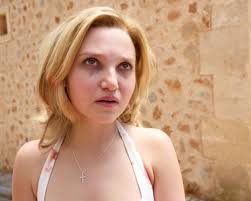
Let’s strip away the royal mystique for a second. The Jane Andrews story, brilliantly dissected in this new four-part series from the producers of The Crown, is a devastatingly sharp tale of social mobility. Here was a working-class kid from Grimsby, a graduate of the local art college, who answered a blind ad in The Lady magazine and found herself dressing the Duchess of York. For nearly a decade, she wasn't just staff; she was a confidante, travelling the world with "Fergie," who mockingly—or affectionately—called her "Lady Jane".
But when the fairy dust wears off, it wears off hard. Dismissed from the Royal Household in a cost-cutting move in 1997, Andrews lost more than a job; she lost her entire identity. She was adrift, a woman who had adopted the accent and mannerisms of the elite, only to be cast back into a world where she no longer fit. This is the crucial context often missing from the tabloid headlines. By the time she met wealthy stockbroker Thomas Cressman, he wasn't just a lover; he was a lifeline back to the life she felt she deserved.
The Cricket Bat, the Knife, and the Open Prison
We all know how it ended. In September 2000, after a holiday where she expected a proposal that never came, Andrews snapped. As Cressman slept in their Fulham flat, she bludgeoned him with a cricket bat and stabbed him with a kitchen knife. She was convicted of murder in 2001 and sentenced to life. But the coda to the crime is what fascinates me from a behavioural standpoint. In 2009, after being transferred to HMP East Sutton Park—an open prison in Kent—she simply walked out.
For three days, she was on the run, sparking a nationwide manhunt that ended, almost comically, at a Premier Inn just a few miles down the road at the Maidstone services on the M20. It’s a bizarre, almost pathetic footnote to a story of such high drama. She was sleeping rough, covered in mud, and finally checked into a budget hotel. It’s a reminder that even in the midst of a "nationwide police hunt," the reality is often far more mundane—and human.
Why This Story Breaks Through the Noise
So, why dedicate column inches to a case that closed its legal books years ago? Because the cultural books are wide open. The premiere of The Lady starring Mia McKenna-Bruce (who is absolutely electric as Andrews) and Natalie Dormer as a surprisingly sympathetic Sarah Ferguson taps into three massive commercial currents.
- The "Rags-to-Riches-to-Murder" Arc: We love a fall from grace, especially when it involves royalty. It’s the ultimate celebrity gossip, packaged as prestige drama.
- The Nuanced Female Anti-Hero: Modern audiences crave complexity. Was she a gold-digger? Was she a victim of a system that chewed her up? The drama forces us to sit with the ambiguity.
- The Epstein Shadow: Let’s be brutally honest. The reason this story has extra legs is because of the recent unsealing of the Epstein files. Natalie Dormer donating her fee to charity because she was "uncomfortable" with the Ferguson-Epstein connections proves that this series is landing in a minefield of contemporary relevance.
Beyond the Courtroom: The Pop Culture Symmetry
Interestingly, the name Jane Andrews is echoing in other corners of the cultural landscape right now, creating a fascinating bit of market "noise." On one hand, you have the hard-hitting realism of The Lady. On the other, you have the fantasy realms of romance and comics.
For those looking for an escape hatch from the grim reality of the ITV drama, the algorithms are pushing The Wrong Quarterback: A Football Romance by C.R. Jane. It’s a perfect example of commercial bifurcation—the market gorging on true crime with one hand, and clutching a comfort read with the other. It’s a study in contrasts: one Jane Andrews story ends in a prison cell, the other promises a "happily ever after" with a morally grey hero.
Then there’s Hollis Jane Andrews, a name popping up in design and lifestyle circles, and the return of a certain web-slinger in Spider-Man: Reign 2, a book that deals with an aging hero haunted by his past. The thematic link? Legacy, reputation, and the inescapable weight of what we leave behind. Whether it’s Kaare Andrews’ artwork depicting an old Peter Parker or the real-life photos of Jane Andrews leaving the Old Bailey, we are a society obsessed with the aftermath of a life lived in the spotlight.
The Verdict
The Lady isn't just a period drama; it’s a Rorschach test for how we view privilege, ambition, and female rage. As investors and content consumers, we should be watching the numbers on this one. If the ratings for this series hit the heights they’re predicted to, don’t be surprised to see a green light for more deep-dive dramas into the royal periphery. The public’s appetite for the gilded cage—and the people who rattle its bars—shows no sign of being satiated. Jane Andrews, whether she likes it or not, is box office gold again.