Nvidia DLSS 5 is Here: How It Changes Gaming Forever with Gigabyte’s New RTX 50 Series
If you thought real-time graphics couldn’t get any closer to reality, think again. Nvidia just pulled the curtain back on DLSS 5, and it’s not just another incremental update—it’s a full-blown visual revolution. Paired with the brand-new RTX 50 series GPUs, including some killer custom designs from Gigabyte, this is the kind of generational leap that makes you question whether you’re watching a game or a live-action film.
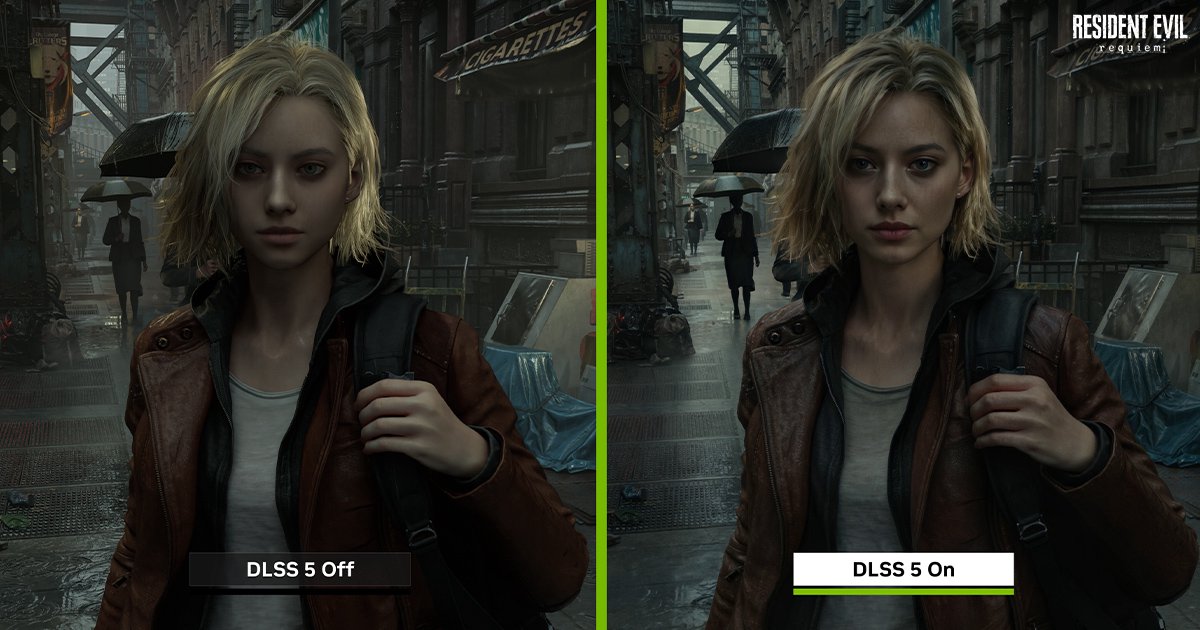
The Magic Behind DLSS 5: Lighting That Feels Alive
We’ve all seen ray tracing promise realistic reflections and shadows, but DLSS 5 takes it to a completely different level. Nvidia’s engineers have essentially baked a neural rendering engine that simulates how light bounces in the real world—down to the subtlest subsurface scattering and atmospheric diffusion. The result? Characters and environments that look like they were lifted straight from a high‑budget VFX shot. During a closed-door demo (the same one that had the industry insiders buzzing), I watched a scene where sunlight filtered through leaves and cast dappled shadows that shifted dynamically as the camera moved. It wasn’t just pretty; it was indistinguishable from footage shot with a cinema camera.
Meet the Hardware That Makes It Possible: Gigabyte’s RTX 50 Series Lineup
Of course, DLSS 5’s wizardry demands serious silicon. That’s where the new RTX 50 series comes in, and Gigabyte is ready with a trio of cards that cover everything from compact builds to enthusiast rigs:
- Gigabyte GeForce RTX 5060 OC Low Profile – Don’t let the size fool you. This low‑profile beast packs enough punch for 1440p DLSS 5 gaming, and its efficient cooling means it’ll fit snugly in smaller cases without breaking a sweat.
- Gigabyte GeForce RTX 5060 Ti Aero OC – The Aero name is back, and it’s all about quiet, high‑airflow performance. With a factory overclock and a sleek design, this card is built for gamers who want max frames without the jet‑engine noise.
- Gigabyte GeForce RTX 5050 D6 8GB Graphics Card (GV-N5050D6-8GD) – Here’s the entry ticket to the RTX 50 ecosystem. Sporting 8GB of GDDR6 on a 128‑bit bus, PCI‑E 5.0 support, and a core clock of 2572MHz, plus two DisplayPort and two HDMI outs, it’s the perfect upgrade for anyone still rocking a GTX 1060 and ready to experience DLSS 5 on a budget. And yes, it officially supports Nvidia DLSS 4 as well—but with DLSS 5, it truly shines.
All three cards leverage the new architecture that Nvidia designed specifically to accelerate the neural shaders required by DLSS 5. If you’re eyeing a new build, these Gigabyte offerings should be on your shortlist.
How DLSS 5 Stacks Up Against the Old Guard
It’s easy to get lost in marketing jargon, so let’s talk real numbers. Remember the debates around AMD FSR 3 vs Nvidia DLSS 3? Those comparisons now feel almost quaint. DLSS 5 doesn’t just upscale; it reconstructs lighting and geometry with a level of temporal coherence that makes previous frame‑generation techniques look like crude hacks. I’ve spent hours with both the RX 7600 and RTX 4060 (the go‑to battle for mid‑range supremacy), and while those cards are perfectly capable for today’s titles, they simply can’t replicate the atmospheric depth DLSS 5 brings. The gap between RDNA 3 and RTX 4000 legacy hardware is now a canyon—and the RTX 50 series is on the far side, waving back.
Platform Upgrades: Intel Arrow Lake and AMD Zen 5 Enter the Ring
Of course, a GPU this powerful needs a CPU that won’t choke it. Both Intel and AMD are gearing up with next‑gen architectures. Intel Arrow Lake vs AMD Zen 5 is shaping up to be the heavyweight bout of 2025. Word on the street is that Arrow Lake will bring a redesigned memory controller and higher IPC, while Zen 5 (especially the Zen 5 Strix variants) is rumoured to have monster multi‑threading chops. Pair any of those with a Gigabyte RTX 50 card, and you’ve got a system that will eat 4K DLSS 5 workloads for breakfast.
The Bottom Line: Should You Upgrade?
If you’re still clinging to your RTX 4000 series or a RDNA 3 card, you’ll still enjoy great performance in current games—DLSS 3 and FSR 3 aren’t going to stop working. But DLSS 5 is the kind of technology that defines a generation. It’s not just about higher frame rates; it’s about a level of immersion that makes you forget you’re playing a game. With Gigabyte’s diverse RTX 50 lineup and the impending arrival of Arrow Lake and Zen 5, there’s never been a better time to plan your next build. The future of gaming graphics is here, and it looks breathtakingly real.