Nvidia DLSS 5 Arrives: How Gigabyte’s New RTX 50 Series is Redefining PC Gaming
If you thought real-time graphics couldn't get any closer to reality, think again. Nvidia has just lifted the lid on DLSS 5, and it's far more than a routine update—it's a full-blown visual revolution. Combined with the all-new RTX 50-series GPUs, including some striking custom designs from Gigabyte, this is the kind of generational shift that makes you question whether you're watching a game or a live-action film.
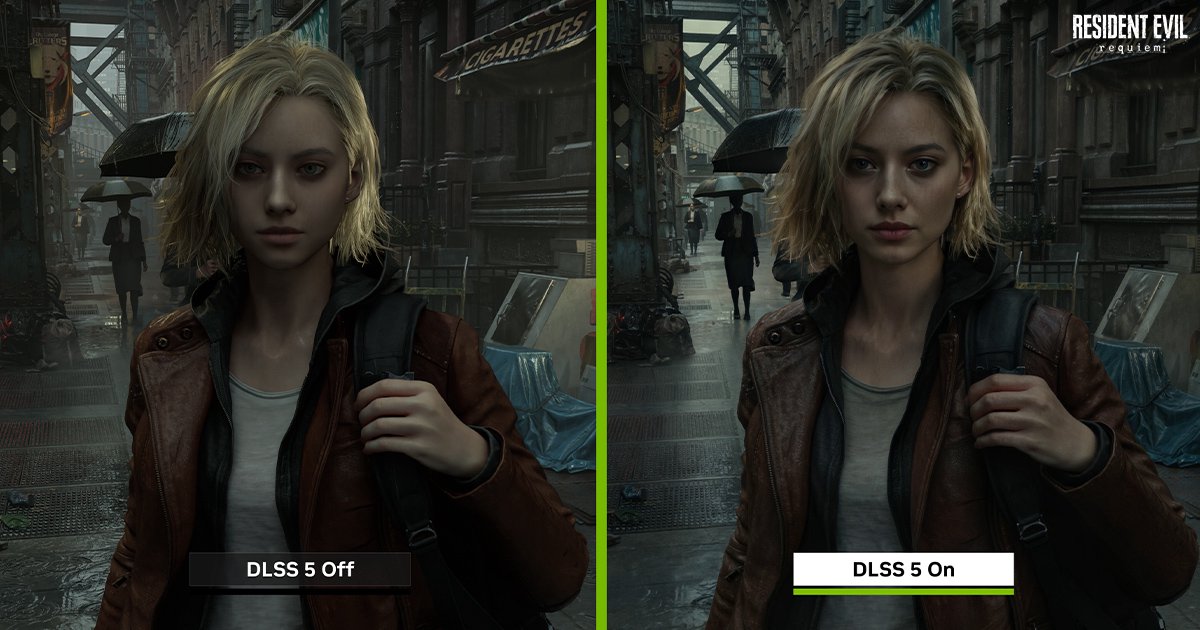
The Magic Behind DLSS 5: Lighting That Truly Lives and Breathes
We've all heard how ray tracing promises realistic reflections and shadows, but DLSS 5 elevates it to an entirely new level. Nvidia's engineers have essentially built a neural rendering engine that mimics the way light behaves in the real world—right down to the most subtle sub-surface scattering and atmospheric diffusion. The result? Characters and environments that look like they've been lifted straight from a big-budget VFX shot. During a closed-door demo (the same one that had industry insiders buzzing), I watched a scene where sunlight filtered through leaves, casting dappled shadows that shifted dynamically as the camera moved. It wasn't just visually stunning; it was virtually indistinguishable from footage captured on a cinema camera.
Meet the Hardware That Makes It Possible: Gigabyte's RTX 50 Series Lineup
Of course, the wizardry of DLSS 5 demands some serious silicon. That's where the new RTX 50 series steps in, and Gigabyte is ready with a trio of cards covering everything from compact builds to all-out enthusiast rigs:
- Gigabyte GeForce RTX 5060 OC Low Profile – Don't let the size fool you. This low-profile powerhouse is more than capable of delivering 1440p DLSS 5 gaming, and its cleverly designed cooling means it'll fit snugly into smaller cases without breaking into a sweat.
- Gigabyte GeForce RTX 5060 Ti Aero OC – The Aero name makes a welcome return, and it's all about quiet, high-airflow performance. With a factory overclock and a sleek aesthetic, this card is tailor-made for gamers who want maximum frames without the jet-engine racket.
- Gigabyte GeForce RTX 5050 D6 8GB Graphics Card (GV-N5050D6-8GD) – Here's your entry ticket to the RTX 50 ecosystem. Sporting 8GB of GDDR6 on a 128-bit bus, PCI-E 5.0 support, and a core clock of 2572MHz, plus two DisplayPort and two HDMI outputs, it's the ideal upgrade for anyone still clinging to a GTX 1060 and eager to experience DLSS 5 on a budget. And yes, it officially supports Nvidia DLSS 4 as well—but it's with DLSS 5 that it genuinely comes into its own.
All three cards leverage the new architecture that Nvidia specifically designed to accelerate the neural shaders required by DLSS 5. If you're planning a new build, these Gigabyte offerings deserve a spot on your shortlist.
How DLSS 5 Stacks Up Against the Old Guard
It's easy to get lost in marketing speak, so let's talk real-world numbers. Remember the debates around AMD FSR 3 vs Nvidia DLSS 3? Those comparisons now feel almost quaint. DLSS 5 doesn't just upscale; it reconstructs lighting and geometry with a level of temporal coherence that makes previous frame-generation techniques look like crude hacks. I've spent hours with both the RX 7600 and RTX 4060 (the classic showdown for mid-range supremacy), and while those cards are perfectly capable for today's titles, they simply can't replicate the atmospheric depth DLSS 5 brings. The gap between RDNA 3 and legacy RTX 4000 hardware is now a chasm—and the RTX 50 series is on the far side, waving back.
Platform Upgrades: Intel Arrow Lake and AMD Zen 5 Enter the Ring
Of course, a GPU this powerful needs a CPU that won't hold it back. Both Intel and AMD are gearing up with next-gen architectures. Intel Arrow Lake vs AMD Zen 5 is shaping up to be the heavyweight bout of 2025. Word on the street is that Arrow Lake will bring a redesigned memory controller and higher IPC, while Zen 5 (especially the Zen 5 Strix variants) is rumoured to boast monstrous multi-threading capabilities. Pair any of those with a Gigabyte RTX 50 card, and you've got a system that will devour 4K DLSS 5 workloads for breakfast.
The Bottom Line: Should You Upgrade?
If you're still holding onto your RTX 4000 series or an RDNA 3 card, you'll still enjoy excellent performance in current games—DLSS 3 and FSR 3 aren't about to stop working. But DLSS 5 is the kind of technology that defines a generation. It's not just about higher frame rates; it's about a level of immersion that makes you forget you're playing a game. With Gigabyte's diverse RTX 50 lineup and the imminent arrival of Arrow Lake and Zen 5, there's never been a better time to plan your next build. The future of gaming graphics is here, and it looks breathtakingly real.