Boeing Stock's "Credibility Reset": Why 2026 is the Year BA Finally Takes Flight
Let's be honest, watching Boeing over the past half decade has been like watching a wounded animal try to drag itself across the savanna. You want to look away, but you can't. There were moments—the door plug incident, the endless 777X delays, the strike—where you genuinely wondered if the old girl would ever get up again. But standing here in early March 2026, looking at the tape, I can tell you something feels different. This isn't just a dead cat bounce. This is the sound of the engines spooling up.
The "Credibility Reset" is Real
You hear analysts throw around terms like "credibility reset" all the time, usually to justify a price target they pulled out of thin air. But when you look at Boeing's Q4 print from late January, that phrase actually means something. For the first time since 2018, the company reported a full-year profit. Yes, I know the asterisk is the size of a 747—the $9.6 billion gain from selling the Jeppesen unit did a lot of the heavy lifting. But strip that away and look at the bones of the operation: commercial airplane deliveries were up over 200% in Q4 compared to the strike-hobbled mess of 2024. They generated positive free cash flow. After years of bleeding red ink, the patient has finally been stabilized.
The market's reaction was oddly muted—shares actually dipped a bit on the news—but that's exactly what you want to see in a real recovery. The quick flippers and headline traders sold the news. The real money is starting to build a position based on what happens in 2026 and beyond. I've been watching this space for twenty years, and the shift in tone from the C-suite, from Kelly Ortberg specifically, is palpable. They've stopped making excuses. They're talking about hitting production milestones, not just "maximizing shareholder value." That's a subtle but massive difference.
Following the Paper Trail
To understand where Boeing is going, you actually have to look at where it's been. I spent last weekend digging through some old archives—specifically the Prospectus Relating to Capital Stocks (including Scrip Certificates Therefor) of United Air Lines Transport Corporation, United Aircraft Corporation, and Boeing Airplane Company. It's a mouthful, I know, but it's a fascinating document. It reminds you that this company, along with United and Pratt & Whitney, were all once one giant trust. That history of vertical integration is coming full circle with the reintegration of Spirit AeroSystems. They're bringing fuselage quality control back in-house because, frankly, outsourcing it to a separate public company with its own margin pressures was a disaster. It's a direct response to the quality lapses that grounded the MAX and blew a door out of an Alaska Airlines jet. It's expensive, it's messy, but it's the right thing to do.
The Numbers That Matter (Not the Noise)
Forget the 26 different analyst price targets bouncing around between $140 and $298. What matters is the math on the factory floor. The Reduction of Total Production Cost Through the Use of Safety Stock and Process Improvements isn't just a textbook title; it's the only game in town for Boeing right now. They've got FAA approval to ramp, but the supply chain is the new bottleneck.
- 737 MAX: They exited Q4 at roughly 42 planes a month. The goal is to hit 47 per month by mid-2026 and eventually 52 per month in early 2027. That incremental creep from 42 to 52 is where the billions in free cash flow get unlocked. We're talking about roughly 500 deliveries this year.
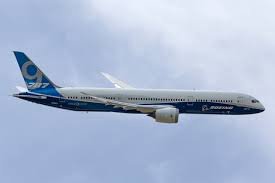
- 787 Dreamliner: Steady at 8 per month, targeting 10 per month by the end of 2026. The widebody market, especially for international travel, is hot, and the 787 is the cash cow they need to pay down that mountain of debt.
- Free Cash Flow (FCF): This is the stat I'm glued to. Management guided to $1-$3 billion in FCF for 2026. That's not a lot for a company this size, but it's the bridge to the promised land of $10 billion annually by 2028.
The market is forward-looking. It's already pricing in that 2028 FCF number. One leading Bay Street analyst, for instance, bases their $275 target on a 22.5x multiple of 2028 cash flow, which is rich relative to history, but justified if you believe the production targets are real.
Catalysts on the Horizon
So what gets Boeing stock from the current ~$230 range back toward those $275+ targets? It's not one thing. It's a series of small, boring victories. Enterprise Risk Management: Industry Experiences teaches us that the biggest risks aren't the ones you see coming; they're the ones hiding in the supply chain. For Boeing, the next big hurdles are the certification of the MAX 7 and MAX 10, expected in the second half of 2026. If they get those done without another regulatory firestorm, the path to 52 per month clears right up.
There's also the commercial momentum. Look at the recent order book: a surprise win with Delta for the 787-10, massive orders from Vietnamese carriers like Vietjet and Sun PhuQuoc Airways, and the potential for an $80 billion framework agreement with India. Airlines are starved for planes. They can't wait another five years for Airbus delivery slots. If Boeing can just deliver on time, the demand is there.
The Indian Angle
For investors here in India, watching Boeing's performance comes with its own set of nuances. The stock is up internationally, but what really matters is the direct impact on the Indian aviation story. The potential $80 billion framework agreement isn't just a number—it's a game-changer for how Indian carriers will expand their fleets over the next decade. With our aviation sector growing at one of the fastest paces globally, every Boeing delivery slot is precious.
The rupee-dollar dynamic always plays a role, but more crucially, Indian suppliers are increasingly becoming vital links in Boeing's global supply chain. When Boeing talks about process improvements and safety stock, it directly impacts engineering and manufacturing shops in Bangalore and Hyderabad. A stable, predictable Boeing is excellent news for the entire Indian aerospace ecosystem, which is poised to take on more complex work packages.
And let's not forget the airlines. Akasa Air just took delivery of more 737 MAX aircraft, and Air India is on a historic expansion spree with both narrowbody and widebody Boeings. For Indian carriers, the stability of the MAX program and the availability of the 787 are existential. Every month Boeing delivers on schedule is a month Indian airlines can retire older, less efficient planes, add new routes—like those direct flights to small US cities we've been hearing about—and truly optimize their networks. It's not just about Boeing's stock; it's about the hundreds of planes that will connect India to the world.
Look, there's a reason the fringe corners of the internet are obsessed with wild theories. It's easier to believe in a shadowy plot than to accept that an industrial giant can fumble the ball this badly through sheer incompetence. But the reality is far less sexy and far more corporate: Boeing is a manufacturing company that forgot how to manufacture.
The story of 2026 isn't about conspiracy. It's about execution. It's about a multi-year grind to get production lines humming at a rate that justifies the stock price. After a decade of self-inflicted wounds, Boeing is finally lined up at the starting line. The light is about to turn green. For Indian investors and the Indian aviation sector, it's finally time to buckle up for what could be a smooth flight ahead.