All the Empty Rooms: The Oscar-Nominated Documentary That Has Left India Reflecting on Loss
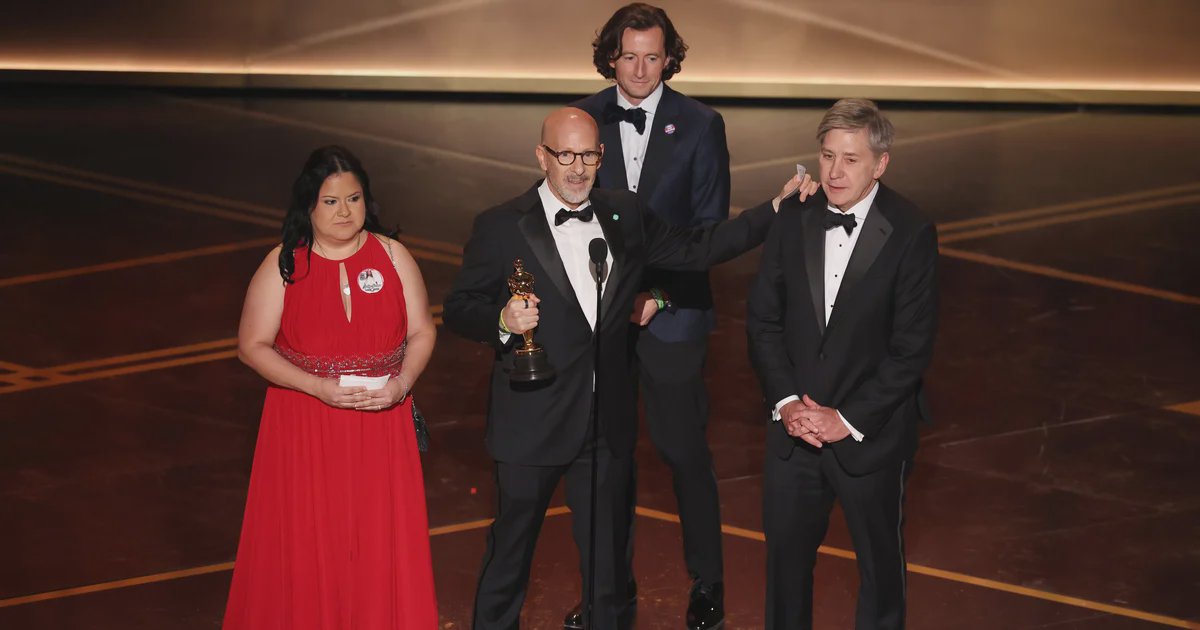
There are moments during the Academy Awards when the glitz and glamour of Hollywood fade, and the stark, unfiltered reality of the world takes centre stage. That moment arrived this year when Kimberly Mata-Rubio walked onto the Dolby Theatre stage. She wasn't there to accept a golden statuette. She was there to speak for her daughter, Amerie Jo Garza, and for every other child whose life was taken inside a classroom in Uvalde, Texas. She was there to talk about All the Empty Rooms.
The Documentary That Held the Room in Silence
All the Empty Rooms isn't just another true-crime documentary. It’s a quiet, heart-wrenching journey through the homes and hearts of families shattered by the Robb Elementary shooting. Director Alejandra Márquez Abella chose not to focus on the perpetrator or the political crossfire. Instead, the camera lingers on the things left behind: a bed whose sheets will never be ruffled by small feet, a backpack hanging on a hook, a crayon drawing still stuck to the fridge. These are the titular empty rooms—physical spaces that have become mausoleums of memory.
Watching it in a theatre in Mumbai last week, you could hear a pin drop. The grief on screen isn't distinctly American; it's universal. It’s the same ache any Indian parent would feel looking at a child’s photograph. And that’s why the film has resonated so deeply here. We might be thousands of miles from Uvalde, but we understand the concept of a home that suddenly feels one voice short.
A Mother’s Words at the Oscars
Mata-Rubio, whose daughter Amerie was just ten years old, didn’t need a script. Her voice, steady but thick with emotion, reminded everyone why the film exists. “They tell us time heals,” she said. “But time just makes the rooms quieter.” She spoke of walking past Amerie’s room every morning, the door still slightly ajar, the way she left it. In that moment, the audience wasn't looking at a celebrity or a politician; they were looking at a mother, plain and simple. And they rose to their feet.
This documentary, now streaming on several platforms and generating serious Oscar buzz, forces a conversation we often avoid. It’s not about gun reform, though that’s an inescapable shadow. It’s about the aftermath. It’s about the silence that fills a house when the laughter stops.
Echoes in Literature
Perhaps that’s why the title has struck such a chord. It feels lifted from a novel—one of those psychological thrillers or deeply felt family dramas you can’t put down. If you’ve been moved by All the Empty Rooms, you might find yourself drawn to the same kind of emotionally layered storytelling found in books like The Loving Husband: A Novel, which explores the secrets and silences that can exist even in an occupied home. Or The House of Last Resort: A Novel, where the idea of a final refuge turns claustrophobic and menacing. There’s a kinship, too, with the creeping dread of Silence for the Dead, a story set in a remote asylum where the past refuses to stay buried. And for a more meditative take, Rooms of Their Own: Where Great Writers Write reminds us that the spaces we inhabit—whether a writing shed or a child's bedroom—hold the ghosts of our creative and emotional lives.
These stories, whether fact or fiction, all circle the same truth: that the rooms we live in are never just walls and floors. They hold our joys, our fears, and ultimately, our absences.
Why It Hits Home in India
There’s a certain Indian resonance here too. We’re a nation that knows about children leaving home for education or jobs in another city, about parents adapting to the quiet of an "empty nest." Those are empty rooms of a different kind, but the feeling of absence is something we see in countless films and hear in old songs. It’s a feeling woven into our shared experience.
- It’s a cultural touchstone: The documentary has sparked conversations in Indian book clubs and coffee shops, often paired with novels that explore loss and family.
- It’s a parent's deepest fear: For Indian parents, the film is almost too hard to watch, yet impossible to ignore—a stark reminder of what no parent should ever have to face.
- It’s a testament to memory: Above all, it shows that love doesn’t end when a life does—it just finds a new way to exist, often in the quiet corners of an empty room.
As the Oscar night faded and the after-parties began, Kimberly Mata-Rubio flew back to Texas. She went home to that room, to the door left ajar. All the Empty Rooms might not win every trophy, but it has already done something more important: it has made sure those rooms are filled, just for a moment, with the light of our collective attention. And that’s a win no envelope can contain.