Cyprus back in the headlines: Why the small Mediterranean island is now at the heart of Middle East tensions
Over the weekend, there was no need to guess what the world would be talking about this time. Iran's missile strikes on Bahrain and Iraq prompted the United Kingdom to immediately announce that it is preparing the legal grounds for strikes against Tehran. And this is precisely where you should look on the map for a small but strategically volatile point – Cyprus.
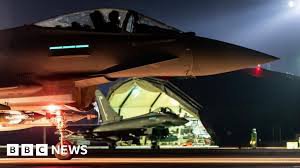
British bases – an outpost on Europe's edge
Cyprus's geography is uncompromising: it lies just a stone's throw from Syria, Lebanon, and Turkey. But the crucial factor is Cyprus's geography as part of Britain's military infrastructure. The island hosts two sovereign base areas, Akrotiri and Dhekelia, which are effectively British territory in the middle of the Mediterranean. These bases have launched operations in Iraq, Syria, and Libya – and now they are on standby once again.
Lawyers in London are undoubtedly fine-tuning the legal clauses that would allow the UK to respond to Iran's actions. And guess where the first Tornados or F-35s would take off from if the decision to strike is made? Exactly from Cyprus. The small island thus finds itself an unwilling bystander, drawn into the game of superpowers. And the island's own internal tension does little to ease the situation.
Northern Cyprus and the reality of a divided island
Discussing Northern Cyprus means stepping into a minefield. Since 1974, the island has been partitioned: the internationally recognised Republic of Cyprus in the south, and the Turkish Republic of Northern Cyprus, which relies on Turkey and is recognised by no other nation, in the north. This division isn't just political; it's visible in daily life, the economy, and even in sports. The crossing points in Nicosia are windows into parallel realities.
The animosity between Greek and Turkish Cypriots has eased over the decades, but a solution remains elusive. Now, turmoil in the Middle East could have direct repercussions on the island: if the British bases become targets, the entire eastern Mediterranean could ignite. And then, Northern Cyprus would inevitably become part of the equation – regardless of Ankara's stance.
Sport unites – even if just for a moment
Amidst the political turmoil, it's refreshing to see that sport still provides a common language. In recent years, the Cyprus national football team has shown it's no longer just a bystander in qualifiers. Players like Grigoris Kastanos or Pieros Sotiriou have brought credibility to the island. And while there's no official joint team representing both north and south, many young people dream of a united representation – a dream that, if realised, would be a more powerful gesture of peace than any diplomatic document.
Meanwhile, the Cyprus national basketball team has begun to make its mark. Despite a small population base, the island has produced skilled players who have shone in the Greek or Turkish leagues. When the national team plays at the arena in Nicosia, the stands are filled with fans in blue and white who forget about politics – at least for a couple of hours.
How does this affect Finland and investors?
For Finns, Cyprus is primarily known for its sun, beaches, and ever-present tourism. But the island is also a significant destination for investors: the property market, energy projects, and corporate taxation attract European capital here. Now, however, a question arises: how great a risk does the eastern Mediterranean tension pose to business?
For now, the situation is under control. The British bases are not civilian targets, and the Republic of Cyprus has not been drawn into military action. If the conflict escalates, the island's role as a logistical hub would be further emphasised – and that could also bring new opportunities. Energy companies continue to drill for gas beneath the seabed, and Finnish engineers are part of that chain. On the other hand, uncertainty might creep into travellers' minds: is it safe to holiday in a country where fighter jets train in its airspace?
What does the future hold?
Cyprus is accustomed to living under pressure. Cyprus's geography is both its curse and its blessing: the island is a gateway to three continents, but at the same time, it has always been a pawn in the games of superpowers. Now, as relations between Iran and the West become increasingly strained, Cyprus finds itself back in the headlines – not as a holiday destination, but as a strategic base. We Finns are watching the situation closely, because events here could ripple across Europe's security and energy markets.
In sport, however, there is still hope. On the field, they don't ask about nationality or religion – only the ball and skill matter. Perhaps one day, both the Cyprus national football team and the Cyprus national basketball team can represent a united island. That would be a victory no missile could achieve.
The Middle East is once again ablaze, and Cyprus stands on the front line. How this affects us will soon become clear.
Key takeaways:
- Cyprus's British military bases are pivotal if the West strikes Iran.
- The status of Northern Cyprus remains unresolved, and a crisis could exacerbate the division.
- Sport, particularly football and basketball, unites Cypriots across the divide.
- For Finnish investors and tourists, Cyprus remains attractive, but the risks are worth acknowledging.