Paul Seixas: The phenomenon shaking the very foundations of world cycling
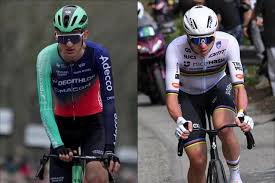
There are moments in a follower's life where you have to pinch yourself to make sure you're not dreaming. This weekend, on the roads of the Ardèche, I experienced one of those moments. One of those times where you think: "I'm witnessing the first steps of a legend in the making." This lad is Paul Seixas. And what he achieved at the Faun Ardèche Classic defies belief.
This wasn't just a victory; it was a declaration of war on the international peloton. At an age where most kids are still finding their feet, Paul Seixas absolutely detonated a WorldTour race by pulling off the very same move that made Tadej Pogačar a legend on this same tarmac a few years ago. The circle is complete, and it's a terrifying prospect for the competition.
The shadow of Hinault and the spectre of Pogačar
The comparison with Tadej Pogačar, I know, is a bold one. Yet, it's unavoidable. On that famous climb where the Slovenian laid down his marker during the European Championships, Paul Seixas not only repeated the feat, but built his triumph upon it. The attack was clinical, the pace infernal, and the look in the eyes of the other favourites, dazed. You don't dominate a classic like that without an engine out of the ordinary.
But what really struck me, and I choose my words carefully, was the reaction of the old guard. Laurent Pineau, who isn't one to get carried away by a flash in the pan, uttered a phrase that speaks volumes about Paul Seixas: "Not since Bernard Hinault has a Frenchman dominated like him." Just let that sink in for a second. Since the Badger. That's the kind of parallel that isn't drawn lightly in the close-knit world of French cycling. Pineau sees in him that certain something, that arrogance, that racecraft, and that raw power that were the hallmark of the very greatest.
A talent cut from a different cloth
So, where does this phenomenon come from? The story of Paul Seixas is also one of an exceptional family background. His mother recently spoke of his roots, that mix which often forges champions, that heritage which gives him that grit and that coolness under effort. You sense a disarming maturity in him. He doesn't just pedal; he composes. He doesn't endure; he anticipates. He's a strategist in an athlete's body, and that's what makes him so special.
If I were to sum up his potential in a few points, I would highlight:
- Rare explosiveness: capable of making the difference on a ramp of just a few hundred metres.
- Tactical intelligence: he reads the race as if he were 30 years old with ten Tours de France under his belt.
- An iron will: that ability not to doubt, to go for it when others hesitate.
The future of French cycling has a name
For seasoned observers, the name Paul Seixas wasn't unknown. But this demonstration in the Ardèche propels him into another dimension. This is no longer about a "young hopeful," but a potential immediate winner. The top WorldTour teams will fight tooth and nail to secure his services, and team managers will have to build their squads around him.
From a purely commercial standpoint, and this is where my analyst's eye meets the passion of a fan, the emergence of such talent is a godsend. French cycling has been searching for its new messiah since the departure of Thibaut Pinot. With Paul Seixas, it may well have found his successor, but in a 2.0 version. More powerful, more complete, more dominant. Sponsors, media, the general public... everyone will want a piece of this phenomenon. His image, his story, his style... everything is tailor-made for the top level, including the media spotlight.
So yes, enormous pressure will be heaped upon him. He'll be compared, analysed, and scrutinised. But after what I witnessed in the Ardèche, one thing is certain: this kid has the shoulders to carry it. French cycling may finally have its diamond in the rough. And this one has the cut of a gem.