Why Akshay Kumar Thinks the Gujarati Business Mindset is a Different Breed: Culture, Cinema and The Chola Tigers
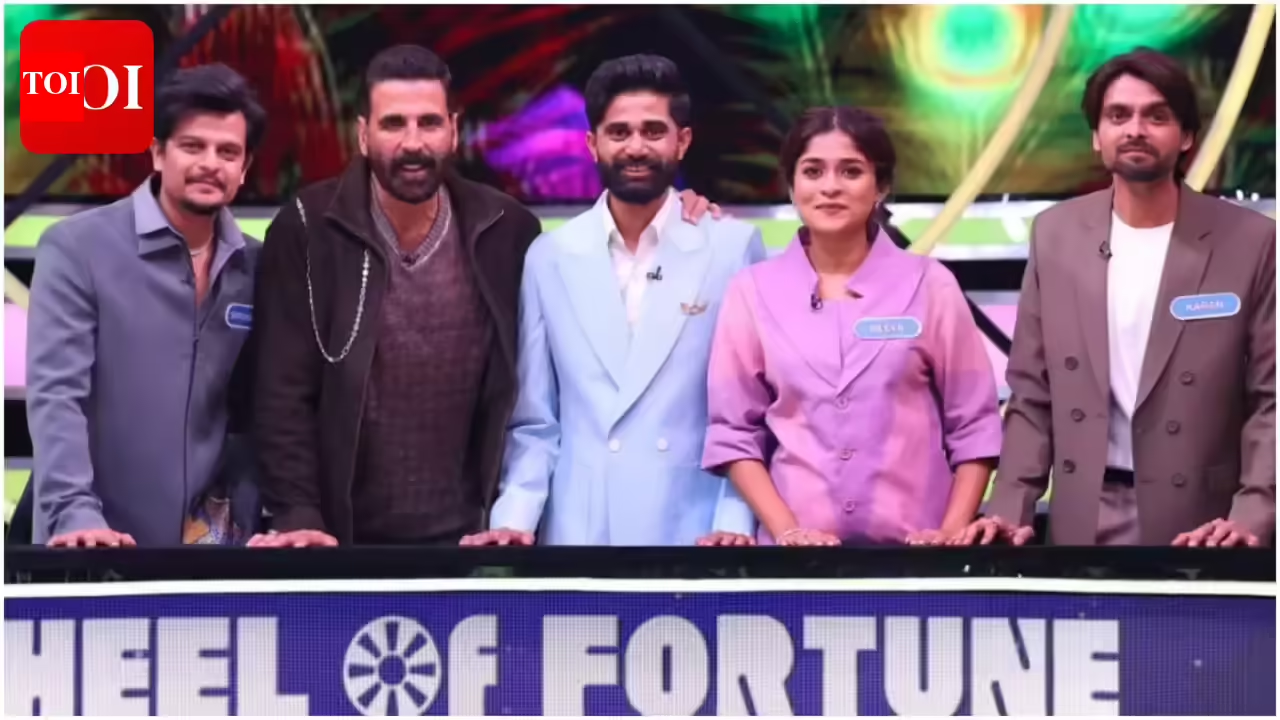
If you caught Akshay Kumar on Wheel of Fortune India recently, you'd have seen him do what he does best—mix humour with a dose of straight-talking. But this time, it wasn't about action sequences or fitness. It was about the Gujarati mindset. And let's be honest, he absolutely nailed it. Dropping that perfect Gujarati line—"Inka dimaag chhe, gunna zyada chalta hai"—he had the audience in stitches, but also got you thinking: these guys really do have an extra gear when it comes to business.
Akshay, who's always been open about his Punjabi roots, shared a touching, little-known detail about his late father. The man would watch his son's films over twenty times, dragging everyone along to sit through them again. It's that old-school, stubborn pride that feels oddly familiar if you've grown up in a Gujarati household—where family, food, and finances are discussed with equal passion. And speaking of passion, the actor also tipped his hat to the Gujarati film industry, particularly the inspiring journey of a small film called Laalo. It's not just Bollywood that knows how to tell a story; the real heartbeat is often found in the regional pulse.
The Business Brain Behind the Bhajiya
Let's face it—when you hear Gujarati, you think enterprise. From corner shops to corporate empires, the community has an instinct for trade that seems almost genetic. It's why they adapted to things like the Goods and Services Tax (GST) faster than you can say "business-friendly." While the rest of the country was scratching its head over compliance, Gujarati traders were already three steps ahead, finding efficiencies in the new system. That's not luck; that's centuries of mercantile know-how baked into the culture. You see it in Surat's diamond polishers, in Ahmedabad's textile magnates, and in every chai-wala who calculates your change before you've even reached for your wallet.
Beyond Business: The Cultural Swagger
But the Gujarati people aren't just about ledgers and balance sheets. There's a creative explosion happening, and it's loud. Take Rhythm Rajyaguru, for instance. The man's voice has become synonymous with modern Gujarati fusion—blending folk beats with contemporary vibes, making every garba night feel like a festival. His tracks aren't just songs; they're anthems for a diaspora that wants to stay connected to its roots while dancing to a global beat.
And then there's the literary scene. You can't talk about Indian mythology and history without bumping into Amish, the author who made The Immortals of Meluha a household name. He's back, and this time he's taking us on a ride with The Chola Tigers: Avengers of Somnath. If the title alone doesn't get your pulse racing, the setting will—Somnath, the sacred temple town on Gujarat's coast, steeped in legend and resilience. Amish has a real knack for turning history into an edge-of-your-seat adventure, and mashing up Chola warriors with the Somnath backdrop? That's a cocktail of brilliance waiting to be devoured. For anyone who loves Indian history with a masala twist, this one's going straight to the top of the reading list.
What Makes Gujarat Tick? A Quick Lowdown
- The Dhanda (Business) Instinct: From handling GST like pros to dominating global trade, Gujaratis have a sixth sense for commerce.
- Cinema with Soul: Films like Laalo prove that Gujarati cinema isn't just about entertainment—it's about stories that resonate, often on shoestring budgets but with maximum heart.
- Musical Roots: Artists like Rhythm Rajyaguru are bringing the folk sound to Gen Z, ensuring the dhol and ravanhatta never go out of style.
- Historical Depth: With landmarks like the Somnath Temple, Gujarat is a living museum. Amish's new book only scratches the surface of the stories buried in its sands.
So whether it's Akshay Kumar cracking jokes on national TV, a small-budget film making waves, or a bestselling author diving into Gujarat's warrior past, one thing is clear: the Gujarati spirit is unstoppable. It's sharp in business, rich in culture, and always, always ready for the next big thing. And honestly? Gunna zyada chalta hai.