Avalanche in Norway: Why an Avalanche Airbag Could Save Your Life
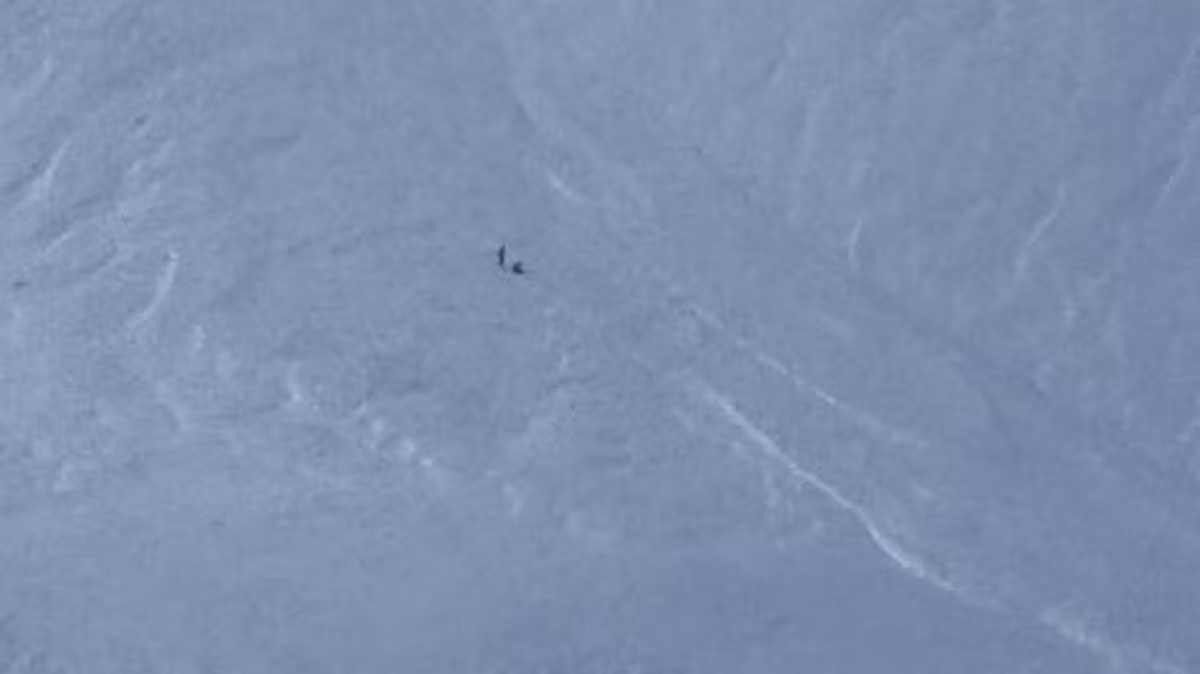
Things are popping off in the mountains these days. Over the past week, we've seen several reports of avalanches in Telemark, and unfortunately, people have been caught. On Gaustatoppen, a large slide ran, dragging one person over 100 metres. It's a gut-wrenching scene that makes even an old-timer like me feel the gravity of it.
The Gaustatoppen Slide: A Close-Up Look at the Power
The incident on Gaustatoppen is a brutal reminder. I've hiked those slopes myself, and I know how fast the weather can turn. The person who got caught there slid over 100 metres. Luckily, they were okay this time, but there are so many "what ifs" in a scenario like that. What if you don't have the right gear. What if you're alone. What if the burial is too deep. That's when an avalanche airbag and avalanche probe go from being "nice to have" to the thin line between life and death.
Why Telemark Is a Hotspot Right Now
It's no coincidence that reports of multiple avalanches in Vestfold and Telemark are coming in fast. Wind and fresh snow have created unstable slabs. I've talked to local mountain guides, and they all say the same thing: the danger is imminent on popular hiking routes. It's not just on big, spectacular peaks like Mount Everest that avalanches happen. Right here at home, we have our own fatalities every single year, even if they don't make international headlines. We only need to remember the dark day in 2014 on Mount Everest, where a massive avalanche killed 16 Sherpas. It happened in the Khumbu Icefall, one of the most dangerous places in the world. That tragedy reminded the entire climbing community of one thing: snow doesn't care about your résumé.
- Check varsom.no before you head out the door. Avalanche danger is regional, and it changes fast.
- Avalanche airbag – invest in one. Inflation can keep you floating on top of the debris instead of getting buried.
- Avalanche probe and shovel – they're useless in your pack if you haven't practised with them.
- Don't go alone. Most survivors are rescued by their own party in the first 15 minutes.
The Small Piece of Gear That Makes a Huge Difference
Let's get specific. An avalanche probe is a collapsible pole. After an avalanche, all you see is the surface. Victims are hidden under a metre of hard-packed snow. You poke the probe into the snow – over and over, crisscrossing – until you feel that soft hit against a back or a boot. It's a raw, basic task, but in the panic right after a slide, the probe is worth its weight in gold. Together with the avalanche airbag that helps keep you from ending up down there in the first place, they form a complete system.
The Stories We Don't Forget
I still remember the stories from Telemark where rescue crews spent hours searching. With every passing minute, the chance of finding someone alive drops. That's why it's so damn important that we take this seriously. It's not about being scared; it's about being prepared. The mountains are beautiful in winter, but they're also a ruthless boss. Once they decide to slide, there's no point arguing.
So before you pack your bag for the weekend: Check your gear. Inflate your avalanche airbag at home in the living room to make sure it works. Practise assembling your probe with your eyes closed. That might sound extreme, but it's in those dark, cold seconds after an avalanche that you'll need to do it. That's way too late to read the manual. Look out for each other out there, folks.