Delta Air Lines: From Atlanta Turbulence to a Legacy of Safety
If you’ve spent any time flying through Hartsfield-Jackson Atlanta International Airport, you know it’s a beast of its own. It’s the busiest airport in the world, and for Delta Air Lines, it’s the heart of the operation. So when you hear about something happening on the tarmac or in the air involving Delta, the chatter here in Georgia gets loud fast. We just saw that over the last few days, with a couple of incidents that had everyone’s attention. A flight heading to Tallahassee had to turn back, and another one had to abort takeoff due to an engine issue. Then there was the Tampa-bound flight that had a late-night engine scare right here at the hub.
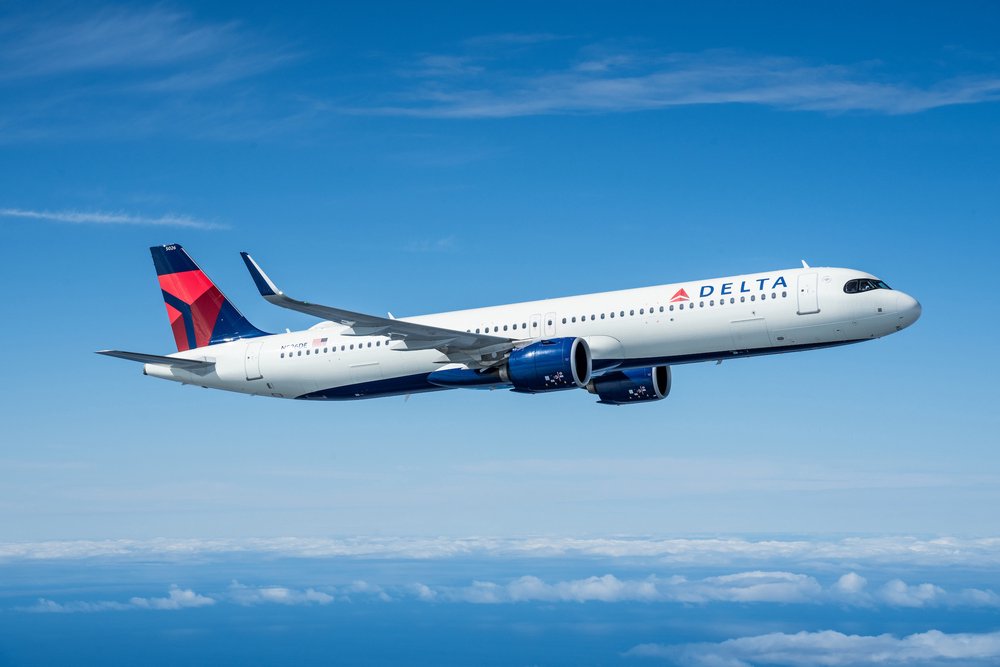
Look, any time a plane turns back to the gate or makes an emergency landing, it rattles people. I get it. But having covered aviation for years, and having lived in the shadow of this airport my whole life, I’ll tell you what I see: a system that’s learned some hard lessons. When Delta Flight DL1182 made that urgent diversion back to Atlanta, the system worked. They caught an issue, didn’t push it, and got everyone back on the ground safe. That’s the standard now. But it wasn’t always this way. To really understand the Delta of today, you have to respect the ghosts of its past.
The Wake-Up Calls: Flights 191, 1141, and Comair 5191
We don’t talk about Delta Air Lines Flight 191 lightly around here. August 2, 1985. That Lockheed L-1011 coming in from Fort Lauderdale got caught in a microburst on final approach to Dallas/Fort Worth. It was a sudden, violent downdraft that just slammed the aircraft into the ground. Over 130 people lost their lives. For anyone in the industry back then, it changed everything. It forced the FAA and airlines to fundamentally rethink how we train pilots to handle wind shear. It wasn’t just a crash; it was a catalyst for technology—onboard predictive wind shear detection systems became mandatory because of what happened that day.
Then, just three years later, Delta Air Lines Flight 1141 happened. August 31, 1988. A 727 bound for Salt Lake City crashed during takeoff from Dallas/Fort Worth. Fourteen people died, and the cause? A failure in procedure. The crew forgot to set the flaps and slats for takeoff, and the cockpit warning system didn’t catch it in time. It was a devastating reminder that checklists aren’t just pieces of paper—they’re the difference between life and death. That incident led to a complete overhaul of cockpit discipline and the adoption of the “sterile cockpit” rule, which is gospel now. You don’t chat about anything but flying below 10,000 feet.
Fast forward to August 27, 2006. Comair Flight 5191. This one hits close to home because it was a Delta Connection flight—Comair—trying to take off from the wrong runway in Lexington, Kentucky. The pilots attempted to take off on a runway that was too short. Forty-nine of the 50 people on board died. It was a tragic loss that underscored the importance of airport surface awareness and crew coordination. If you look at the safety protocols in place today—the advanced ground radar, the strict procedures for runway verification—you’re looking at the legacy of that flight.
Three Hard Lessons That Built Today’s Safety Culture
If you want to understand why a tire issue in Atlanta triggers a full stop rather than a shrug, look at what these accidents carved into the industry’s DNA:
- Wind shear isn’t a theory—it’s a killer. Flight 191 forced the installation of predictive wind shear detection in every cockpit. Today, pilots see the danger before it hits.
- Checklists save lives when egos don’t get in the way. Flight 1141 taught the industry that cockpit hierarchy kills. Now, the co-pilot has the authority—and the obligation—to stop a takeoff if something’s wrong.
- Runway confusion is unacceptable. Comair 5191 led to surface movement radars and standardized taxi procedures that make taking the wrong runway nearly impossible.
Reading Between the Lines of a Diversion
So when I hear about a flight turning back to Atlanta because of a tire issue or an engine scare, I don’t see a failure. I see the system humming. I see the culture that was forged in the crucible of those tragedies.
The reality is, Delta moves an astronomical number of people. Just at Atlanta alone, we’re talking hundreds of thousands of passengers a day. A mechanical issue is statistically inevitable when you have that many moving parts. The difference now is how the organization responds to it. There’s a humility in the operation now that wasn’t always there. They know the history. They live it.
For the average traveler, hearing about a "diversion" or an "emergency landing" is scary. But if you’re a high-value traveler—someone who lives in the air, someone who chooses a carrier based on more than just the price of a ticket—you need to look at the response. You need to look at the track record.
Delta has positioned itself as a premium carrier in the U.S., and part of that premium is safety culture. They don’t cut corners. When I saw those Atlanta incidents pop up in the chatter this week, I didn’t think, "Oh no, what’s going on?" I thought, "Good. They caught it."
We can’t erase the past. We can’t forget the names—Flight 191, Flight 1141, Comair 5191. They are part of the lore of aviation and the specific DNA of Delta Air Lines. But what we can do is learn from them. Every time a plane turns back to the gate in Atlanta without incident, it’s a testament to those lessons finally being embedded into the culture. It’s a boring outcome—and in the airline business, boring is the highest compliment you can pay.