Carlos Westendorp Dies: The Diplomat Who Shaped Spain’s History and Pacified the Balkans
Madrid awoke today to news that marks the end of an era in Spanish diplomacy. Carlos Westendorp y Cabeza, the man who brought Spain’s influence to the world’s most volatile corners, has passed away at 89. He was no conventional politician, not one chasing an easy headline. He was a public servant of the old school, a career diplomat through and through who understood that the best foreign policy is forged with patience as a shield and words as a sword.
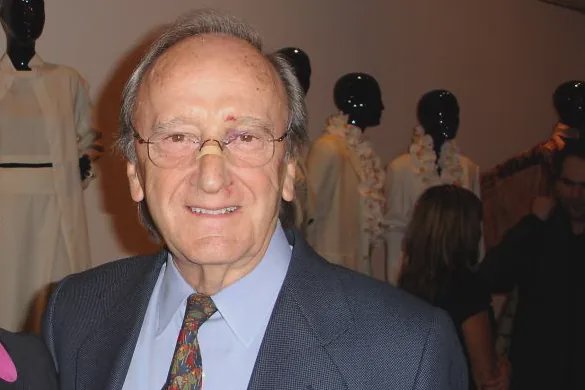
To speak of Carlos Westendorp is to speak of the Spanish Transition in capital letters, but also of those moments when Spain stopped staring at its own navel and stepped onto the global geopolitical stage. If there’s a name that resonates strongly in NATO archives and European foreign ministries, it’s his. For many Spaniards, his name might be tied to his tenure as Foreign Minister under Felipe González. But for those of us who followed his international career closely, Westendorp was much more: he was the "architect of peace" in the Balkans, the man they called when the war was at its peak and no one knew how to stop it.
A Basque with a Diplomatic Pedigree
Born in Madrid but with deep roots in Bilbao, Carlos Westendorp belonged to that lineage of civil servants who turned a diplomatic career into a way of life. Joining the Ministry of Foreign Affairs in 1966 marked the beginning of a record of service that seems nearly impossible to match today. He held key posts in Paris, at the Spanish mission to the United Nations, and later in Bonn, where he helped shape relations with a reunifying Germany. But his true trial by fire, the moment that secured his place in the history books, came when the world was ablaze.
- High Representative for Bosnia (1997-1999): He succeeded Sweden’s Carl Bildt with an impossible mission: enforcing the Dayton Accords. While world powers debated, Westendorp acted. From imposing national symbols to restructuring the local economy, his steady hand prevented the fragile country from plunging back into ethnic hell.
- Foreign Minister (1995-1996): Just before his Balkan assignment, he held the portfolio at a critical time. He managed Spain’s integration into NATO’s military structure, a pivotal step that defined defense policy for decades to come.
- Ambassador to Russia (2004-2007): During Vladimir Putin’s first term, he represented Spanish interests in Moscow, demonstrating a versatility few diplomats can claim.
The Legacy of Strategic Patience
What made Carlos Westendorp y Cabeza special wasn’t just his impressive résumé, but his approach to the craft. In an era ruled by immediacy and political noise, he operated in the silences. Anecdotes from those who worked with him in Sarajevo tell of hours spent in meetings with local leaders who hurled insults at each other, waiting for the precise moment to make a proposal. He wasn’t a hawk, nor was he a dove. He was a strategist. He knew a mediator’s credibility is built on tenths of a second, and that once lost, it can never be regained.
Today, the diplomatic community recalls this aspect of him, calling him a "patient politician and a key figure in diplomatic dialogue." And that patience wasn’t passivity; it was calculation. While others called for large-scale military interventions, Westendorp focused on mastering the details. From his office in Brussels first, and later from Sarajevo, he designed the institutional framework that, for all its flaws, allows Bosnia-Herzegovina to exist as a state today.
A Spain That Rose to the Occasion
As highlighted in the chronicles, Carlos Westendorp represented that moment when democratic Spain stopped being a mere recipient of international decisions and became a relevant player. His death leaves us with the feeling of being orphaned by a generation that understood public service as a long-term commitment, not a springboard for elections. In a world where chancellors are measured by likes, Westendorp was measured by results on the ground. And on that field, he was always one of those who made a difference.
Rest in peace, a man who knew how to be where Spain needed to be. His legacy is written not only in history books, but also in the peace that millions in the Balkans enjoy today. That is his finest monument.