Carlos García-Galán: The Spanish Engineer Tasked with Commanding NASA’s First Permanent Lunar Base
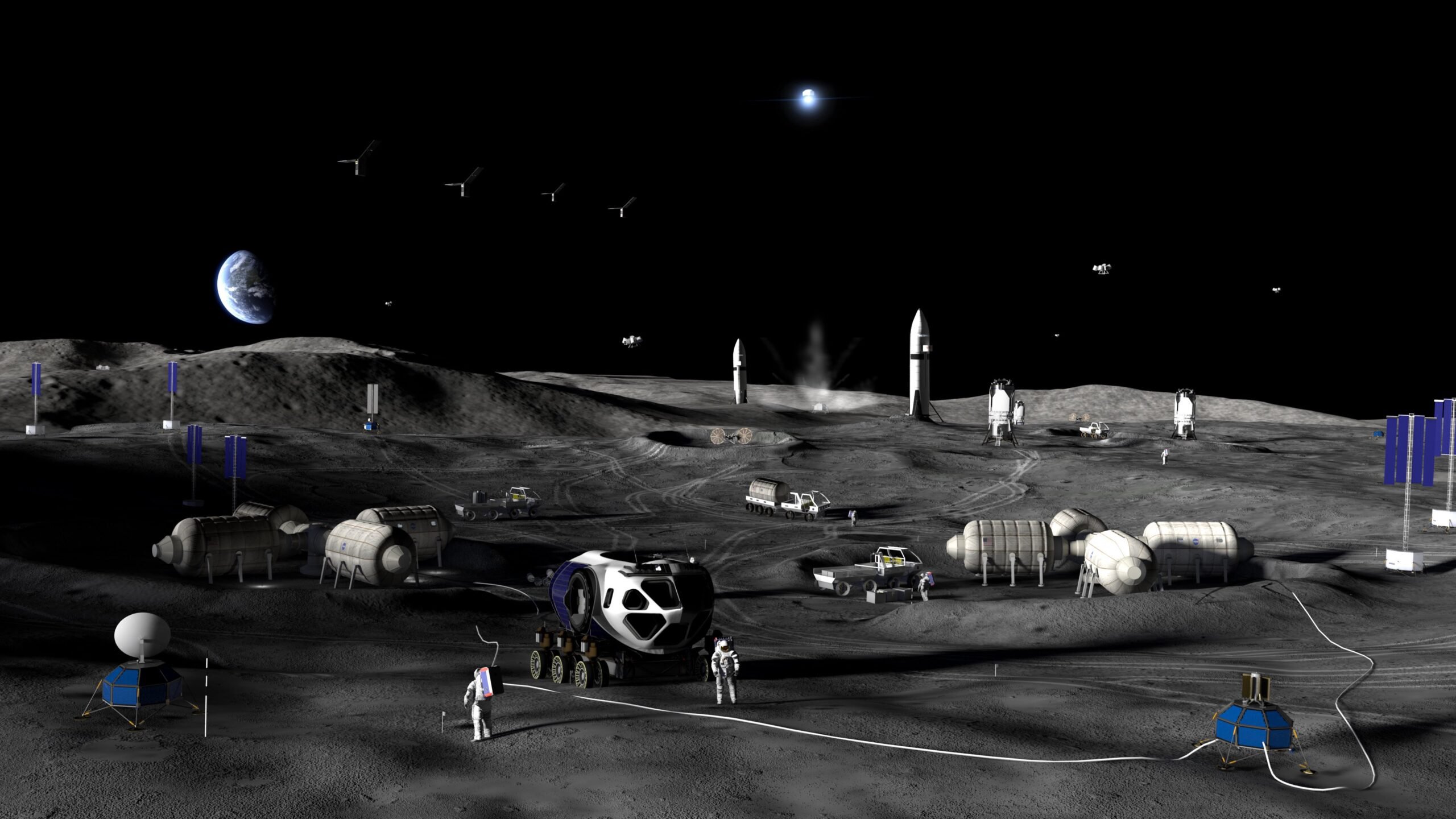
This is no longer science fiction, nor a contest to see who has the biggest rocket. In recent hours, the industry has been hit by a seismic shift that has changed the rules of the space exploration game. And it comes with a Spanish accent. The name echoing through every office at Cape Canaveral, Houston, and, of course, Madrid, is Carlos García-Galán. This engineer, a seasoned veteran within the agency, has just been appointed director of what will be humanity's first permanent lunar base. Yes, you read that right. A Spaniard is now in charge of laying the next brick beyond Earth.
The news has landed like a bombshell in some circles—not because of the appointment itself, but because of its strategic implications. While many of us were tracking the Gateway station, that outpost initially planned to orbit our satellite, the decision-makers have decided to make a hard pivot. Forget the idea of a mini-ISS circling the Moon. The new roadmap, for which García-Galán will be ultimately responsible, is aimed squarely at the surface. We're going to build on lunar dust, not float nearby.
This change of plans is massive. Scrapping Gateway as the central hub is no minor decision. It speaks to a pragmatic urgency: if we're going back to stay, we need to have our feet on solid ground. And this is where Carlos Garcia Galan's profile comes in. He's not a desk-bound bureaucrat; he's a guy who has spent decades solving engineering problems in hostile environments. His resume, which includes everything from life support systems to module integration for the Artemis program, makes him the key player they needed to ensure this project doesn't remain just a conceptual drawing.
Goodbye Orbit, Hello Surface
The decision, confirmed this week by highly reliable internal sources, gives us a much clearer picture. We're no longer talking about "going camping" on the Moon. We're talking about building infrastructure designed to last for decades. According to the new plans, the base won't just be a place for astronauts to sleep; it will be a full-fledged operations center. And here, the experience of Carlos García-Galan is crucial. Rumors suggest his approach has been exactly that: setting aside the logistical complexities of maintaining an orbital station—with all the supply and radiation issues that entails—to focus all resources on developing underground habitats using lunar regolith itself as a protective shield.
For those of us who have covered this field for years, this is a total paradigm shift. I remember when the Gateway was the goose that laid the golden eggs. Now, with this pivot, efficiency and, above all, long-term vision are being rewarded. The objective is clear: In 2024 the next man and the first woman will set foot on the moon, but what truly matters is what comes after. That date is no longer just about planting a flag; it's the starting gun for construction. And the person orchestrating this logistical symphony is him.
- Radical Simplification: Eliminates the cost overruns and technical complexity of the Gateway, redirecting that budget toward creating interchangeable surface modules.
- Natural Protection: The base will be built utilizing lava tubes and craters for protection against cosmic radiation and micro-impacts. An idea that has been maturing in the minds of engineers like García-Galán for years.
- International Collaboration: Even though the leadership is American (with a Spanish stamp), this opens the door for other agencies to have significant stakes in the habitation modules, not just cargo supply.
Speaking of European collaboration, it's no coincidence that the name Juan Carlos García-Galán (as he is sometimes referred to in the more technical circles of the old continent) has emerged so forcefully. His dual nationality and his career bridging U.S. flight centers and European operations have given him a unique perspective. He isn't just the smart guy who knows rockets; he's the manager who understands that to build a base on the Moon, you first have to align 20 countries with differing interests.
Dream or Reality?
Many ask me if this is feasible or just political hot air. The answer lies in the track record of Carlos Garcia Galan. This guy hasn't been making noise on social media; he's been in the trenches, overseeing stress tests, validating thermal shields, and ensuring every bolt can withstand the 300-degree temperature swing between lunar day and night. Dreaming of Going to the Moon - Carlos Garcia-Galan isn't just a catchy slogan; it's the story of his professional life. He's been dreaming of this since he was a kid in Madrid, only now he holds the keys to the workshop.
The announcement has been met with surprise but also immense relief within the industry. The private contractors who were gearing up to work on the Gateway now have to reconfigure their prototypes, but most agree that betting on the surface is commercially stronger in the long term. Furthermore, the decision to appoint a figure as technically skilled as García-Galán sends a clear message: the era of empty announcements is over. Now it's time to build, and to build, you need architects, not showmen.
So now you know. The next time you look at the Moon, imagine the blueprints this Spanish engineer is currently unfurling in the space agency's offices. Because when in 2024 the next man and the first woman set foot on the moon, they won't be alone. Back at Mission Control, he'll be there, ensuring that the base that follows has the most solid foundations in history. The space race has only just begun, and for the first time, the person holding the hammer and the tape measure speaks Spanish.