Sky-Gazers Rejoice: 'Blood Moon' Total Lunar Eclipse Dazzles in Dazzling Red
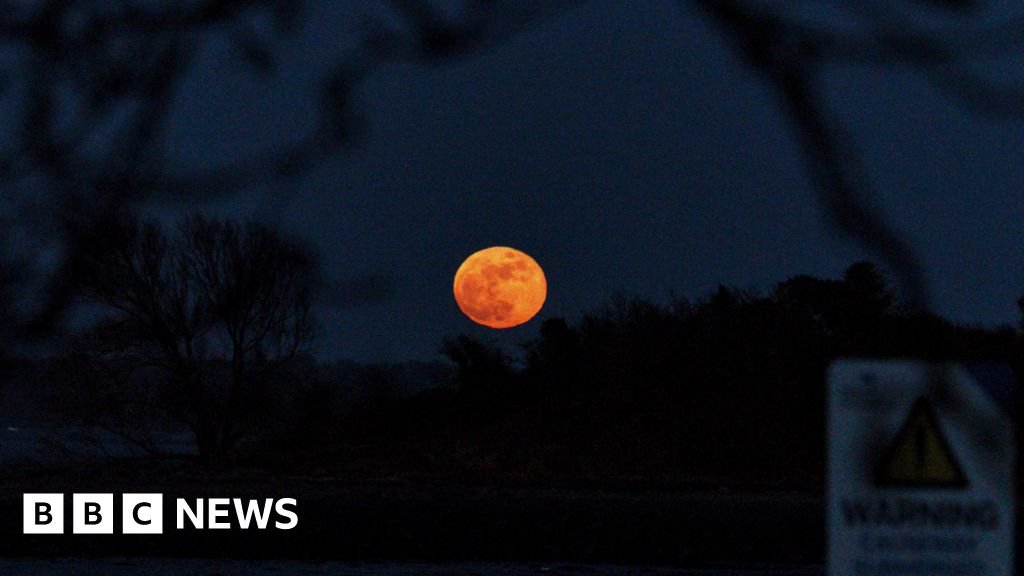
If you caught a glimpse of the sky in the wee hours of this morning, you were in for a real treat. For the first time since 2025, a total lunar eclipse—the kind that earns the dramatic nickname "blood moon"—turned our celestial neighbor into a ghostly, rust-colored sphere. Across the UK, from the south coast of Cornwall to the Shetland Isles, those lucky enough to have clear breaks in the March clouds witnessed a truly mesmerizing sight.
The Science Behind the Crimson Glow
For the uninitiated, the spectacle might look like an omen, but the explanation is beautifully simple. A total lunar eclipse happens when the Sun, Earth, and Moon align perfectly, with our planet sitting squarely in the middle. The Moon doesn't vanish into darkness, though. Instead, it drifts into Earth's shadow—the umbra. But here's where it gets really cool: sunlight filtering through the edges of Earth's atmosphere is bent, or refracted, onto the Moon's surface. Our atmosphere scatters shorter wavelengths of light (blues and violets) more effectively—a phenomenon called Rayleigh scattering—while allowing the longer wavelengths (reds and oranges) to pass straight through. It's the very same reason we get those stunning sunsets and sunrises. That sunset glow is projected onto the Moon, painting it in shades of copper, rust, and deep crimson.
Catching the Moment: A Timeline of Totality
Totality—the period when the Moon was fully immersed in Earth's shadow—lasted for a generous 58 minutes this time around, giving sky-watchers plenty of time to take it all in. The action began just after 2:30 AM GMT as a subtle shading crept across the lunar disk. By 3:50 AM, the 'bite' out of the Moon was unmistakable. Then came the magic: from 5:16 AM to 6:14 AM, the Moon hung there, fully engulfed, glowing like an ember. For those using binoculars or a small telescope, the effect was even more profound, with the three-dimensional curve of the shadow becoming starkly apparent.
Key Moments of the Eclipse
- Penumbral start: 2:32 AM GMT – The Moon began to dim almost imperceptibly.
- Partial eclipse begins: 3:50 AM GMT – A distinct dark 'bite' appeared on the lunar edge.
- Totality (maximum blood moon): 5:16 AM – 6:14 AM GMT – The Moon was fully immersed in Earth's shadow, glowing red.
- Partial eclipse ends: 7:34 AM GMT – The last hint of red faded as the Moon returned to normal.
More Than Just Science: Myths and Moon Lore
You can't have a spectacle like this without a rich tapestry of human storytelling wrapped around it. Long before we understood the geometry of it, a blood-red moon must have seemed apocalyptic. Many ancient cultures viewed a lunar eclipse as a disruption of cosmic order. In some Andean traditions, it was believed a celestial jaguar was attacking the Moon, and people would shake spears and make as much noise as possible to drive the beast away. Ancient Mesopotamians saw it as an assault on their king, so they'd install a substitute ruler until the danger passed. Even today, the term 'blood moon' carries a certain dramatic weight, often woven into modern prophecy and spiritual interpretations.
Yet for all the myths, the reality is no less awe-inspiring. This particular eclipse felt like a masterclass in cosmic mechanics—a quiet, predictable dance that has been going on for billions of years. It connects us not only to the universe but to every human who has ever looked up and wondered at a sky turned red.
What's Next for Night Sky Enthusiasts?
If you missed this one (or you're now hooked), you won't have to wait too long for the next total lunar eclipse visible from the UK. Mark your calendars for the winter of 2028, when another one will grace our night skies. But between now and then, there are always planets, meteor showers, and partial eclipses to keep you looking up. For now, though, let's just appreciate the journey we've just been on—a beautiful loop through science, myth, and the sheer wonder of the cosmos. Tonight, the Moon returns to its familiar silver, but it'll take a few days for the rest of us to come back down to Earth.