The High-Stakes Chess Game of US Justice: From SCOTUS Showdowns to DOJ's Reversals
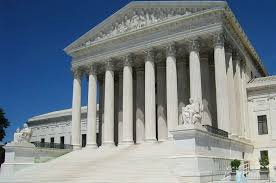
Let's be real, watching the American justice system from this corner of the world can sometimes feel like binge-watching the world's most expensive, high-stakes political drama. The last 72 hours alone have delivered plot twists that would make a Bollywood screenwriter jealous. We're seeing the gears of the US Justice department grind with whiplash-inducing reversals, while the nation's highest court grapples with sentencing guidelines so odd they sound made up.
As someone who's spent decades with one eye glued to court dockets in the Western world, take it from me: what's happening now isn't just academic legal jargon. It's raw, unfiltered power politics colliding head-on with the basic principles of law. And for anyone involved in global business, policy, or just curious about how power really works, this is essential viewing.
The Supreme Court's "Orangutan" Problem
Head over to Washington D.C., and the atmosphere inside the Supreme Court this week was thick with heavy questions. The case? Hunter v. United States. Sounds dry, but the facts are anything but. We're talking about a Texas man, Munson Hunter, who was ordered by a judge to take mental health medication as a condition of his supervised release. He gave up his right to appeal as part of a plea deal—standard practice in nearly 97% of federal cases—but he's challenging this specific, intrusive condition.
The Justices, from Neil Gorsuch to Sonia Sotomayor, were clearly troubled. They weren't just debating Hunter's medication; they were debating the very essence of the plea bargain. The government's lawyer took a hardline stance: a deal is a deal, even if the sentence is clearly illegal or unconstitutional. This is where it got interesting. Justice Gorsuch, not exactly known as a firebrand liberal, posed a hypothetical that should worry anyone who believes in fair play. He basically asked, if a judge let an "orangutan pick a sentence out of a hat," would the defendant have no right to appeal because of the waiver? The government's chilling answer was "yes".
Lisa Blatt, arguing for Hunter, cut through the legal jargon with a line that should hit home in every corporate boardroom and coffee shop in Singapore: "Whatever Elon Musk could get, a criminal defendant should be able to get under contract." She was highlighting the hypocrisy that we provide fairer treatment under contract law for the wealthy than we do for individuals facing the loss of their freedom. Well-informed legal sources have noted that briefs filed in the case warn that without a safety valve, the judiciary's reputation will be seriously damaged.
The DOJ's Political Whiplash: One Step Forward, Two Steps Back
If the Supreme Court represents the slow, deliberate burn of justice, the Department of Justice under Pam Bondi looks like a Formula 1 car with a stuck accelerator—thrilling, but prone to spectacular crashes. Just this week, we saw an administrative U-turn so sudden it left heads spinning from D.C. to Singapore.
The DOJ had apparently agreed to drop its appeals against four major law firms—Perkins Coie, WilmerHale, Susman Godfrey, and Jenner & Block. These firms had been in the crosshairs of executive orders that revoked security clearances and threatened government contracts—moves that federal judges had already struck down as unconstitutional. Peace was in sight. Emails were sent. Agreements were made.
Then, less than 24 hours later, the DOJ reversed course. They withdrew their motion to dismiss. They were back in the fight. Perkins Coie issued a scathing statement, calling it an "unexplained about-face." Susman Godfrey stood firm, vowing to defend "the rule of law—without equivocation".
This isn't just about legal procedure; it's a signal. It tells the market, it tells foreign governments, and it tells us observers that the executive branch's word is now subject to change without notice. For Singaporean companies with federal contracts, or those navigating US regulations, this kind of instability is a real headache. You can't plan for a regulatory environment where the enforcement agency can't decide if it's litigating or settling from one coffee break to the next.
Election Integrity or Federal Overreach?
And then there's the other front of the US Justice offensive: the states. Bondi's DOJ is now suing five more states—Kentucky, New Jersey, Oklahoma, Utah, and West Virginia—demanding access to their voter rolls. The administration cites the Civil Rights Act of 1960, arguing they need the data to root out fraud. The states, including Republican-led Oklahoma, are pushing back on privacy grounds, worried about handing over driver's licence numbers and Social Security data.
This is where the concept of "justice" becomes a political football. Is this a legitimate federal audit, or is it an attempt to centralise control over election data? The courts have already thrown out similar suits in other jurisdictions, calling the DOJ's legal basis "flawed". For a global audience, it reinforces the image of a justice system that is increasingly fractured, with the federal government and states locked in a tug-of-war over fundamental rights.
The Bottom Line: Certainty is the Casualty
So, what's the takeaway for us? Whether it's the Supreme Court pondering the limits of a plea deal in Hunter, or the DOJ's chaos in the Jenner and Block litigation, the underlying current is the same: the erosion of predictability. The US Justice system has always been a beacon for global commerce precisely because of its stability. That beacon is flickering.
For the Singaporean investor, the tech entrepreneur, or the policy wonk, the message is clear. The American legal landscape is becoming a terrain of tactical gambits. You don't just need a lawyer anymore; you need a political analyst. You need to watch not just the rulings, but the reversals. As sources close to the litigation have suggested, if we don't hold the system to a standard that prevents a "miscarriage of justice," we all lose. And in this game, the biggest loser isn't just a defendant in Texas or a law firm in D.C.—it's the very concept of justice itself.
Key Areas of Turmoil in the US Justice System
- SCOTUS (Hunter v. US): Debating if defendants can appeal illegal sentences (like forced medication) even after waiving rights. A ruling is expected by July.
- DOJ Reversals: The department abruptly withdrew its dismissal of appeals against four major law firms, creating legal and market uncertainty.
- Voter Roll Lawsuits: The DOJ is suing multiple states for election data, clashing with state privacy laws and raising questions of federal overreach.
- Enforcement Priorities: New DOJ guidelines are laser-focused on national security, trade fraud, and cartels, reshaping the compliance landscape for global businesses.
In the end, whether you're following the narrative of political defiance or the gritty details of plea agreements, the story is the same. The machinery of American justice is grinding loudly, and the sparks are flying everywhere.