The Rashaun Jones Mistrial: Justice Deferred for Bryan Pata and the Business of a Broken System
For nearly two decades, the murder of Bryan Pata has been a scar on the University of Miami football program—a what-if story that transcended sports and bled into the hard reality of South Florida crime. This week, that scar was ripped open again. The trial of Rashaun Jones, the former Hurricanes teammate accused of executing Pata in 2006, ended not with a verdict, but with a mistrial. The jury was deadlocked, and just like that, the promise of closure vanished into the Miami humidity.
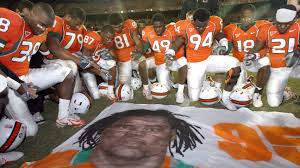
Let's be clear about what happened in that Miami-Dade courtroom. After a three-week presentation of evidence that stretched back to November 7, 2006—the night Pata was shot outside his Kendall apartment—the six jurors spent roughly six hours deliberating. They were tasked with parsing a case that had gone stone cold for 15 years before Rashaun Jones was arrested in Ocala in 2021. The state built its case on a foundation of jealousy, opportunity, and circumstantial threads. The defense? They poked holes big enough to drive a truck through, arguing there was no "direct, credible evidence" tying their client to the murder. On Monday, Judge Cristina Miranda had no choice but to call it: a hung jury.
The Case That Couldn't Close: Evidence vs. Reasonable Doubt
If you're going to understand the business implications of this mistrial—and trust me, there's a ledger to be kept here—you have to look at the balance sheet of evidence the prosecutors, led by Cristina Diamond, laid out. It was a classic "motivation" play.
The prosecution's narrative was compelling in its simplicity: Rashaun Jones was a player whose star was fading. Suspended from the team for marijuana use, he watched from the bench as Bryan Pata, a dominant defensive lineman, was projected as a top NFL draft pick. According to the state, that jealousy curdled into murder. They pointed to:
- A history of bad blood: Previous fights and tension between the two players.
- The weapon: Witness testimony that Jones had spoken about having a ".38 on me," which matched the caliber of the unfound murder weapon.
- The eyewitness: Former UM professor Paul Conner, who picked Rashaun Jones out of a photo lineup twice, identifying him as the man he saw fleeing the scene after hearing a "pop."
- Phone records: Data that placed Jones's cell phone near the crime scene around the time of the murder.
On paper, it sounds like a lot. But in the arena, defense attorney Christian Maroni shredded the "rope" the prosecution tried to braid. He reminded the jury that the murder weapon was never found. He got the medical examiner, Dr. Emma Lew, to admit that the bullet's trajectory couldn't determine the shooter's position. He exposed that the key witness, Paul Conner, had bad vision, the area was dark, and he only saw the suspect for a second or two. Even the phone data expert conceded he couldn't say Jones was standing at the crime scene—the tower coverage was wide enough to include his own home.
The jury looked at that balance sheet and saw red ink. Not proof of innocence, but a fundamental failure of proof beyond a reasonable doubt.
The Clock is Ticking: What Happens to Rashaun Jones Now?
This is where we move from the crime blotter to the business ledger. Rashaun Jones has been in custody since 2021, his life on hold. Under Florida law, the state now has 90 days to decide if they want to retry him. This is a high-stakes poker game with real money on the line.
For the Miami-Dade State Attorney's Office, a retrial means burning more taxpayer cash. You're talking about re-subpoenaing witnesses, paying expert fees, and dedicating courtroom resources for another three weeks—all for a case that just proved to be un-winnable with the current hand. The victims' family, Pata's loved ones who have waited 20 years, are now facing the prospect of doing it all over again. That emotional toll is incalculable.
For the defense, it's a game of chicken. Do they push for a speedy retrial while the iron is hot, or do they wait? Jones has maintained his innocence, even turning down a plea deal that would have given him 15 years with credit for time served. That decision looks pretty savvy right now. His legal team can smell the blood in the water. They know the prosecution's case is circumstantial and that a key witness, Paul Conner, is 81 with health issues—his videotaped testimony was already used because he couldn't testify in person. If Conner becomes unavailable, the state loses its only identifier.
The "30 for 30" Economy: Why This Story Still Has Commercial Legs
Here's the part nobody in the mainstream media likes to talk about, but as an analyst, I see it clearly: the Bryan Pata case is a piece of intellectual property. It's the reason you're seeing a surge in searches for Rashaun Jones right now. This story has all the elements of a blockbuster documentary: fame, jealousy, a cold case, and an unresolved ending.
The "True Crime" genre is a billion-dollar business. Major sports documentary franchises have built their reputation on stories exactly like this—where sports and tragedy collide. The mistrial doesn't close the book; it adds a new, dramatic chapter. The ambiguity creates a longer shelf life. For streaming services and production companies, a conviction would have been an ending. A hung jury? That's a cliffhanger. It keeps the mystery alive, fuels forums, and maintains public interest. The commercial value of the Rashaun Jones narrative actually increased on Monday.
Think about the advertising metrics. Content that deals with unresolved justice, particularly involving high-profile athletes, drives incredible engagement. It's why local and national newsrooms are pumping out updates. The clicks are massive. For brands looking to place ads against premium, long-form journalism or documentary content, this case is now a more attractive, longer-term bet. It has legs.
The Verdict on the Verdict
At the end of the day, the system worked exactly how it was designed. The prosecution couldn't clear the bar. But let's not pretend this is a win for anyone except the strict interpretation of the law. Bryan Pata was a 22-year-old kid with an NFL future who bled out on a sidewalk. His family left the courtroom Monday with the same emptiness they've carried for two decades.
As for Rashaun Jones, he walks back into a holding cell, not a free man, but not a convicted one. He's in a bizarre purgatory, waiting to see if the state wants to run it back. Whether this case gets a second season in court or becomes the subject of the next must-watch docuseries, one thing is certain: the business of justice—and the story of what happened to Bryan Pata—is far from over.