Explosion in Rågsved Sends Shockwaves Through Stockholm: From a Sense of Safety to the Stock Market
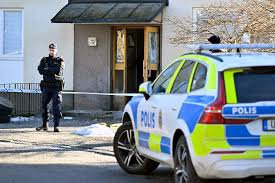
There was a blast in Rågsved yesterday. For the average person, it was a distant echo in the news feed, just another dot on the map of southern Stockholm that's quickly forgotten. But for those of us who have the entire Stockholm region as our workplace—from the stock exchange floor to the town squares of the concrete suburbs—the bang was a clear signal. It's not really about the explosion itself, but what it represents: a shift in the balance of safety that immediately has economic consequences.
The rumours from Rågsved, about a blown-up doorway, confirm a worrying trend. It's not the first time the City of Stockholm has dealt with this type of incident, but each time, the city's brand gets eroded a little more. And in an era where capital is more flighty than ever, safety is the strongest currency. This is where the Stockholm syndrome takes on a cynical economic twist—we risk getting used to a new normal where insecurity becomes part of everyday life, and that's precisely when long-term investments start being questioned.
From a Suburban Doorway to the Pulse of the Stock Exchange
Let me be clear: an explosion in Rågsved won't directly affect the Stockholm stock market on Monday morning. No one is selling their shares in Investor just because there was a blast in the southern suburbs. But it does affect the trust capital that the entire region rests on. I've seen it before, in other major European cities. It starts with insurance brokers raising their eyebrows when underwriting new policies for retail spaces in the outer areas. It continues with real estate agents noting that viewings in certain parts of Stockholm are becoming harder to book. Eventually, it lands in boardrooms where they're calculating a risk premium for property portfolios in socio-economically vulnerable areas.
Those who think this is only a problem for Rågsved and similar suburbs are living in an illusion. Stockholm is an interconnected organism. When safety breaks down in one part, it affects the entire system's immune response. This impacts everything from consumer behaviour to where companies choose to set up.
The Three Clear Economic Impacts
My experience tells me we'll see the consequences in three distinct layers in the near future:
- The New Geography of the Property Market: Apartments in areas perceived as unsafe will find it increasingly difficult to command high prices. At the same time, demand for 'safe' addresses in the city centre and secure residential suburbs will increase. This creates a divided market where the postal code becomes a price tag.
- Local Businesses Under Pressure: The business owners in Rågsved centre—those running the pizzeria or the grocery store—pay the price immediately. Customers stay away, staff don't want to work evenings, and insurance premiums skyrocket. Local businesses become the first domino to fall.
- Reallocation of City Resources: The City of Stockholm is now forced to spend more and more tax revenue on safety measures, CCTV surveillance, and social interventions. Money that should have gone to schools and infrastructure is being redirected to emergency responses. This is a hidden tax increase for all Stockholm residents.
The Stockholm Syndrome as an Economic Risk Factor
The most worrying thing right now isn't the explosion itself, but how quickly we adapt. The Stockholm syndrome, in my world, is about how we as a society start to identify with the problems instead of demanding solutions. When we hear "there was a blast in Rågsved" and just shrug our shoulders, we've already lost the first half. We've accepted that insecurity is part of Stockholm's DNA.
For investors—from small-time savers on the Stockholm stock market to international institutional investors—this normalisation is the biggest risk. They look at trends, not isolated incidents. If the pattern of insecurity spreads like ripples in a pond from the southern suburbs to other parts of the capital, then the entire region's attractiveness gets re-evaluated. Then it's no longer about Rågsved, but about Stockholm as a brand.
We are at a crossroads. Either we take this seriously and see it as a warning signal that demands action, or we continue to internalise the insecurity until it becomes a permanent part of our daily lives. For the economy, for safety, and for the future of Stockholm, there is only one right choice. The question is whether we have the courage to make it.