NASA Artemis II Moon Mission: Why This Lunar Journey Is a Giant Leap for Canada and the World
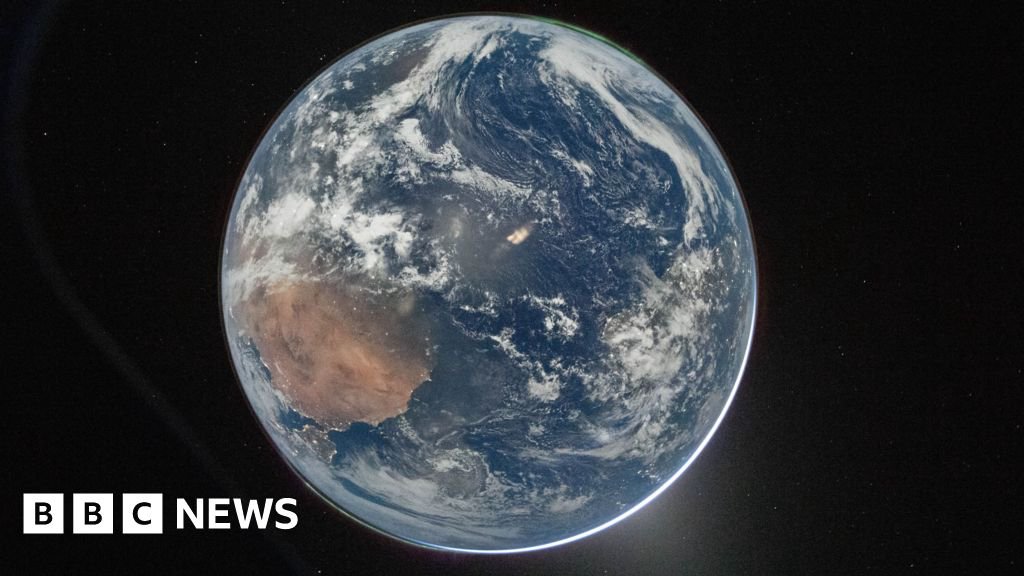
As I’m writing this, four human beings are strapped inside the Orion spacecraft, already hundreds of thousands of kilometres from Earth, barrelling toward the far side of the moon. It sounds like a sci-fi dream, but it’s real—and it’s happening right now. NASA’s Artemis II moon mission officially broke free of Earth’s orbit on April 3, and the crew is now on a path that hasn’t been travelled by any human since 1972.
You’ve probably heard the name Artemis II tossed around for months. After a few careful reschedules—most recently pushing the launch window to early April following a targeted March readiness—everything finally lined up. And let me tell you, the payoff has been electric. This isn’t just another rocket show. It’s the first crewed test of the Orion capsule and the Space Launch System, and it’s carrying something extra special for us Canadians: our very own Jeremy Hansen.
Meet the Crew: A Canadian Among Stars
Commander Reid Wiseman, pilot Victor Glover, mission specialist Christina Koch, and Canadian astronaut Jeremy Hansen make up the four-member team. For Hansen, a Colonel in the Royal Canadian Air Force, this moment is the culmination of a decade of training and a whole lot of national pride. When he buckled in for launch, he wasn’t just representing himself—he was carrying every kid who ever looked up at a dark prairie sky and wondered “what if?”
Just days before liftoff, on March 31, a veteran radio host from a major network broke down why this mission feels different. His take? “We’ve been to the moon before, but we’ve never taken this many people from this many backgrounds, and we’ve never done it with this level of international partnership.” He’s right. Artemis II isn’t a flag-planting stunt. It’s a blueprint for staying there.
Why NASA Is Betting Big on Artemis II
You might wonder: why pour all this money and risk into going back? Simple. NASA is betting big on Artemis II moon mission because it’s the critical flight before we attempt a lunar landing with Artemis III. Think of this as the dress rehearsal—only the stakes are real, and the orbit is 370,000 kilometres from home. The crew will swing around the moon, test every system, and then come back. No landing this time. But if anything goes wrong, those lessons save lives down the road.
And the agency isn't going it alone. In a brilliant move, NASA has teamed up with a renowned documentary brand to showcase the Artemis II moon mission in immersive detail. They’ve embedded cameras, offered behind-the-scenes access, and built a documentary-style narrative that’s making even my neighbour (who usually only watches hockey) stop and stare. That kind of storytelling matters. It turns a technical marvel into a shared human experience.
- First crewed Orion flight – Testing life support, navigation, and heat shield performance.
- Deep space rendezvous – The crew will fly farther from Earth than anyone since Apollo 17.
- Canadian footprint – Jeremy Hansen controls key robotics and science experiments during the flyby.
Where Is Artemis II Right Now?
As of today, April 4, 2026, the Orion spacecraft is roughly 280,000 kilometres from Earth—beyond the orbit of most GPS satellites and climbing fast. They’ve already performed the critical trans-lunar injection burn, which set them on a precise course to loop behind the moon. In a few days, they’ll lose radio contact for about 34 minutes as they pass the lunar far side. That silence? It’s the price of glory.
Back on the ground, mission control in Houston is buzzing. And up in Canada, you can feel the buzz too. Schools are tracking the mission live. The country’s space agency has set up viewing parties from Vancouver to St. John’s. For a country that’s always punched above its weight in robotics and satellite tech, having one of our own inside that capsule is the ultimate validation.
What Comes Next?
After the crew splashes down in the Pacific (targeted for late April), NASA will pore over every byte of data. Then the real prize: Artemis III, the first crewed lunar landing since 1972, with a woman and the next man—and likely another Canadian role. But right now, none of that matters. Right now, four people are looking out a tiny window at a blue marble shrinking behind them. And one of them is ours.
So keep looking up. Whether you’re in a downtown Toronto condo or a cabin in the Yukon, this is your mission too. NASA’s Artemis II moon mission isn’t just American history. It’s human history. And Canada has a seat at the table.