The Citronella Catastrophe: What a Perth Restaurant’s $40,000 Fine Means for the Industry
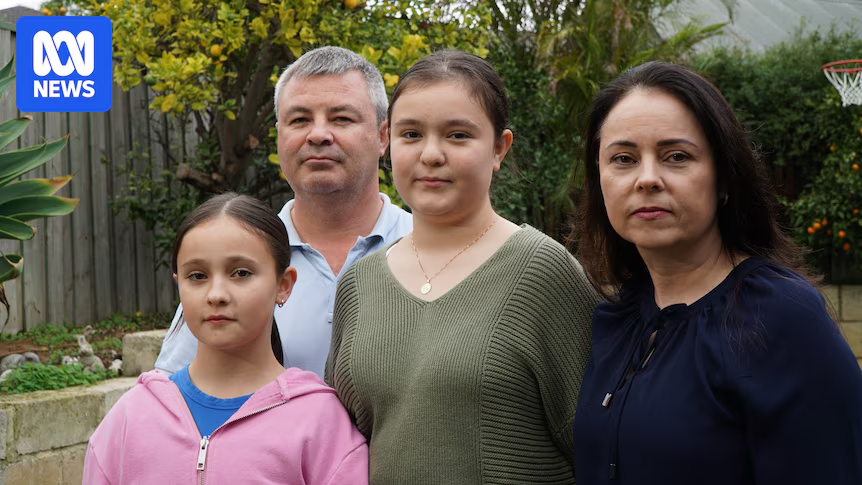
Yesterday, a Perth restaurant owner learned the hard way just how costly a simple mix-up can be. A $40,000 fine and a criminal conviction for serving two young children a drink laced with mosquito repellent instead of apple juice. But beyond the courtroom drama in Western Australia, this incident has ripped the lid off a much bigger, more dangerous problem brewing across the Australian food and hospitality industry: our collective ignorance of the plants we use every day.
The culprit was citronella. Not the fragrant lemongrass you toss into a Tom Yum soup, but its toxic twin. We're talking about the high-octane stuff you burn in a bucket on the back porch to keep the mozzies at bay. The plant world, as it turns out, has a wicked sense of humour. It gives us Cymbopogon citratus – the culinary hero, fresh, citrusy, and completely edible – and its doppelgänger, Cymbopogon nardus, the source of citronella oil that belongs nowhere near a child's digestive system.
Let's be brutally honest: if you walked into a trendy Sydney bistro or a Melbourne wine bar and asked the floor staff to tell you the difference between a stalk of Fresh Lemongrass and a bunch of Lemon balm, you'd likely get blank stares. Throw Cymbopogon nardus into the conversation and you might as well be speaking Klingon. This isn't just a failure of one venue; it's a systemic gap in basic botanical literacy across the entire supply chain, from the grower to the wholesaler, right down to the kitchen hand prepping the garnish.
The commercial angle here is massive. We are in the middle of a 'natural' gold rush. Restaurants are plastering menus with foraged greens, artisanal teas, and house-made tinctures. The wellness industry has turned Citronella oil into a must-have for aromatherapy diffusers and organic bug sprays. Garden centres can't keep Cymbopogon citratus in stock. But in this rush to cash in on nature's pharmacy, we've forgotten the first rule of botany: identification is everything.
This Perth case is the canary in the coal mine. It exposes a terrifying reality: a product meant to repel insects is visually and aromatically similar enough to a food staple that a professional kitchen mistook one for the other. What happens when a guest with a severe allergy is served the wrong herb? What happens when a bartender muddles a toxic ornamental plant instead of mint? The liability doesn't just stop at the restaurant door; it goes all the way back to the nursery that sold the plant, the distributor who labelled the box, and the importer who brought the seeds in.
For investors and business owners in the food and ag-tech sectors, this is a flashing red light. The market for botanicals is booming, but the infrastructure to support it safely is lagging. We need:
- Radically transparent labelling: A potted plant labelled simply 'Lemongrass' is a lawsuit waiting to happen. It must specify the species – Cymbopogon citratus – and include clear warnings on non-edible varieties like Cymbopogon nardus.
- Compulsory staff training: This isn't a nice-to-have. Every chef, every floor manager, every buyer should be able to pass a basic plant identification test. It's as fundamental as food safety certification.
- Supply chain audits: Wholesalers need to verify that what they're selling as Fresh Lemongrass is indeed the edible species. A photo on an invoice isn't enough.
The tragedy is that this entire debacle was avoidable. It wasn't malice; it was ignorance dressed up as innovation. We got so excited about putting 'garden-fresh' ingredients on the plate that we forgot gardens can also be poisonous.
As the public hangs the owner out to dry, we should also be asking harder questions of the system that allowed this to happen. The next time you order a craft cocktail garnished with a sprig of something green, ask yourself: does the person serving it know exactly what that is? If they don't, they're not just pouring a drink – they're rolling the dice. And in this game, the house always loses eventually.