Petrol Price Trends 2026: Why India is Staying Steady While Indonesia, Malaysia, and Singapore Feel the Pinch
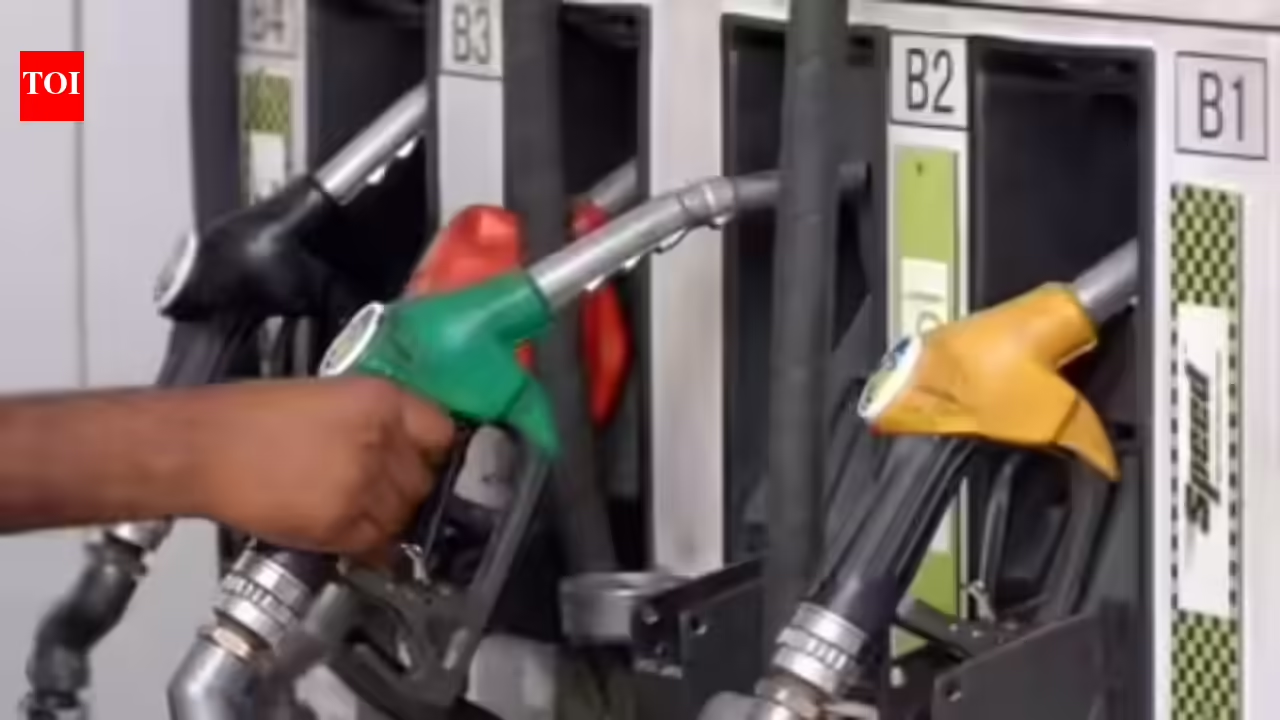
Look, if you’ve been scrolling through the news like the rest of us, you’ve seen the headlines from across the border. Our neighbours are getting absolutely hammered at the pumps. Jakarta, Kuala Lumpur—even Singapore, that polished financial fortress—are seeing prices jump in ways that make you wince. And here we are in India, cruising along like nothing’s happened. For now, at least. But if you’ve been driving in this country long enough, you know the silence isn’t peace. It’s the calm before the next price cycle hits.
Let me tell you what’s actually going on, because the difference between us and them comes down to one thing: how we play the waiting game.
Our Neighbours Are Feeling the Heat
Take Indonesia. They’ve always leaned heavily on subsidies to keep the petrol price bearable. But even that shield is cracking. A whisper in global crude benchmarks—just a whisper—and Jakarta had to move. It wasn’t a huge hike in raw numbers, but ask anyone in logistics there and they’ll tell you: when fuel moves, the price of everything else follows. Vegetables, ride-hailing, your morning coffee—it all creeps up overnight.
Then you’ve got Malaysia. Their system is a different beast entirely. They run on a weekly float, which means the Petrol Price Malaysia can swing wildly depending on how the ringgit is doing that particular Tuesday. One week you’re fine, the next you’re staring at the pump wondering if the machine glitched. It keeps consumers on their toes in a way we don’t have to deal with here.
And Singapore? Usually the benchmark for everything refined in this region. But even their pump prices have inched up to levels that are making their famously stoic commuters grumble. When Singapore Petrol Price moves, it’s not a local issue—it’s a regional signal that the supply chain is tightening. Same story in Pakistan. Word from Islamabad is that the latest revision there has effectively frozen their transport sector overnight. It’s a textbook case of global pressure hitting a domestic economy that’s already running on fumes.
So why aren’t we seeing the same chaos?
The India Pause: What’s Really Happening Here
If you filled up in Delhi or Mumbai this week, you noticed the numbers didn’t move. Not a rupee. But here’s the inside scoop that the guys at the petrol bunk won’t tell you: the oil marketing companies quietly bumped up premium petrol by up to Rs 2.35 per litre. That’s the high-octane stuff. The regular fuel—the one the auto-rickshaw and family sedan run on—stayed put.
That’s the game. The Petrol Price Cycles in India are built on absorption. Our public sector units don’t react the minute something flares up in the Middle East. They watch the currency, they watch the geopolitical temperature, and they sit on the inventory until they absolutely can’t anymore. Right now, they’re choosing to hold the line. It keeps the common man insulated, sure. But it’s not charity. It’s a balance sheet bet that they can ride out the current wave without passing it on to us. The question is: for how long?
If you’re the type who likes to know what’s coming, here are the three things that’ll decide when the next hike actually hits our pumps:
- The Strait of Hormuz temperature: Any real escalation there and shipping insurance spikes. That hits crude before anything else.
- The rupee’s mood: That premium petrol tweak wasn’t random. If the rupee slides further, expect the pressure to trickle down to standard fuel.
- Inventory math: The PSUs are holding high-cost stock from the last global spike. They’ve been delaying the pass-through. But margins aren’t infinite.
For now, while our neighbours are recalibrating and absorbing the shock, we’re sitting in this strange lull. It feels stable. It feels like the usual Indian summer where nothing moves. But anyone who’s watched these cycles knows: the freeze never lasts. So fill up, keep your ears open, and don’t get too comfortable. The next move is already being debated in boardrooms. We just don’t know when they’ll decide to let us in on it.