Dutch police deploy hologram to solve 2009 cold case: a new standard?
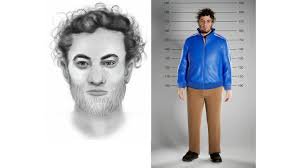
The invisible suspect becomes visible
If you were walking through the centre of Bilthoven last week, you could have easily come face to face with a ghost from the past. Police there displayed a hologram of a man suspected of a horrific rape in 2009. It's not just a trick pulled from a sci-fi movie; it's the latest addition to the arsenal of Dutch investigation techniques. We all know the images: police mugshots at the station, the sniffer police dog, and the familiar police car cruising the neighbourhood. But this? This is a game-changer.
From 2D photo to 3D hologram: the evolution of the police mugshot
For years, we relied on grainy footage from security cameras or sketches from a police artist. But the police have invested heavily in recent years in technology that goes beyond the flat surface. Back in 2023, they created a 3D model of a sex offence suspect, and now they're taking it a step further: a life-sized hologram you can view from any angle. The idea is simple but brilliant: the more senses we engage, the greater the chance someone will think, "hey, I know that bloke, that's my neighbour or my cousin." It's an appeal to the collective memory of the Netherlands, wrapped in high-tech ingenuity.
The power of the image: why this works
Let's be honest, our brains are wired to recognise faces. But a static photo from fifteen years ago often isn't enough. People change, hairstyles change, but the bone structure remains. With a 3D hologram, you can see someone from every angle. You don't just see the face, but also the way he stands, his shoulders, his posture. That triggers far more memories than a grainy little mugshot on a website. And the beauty of it is: this technology isn't just reserved for cold cases. Imagine being able to use this in every major search operation.
Not just tech, but also trust
The introduction of this kind of tool naturally raises questions about privacy and ethics. But the authorities have clearly drawn lines here. We're talking about serious crimes where the community is crying out for answers. This isn't about shoplifting; it's about sex offences that have been gathering dust on shelves for years. Deploying a hologram is an ultimate attempt to secure justice for the victims. And that carries a lot of weight. The police are showing they'll pull out all the stops, and that builds trust.
The business behind the badge: a growing market
As a tech analyst, I look at these developments with more than just a social interest. What's happening here is the rise of a whole new industry around police technology. Think about the companies creating these 3D models, the software for facial recognition, the projectors displaying the holograms. The Dutch government is pumping millions into innovation, and that's attracting international players. It's a market set to grow exponentially over the next ten years. From startups specialising in mugshot analysis to established defence companies retooling their augmented reality know-how for civilian use. Whoever invests in this niche now will be sitting in the driver's seat of the security sector down the track.
The human factor: the police dog remains indispensable
Let's not forget, though, that technology is just a tool. The real strength lies in combining the old with the new. The police dog, with its nose, can follow a trail no machine can detect. The local beat cop in their police car who knows the people, who knows what's going on. The hologram is an asset, but it will never replace the gut feeling of a witness who says, "I'm certain, that bloke always used to walk his dog there." The technology serves to enhance that human judgment, not replace it.
- 3D models: Accurate reconstructions of suspects based on witness statements.
- Holograms: Life-sized projections in public spaces to encourage recognition.
- Facial recognition: Software that compares camera footage with the 3D models.
- Drones and sensors: Extra eyes and ears for police at major events or during search operations.
Conclusion: the future is holographic
The use of the hologram in Bilthoven isn't a one-off; it's a statement. The police are showing they're ready for the future. We're going to see more innovations like this, and that's a good thing. Because in the fight against crime, you have to take every inch you can get. And if that means bringing a bit of sci-fi to Bilthoven, then I'm all for it. Hopefully, it leads to a breakthrough in this case, and to a wave of new techniques that make us all safer. Keep an eye on the police car, but also look out for the hologram in the town square. It could just be your neighbour.