The Press Conference as the Megaphone of Power: What the Nuclear Threat and the Unrest on Jagtvej Reveal About Crisis Communication
It was a 24-hour period where two vastly different realities collided in the Danish public sphere. In the Hall of Mirrors at Marienborg, the Prime Minister stood ready at the podium, surrounded by a sea of microphones and flashing lights. The subject was so charged with historical weight that you could almost cut the tension in the air: Denmark's role in the new French nuclear deterrent. Just a few kilometers away, at Jagtvej 69, the smoke still hung heavy over the cobblestones after the night's clashes. Masked demonstrators had committed widespread vandalism, and riot police were trying to restore calm. In the midst of the chaos, authorities called yet another press conference.
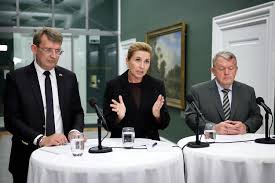
The Prime Minister's Stagecraft: When the Press Conference Becomes a History Book
The press conference originating from the Prime Minister's office earlier in the week wasn't just another part of the political routine. It was a meticulously choreographed display of power. Calling a press conference about Danish involvement in France's nuclear umbrella sends a signal far beyond the country's borders. It was a press conference meant to invoke solemnity while simultaneously marking a shift in Danish security policy. No one talks about "spin" in such a situation, but any seasoned observer knows that the choice of location, the lighting, and even the minister's attire are all part of the narrative. It's about building trust in uncertain times. These are the moments when the press conference transcends its function as an information channel and becomes a symbolic ritual.
Jagtvej 69: When the Press Conference Was Meant to Put Out a Fire
The same day police had to deploy with heavy equipment to Jagtvej, the communications teams at the command center were scrambling. The unrest with masked perpetrators and extensive vandalism demanded a swift and precise response. This resulted in a press conference designed to do three things: reassure the public, inform about the investigation, and, not least, frame how we as a society understand such riots. The press conference after such a night is often more revealing than the unrest itself. This is where we see how those in power choose to articulate the conflict. Are they "criminals," "activists," or "young people"? Every single phrase is carefully weighed because it impacts public judgment. It's classic crisis communication, but executed at a pace where missteps can be costly.
From Politics to Business: The Commercial Value of a Strong Press Conference
As a business analyst, I can't help but see the two press conferences as a mirror of the reality Danish companies navigate. The Prime Minister's press conference is a study in how to communicate strategic weight and long-term vision. It's the kind of communication you see when a major corporation needs to present a merger or a new ownership structure. It's about sending a signal to shareholders, partners, and the outside world that you have a steady hand on the tiller. Conversely, the press conference after the Jagtvej unrest is a textbook example of acute crisis PR. It's equivalent to when a company is hit by a layoff scandal, a production flaw, or a case of poor work culture.
- Credibility is currency: Just as the Prime Minister needs to appear unshakable, a CEO must be able to stand up and face press questions without faltering. A poorly handled press conference can be costly in terms of lost market value.
- Message control: Both politicians and top executives fight to prevent the story from being defined by others. A press conference is their chance to set the agenda before rumors and speculation run wild.
- Empathy and decisiveness: After Jagtvej, it was crucial to show decisiveness towards citizens who felt unsafe. In a corporate crisis, showing empathy towards employees and customers is just as important. The words "we apologize" must be followed by concrete actions, and this needs to be communicated clearly at a press conference.
The Hidden Agenda: Who Wins at the Press Conference?
Looking back on the week, it's clear that the press conference as a format is stronger than ever. In an age of filter bubbles and social media, where everyone has an opinion, the physical press conference with live images and sharp journalistic questioning has become a rare and therefore valuable commodity. This is where power truly must be held accountable. For investors and business professionals, analyzing these press conferences is a must-have skill. It's about being able to discern when an announcement represents real news and when it's merely window dressing. It's about understanding that a press conference is never just a press conference. It's a strategic weapon, a performance, and ultimately a crucial piece in the game for power and influence – whether it plays out in the Prime Minister's Office or in a boardroom.
The question we, as analysts and consumers of news, must ask ourselves is: Who managed to win with their press conference this week? And more importantly, what can we learn from it for the next time we find ourselves with the microphone in hand?