Gerry Adams: New Files Claim Sinn Féin Leader Was Senior IRA Commander
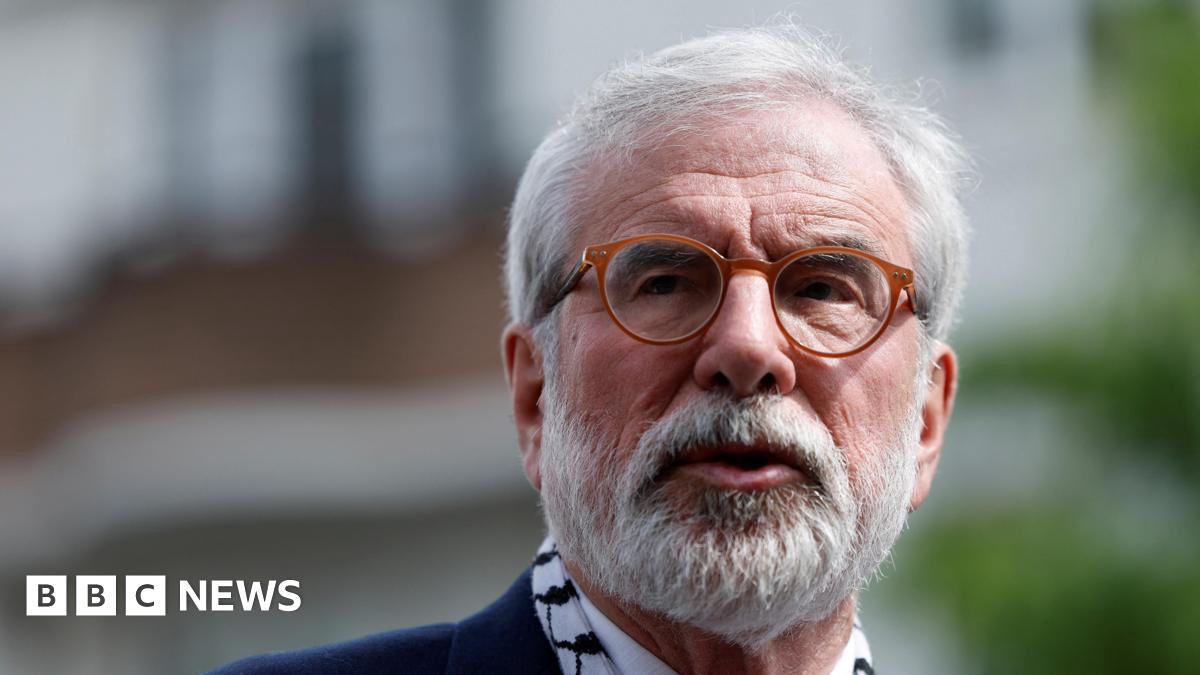
The long-simmering debate over Gerry Adams's past has been reignited this week with the release of newly declassified British government files. The documents, now public, contain explosive claims that the former Sinn Féin leader was a senior commander in the Irish Republican Army (IRA). For decades, Adams has been the enigmatic face of Irish republicanism, steering his party from the fringes into the mainstream while consistently denying membership in the paramilitary group. His journey from alleged revolutionary to peacemaker is chronicled in his own book, Gerry Adams: War, Peace And Politics, which offers his personal narrative of those turbulent years. But these newly unearthed records threaten to undermine that carefully constructed story.
What the Files Contain
The documents, dating from the 1970s and 1980s, paint a starkly different picture from the one Adams has always presented. According to intelligence reports compiled by the Royal Ulster Constabulary (RUC) and the British Army, Adams was not just a peripheral figure but held a key leadership role within the IRA's command structure. The documents suggest he was involved in plotting major operations, directly contradicting his long-held public stance. The level of detail is striking:
- One memo from 1978 specifically names Adams as the IRA's Director of Operations in Belfast, placing him at the heart of the organization's military planning.
- A later briefing from 1983 describes him as a "key strategist" with influence over both the political and military wings of the republican movement.
- The files also indicate that British intelligence believed Adams sat on the IRA Army Council, the body that directed the entire campaign, during the early 1980s.
These are not throwaway lines; they are assessments based on what the security forces considered their best intelligence at the time. For those who have followed Adams's career, the claims are explosive, yet they fit into a long-standing pattern of suspicion that has never quite gone away.
The Human Cost: A New Lawsuit
The release of the files coincides with a fresh and deeply personal legal battle. As has emerged in legal filings, a man has initiated proceedings against Gerry Adams, seeking damages for alleged historical wrongs. The case, captured by the poignant question "Why I'm suing Gerry Adams", adds a human dimension to the historical accusations. The plaintiff claims that Adams, in his capacity as a senior IRA figure, sanctioned an operation that led to the death of his father in the 1970s. While the specifics are yet to be tested in court, the lawsuit underscores that for many families, the Troubles are not just history—they are a living wound. This legal action, alongside the archival revelations, puts Adams back in the spotlight not as a statesman, but as a figure of unresolved conflict.
Context and Contradictions
To understand the weight of these allegations, one must delve into the broader tapestry of Irish history. As Malachy McCourt's History of Ireland vividly details, the lines between political activism and paramilitarism have often been blurred, especially during the decades of the Troubles. Adams's own rhetoric, including his Address by Gerry Adams TD in the Dáil after he became a Teachta Dála (TD), has always walked a careful line. He has advocated for peace and reconciliation while acknowledging the "conflict" of the past, but he has never provided the detailed personal accounting that some victims' families demand. His famous refusal to condemn the IRA during the Troubles, coupled with his insistence that he was "never a member," has fueled decades of speculation and mistrust. These new files will do little to quell that; if anything, they add fuel to the fire.
Reactions and Political Fallout
Sinn Féin has swiftly dismissed the files as "old news" and part of a coordinated smear campaign by British security services, pointing out that such intelligence was often unreliable or politically motivated. Gerry Adams himself has consistently refuted any claims of IRA membership throughout his life, and his supporters argue that he has dedicated his later years to building peace. However, the declassification arrives at a sensitive time for Northern Ireland's power-sharing government, where Sinn Féin is now the largest nationalist party. While the peace process itself remains stable, such revelations risk reopening old wounds and complicating the already delicate dynamics at Stormont. For historians and the public alike, these files add another layer to the complex legacy of a man who helped shape modern Ireland. Whether they will alter Adams's place in history is uncertain. But they ensure that the debate over his role—as peacemaker or paramilitary, as politician or commander—will continue for years to come.