Indigo CEO Pieter Elbers Steps Down: Inside The Turbulence And What’s Next For India’s Largest Airline
It’s not every day that the boss of India’s most profitable airline suddenly hands over the keys. But that’s exactly what happened this week when Pieter Elbers, the man who steered IndiGo through one of its worst operational storms, decided to call it quits. If you’ve flown anywhere in the region recently, chances are you’ve been on one of their planes. And if you’ve been following aviation news, you know the past year hasn’t been smooth sailing—or flying. Elbers’ resignation, just months after the airline faced massive flight cancellations and passenger outrage, has left the industry buzzing. Who takes over? None other than co-founder Rahul Bhatia, stepping in with a signature style that insiders are already calling ‘Main Hoon Na’—a nod to his hands-on, slightly dramatic approach to rallying the troops.
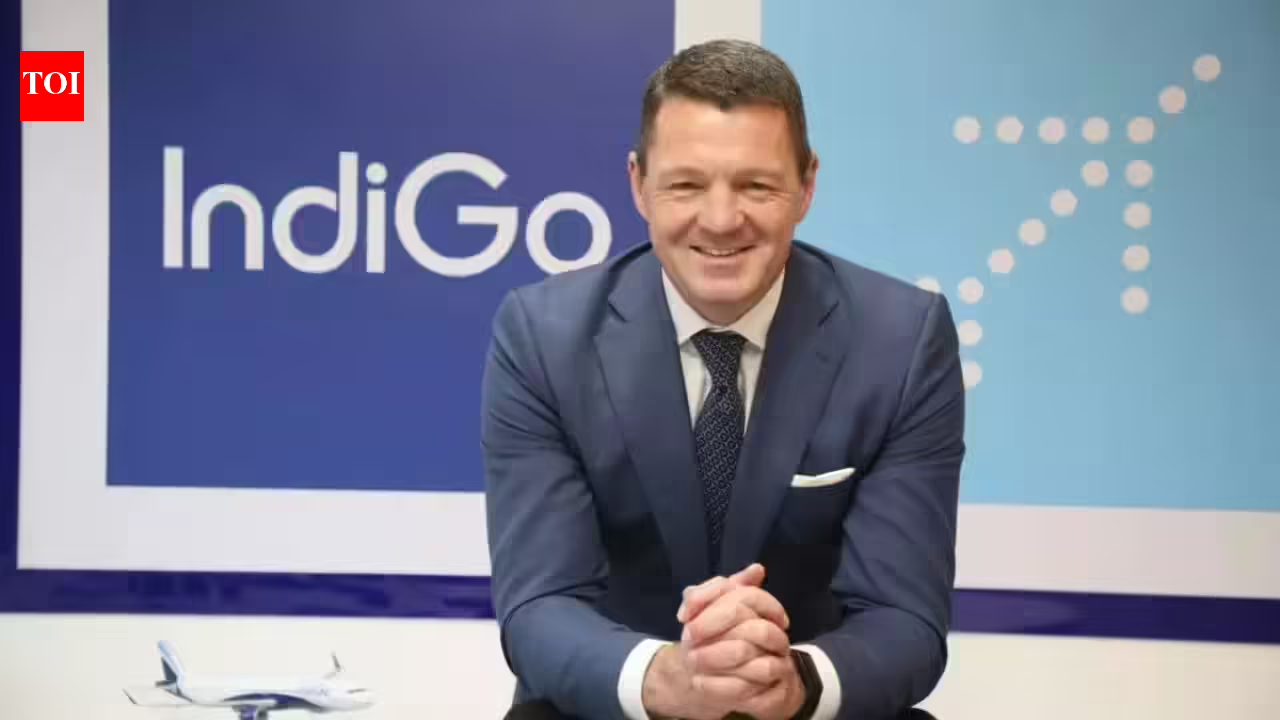
A Dutchman’s Last Flight: Pieter Elbers’ IndiGo Chapter
When Elbers took the helm in 2022, he was stepping into some pretty big shoes—and a country where the aviation market is as chaotic as it is promising. Coming from KLM, where he was CEO for years, the Dutchman brought a sense of European precision to the Noida headquarters. For a while, it worked. IndiGo expanded routes, posted record profits, and looked unstoppable. But then came the engine troubles, the groundings, and the cascading cancellations that left thousands of passengers stranded. Suddenly, the airline that prided itself on being on time became a symbol of uncertainty. Elbers weathered the immediate crisis, but as one insider put it, "The pressure never really lifted." And now, with his exit, the question on everyone’s lips is: did he jump, or was he pushed? The company line is a smooth handover, but in the Burn Book of Indian aviation, this chapter is far from closed.
Rahul Bhatia’s ‘Main Hoon Na’ Moment
In true Bollywood style, just when the credits seemed to roll, the original hero returns. Rahul Bhatia, the co-founder and the man who built IndiGo from the ground up, isn’t just filling a chair—he’s sending a message. In an internal note to employees, he reportedly channeled that iconic Shah Rukh Khan line, "Main hoon na," assuring the team that he’s got their backs. It’s a smart move, one that plays on emotion while addressing the anxiety that always follows a top-level exit. Bhatia isn’t a stranger to turbulence; he’s been through the airline’s many ups and downs since 2006. But this time, he’s stepping in at a moment when the brand’s halo has dimmed. His immediate task? Restore stability, calm the nerves of frequent flyers, and keep the operations from hitting more bumps. And if there’s one thing Bhatia knows, it’s that in this business, Stillness Is the Key—especially when everything around you is moving at 500 knots.
Leading Through the Comfort Crisis
Aviation is a brutal industry. Margins are thinner than a pilot’s patience during a delay, and public memory is long. For the new-old boss, this isn’t just about logistics—it’s about leadership in what author Michael Easter calls The Comfort Crisis. The idea that real growth, both personal and organisational, happens when you step into discomfort. Bhatia is walking into a situation that’s anything but comfortable: a rival airline (Akasa) gaining ground, Pratt & Whitney engine woes refusing to go away, and a reputation that took a hit during last year’s meltdown. Yet, insiders say he thrives in chaos. "Rahul doesn’t panic; he gets practical," a former executive told me over kopi. That grounded, no-nonsense approach might be exactly what IndiGo needs right now. No frills, just focus—much like the airline’s own brand promise.
Smart Brevity in a Time of Noise
One of the most underrated skills in leadership today is knowing when to shut up and say something meaningful. In the age of 24/7 news cycles and viral tweets, every statement from an airline CEO is scrutinised. That’s where Smart Brevity—the philosophy of saying more with less—comes into play. Bhatia’s internal message was short, punchy, and reassuring. No corporate jargon, no long-winded promises. Just a simple: I’m here, let’s get to work. It’s a lesson that many in the C-suite forget. When the ship is rocking, people don’t want essays; they want direction. And if Bhatia can carry that concise, confident tone to the public, he might just turn a moment of crisis into a moment of clarity.
What’s Next for India’s King of the Skies?
IndiGo has long been the King of the Skies in India—the largest, the most efficient, the one everyone else chases. But pride, as they say, comes before a fall. The challenge now is to reclaim that swagger without sounding arrogant. The airline’s market share is still healthy, but the gap with competitors is narrowing. Bhatia’s interim leadership will likely focus on three things:
- Stabilising operations: Getting the fleet back to full strength and ensuring cancellations become a rare exception, not the norm.
- Rebuilding trust: Passengers need to feel that IndiGo is reliable again—especially the business travellers who pay a premium for predictability.
- Preparing for the next CEO: Whether it’s an internal promotion or another global hunt, Bhatia’s tenure is temporary. The real test will be finding a successor who can blend global standards with local realities.
As the dust settles on Elbers’ departure, one thing is clear: Indian aviation never sleeps, and the IndiGo story is far from over. Whether Bhatia’s ‘Main Hoon Na’ confidence translates into a sustained recovery—or just a short-term fix—depends on how well he navigates the turbulence ahead. But if there’s one takeaway from this saga, it’s that leadership, much like flying, is all about adjusting to headwinds. And right now, IndiGo’s cockpit just got a familiar face back in the left seat.