Blood Moon 2026: Why We Can't See It From Singapore, But Can't Stop Talking About It
Here's the cosmic irony for you tonight. The much-hyped total lunar eclipse of March 2026 is happening right now, painting the moon a deep, coppery red for millions across Australia, Asia, and the Americas. And from Singapore? Not a bloody thing. While the headlines scream "Blood Moon," we're left staring at the same grey clouds we always get in early March, completely shut out of the show. The Moon might be turning red, but from Ang Mo Kio to Jurong, it's just the usual shade of "not quite visible."
A Worm Moon We Won't See
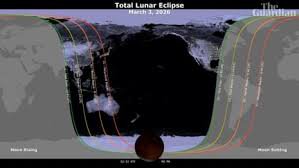
It's a bitter pill, isn't it? This particular Blood Moon coincides with the Worm Moon, the final full moon of winter, named after the earthworms that start to surface as the ground thaws—a little nod to spring that feels particularly cruel when you're stuck inside refreshing Twitter for photos. The science is brutally simple: the alignment is all wrong for Southeast Asia. The Moon will be below our horizon during the entire 58-minute window of totality, which peaks at 11:33 UTC/GMT. We are, quite literally, on the dark side of the planet for this one. While an old mate of mine at the Science Centre was muttering into his kopi last night about having to wait until August for a proper look, the rest of the world is getting the show.
For the stargazers among us, it stings. But what fascinates me—and this is where the business brain kicks in—is how little that actually matters. The inability to physically see the event has done precisely nothing to dampen our cultural appetite for it. In fact, the search traffic and social chatter around the "Blood Moon" this week suggest a paradox: we consume the celestial event more voraciously when it becomes a mediated spectacle rather than a lived experience.
The Fantasy of the Red Moon
This isn't just about astronomy; it's about narrative. The term "Blood Moon" sounds like something straight out of high fantasy, and that's precisely where our collective imagination is currently camping out. You've seen the lists. When the Moon Hatched: A Novel by Sarah A. Parker has been absolutely unavoidable. It's been sitting on bestseller lists for months, a chunky romantasy that opens with a violent bang and dares you to keep up with its intricate world-building. It's the kind of book you see clutched in the hands of commuters on the North-East line, its sprayed edges peeking out of a tote bag.
The timing is delicious. Here we are, a Singapore audience locked out of the actual eclipse, obsessively refreshing feeds for a glimpse of red, while simultaneously devouring a novel where the moons are dead dragons and the plot hinges on cosmic loss. And the market knows it. The sequel, The Ballad of Falling Dragons, is already on pre-order for its October release, promising more of that lyrical, gut-wrenching chaos that readers apparently can't get enough of. We're substituting the real sky for Parker's fictional one, and frankly, it's a fair trade. Her world has dragons that turn into moons when they die—which is infinitely more dramatic than the actual geology of lunar craters.
When the Underground Meets the Up Above
This cultural bleed goes beyond the bookshop. The long tail of this trend touches Ana Lily Amirpour's brilliant indie flick, Mona Lisa and the Blood Moon. If you haven't caught it, it's a 2021 gem about a girl with telekinetic powers escaping a mental hospital in New Orleans. It's grimy, stylish, and uses the titular moon as a backdrop for urban chaos and fragile human connection. The film flopped on its initial release, but it's finding a second life on streaming this week because the algorithm smells the keyword.
Let's break down what's actually happening in the market right now:
- The Event: The March 3 total lunar eclipse. Invisible in Singapore, highly visible online.
- The Book: When the Moon Hatched and its sequel The Ballad of Falling Dragons. Tapping into the romantasy boom with heavy "enemies to lovers" and "shadow daddy" tropes.
- The Film: Mona Lisa and the Blood Moon. A cult classic re-emerging as a keyword play, offering a grittier, modern take on lunar mystique.
This is the new business of entertainment. It's not about the thing itself; it's about the mood it creates. A publisher doesn't just sell a book about dragons; they sell the feeling of looking up at a red sky and wondering what's out there. A streaming service doesn't just serve up a movie; it serves up a vibe that matches the current global conversation.
The Real Eclipse is in the Content
So, while we wait for a partial eclipse we can actually see in August, the commercial machinery isn't waiting. The "Blood Moon Party" might be a literal rave somewhere in East Asia tonight, but for the Singapore audience, it's a digital party. We're buying the books, streaming the films, and sharing the live streams from the States. We are turning a scientific miss into a cultural hit.
That's the lesson here. The most valuable real estate isn't in the sky tonight; it's in the feeds, the forums, and the pre-order pages. As an industry watcher, I'm less interested in the hue of the moon and far more interested in the hue of the bottom line. And right now, for the fantasy and film industries, it's glowing a very profitable red.