In aller Freundschaft: Why the ARD Series Will Still Be Winning Hearts in 2026
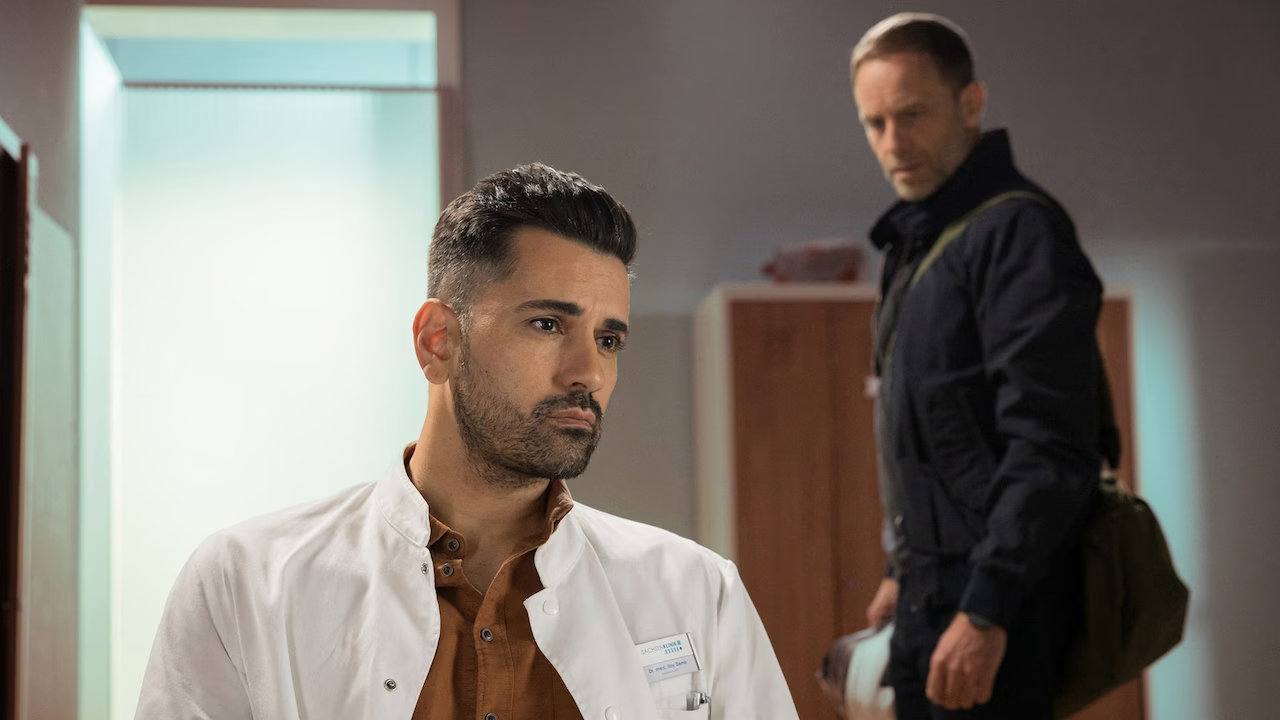
It's Tuesday evening again, and for millions of us, that means one thing: get comfortable, maybe grab a bite to eat, and then dive into the world of Sachsenklinik. Yesterday, on the 3rd of March, the latest episode of In aller Freundschaft aired – and as has been the case since 1998, it was a little television event. Episode 1128, titled "Leben das bleibt" (Season 28, Episode 40), has been available in the ARD Mediathek since last night, and social media is already buzzing. But what makes this show so enduring? And why should we, even here in New Zealand, be paying attention?
The Secret Recipe of a Long-Running Hit
Who would have thought? A hospital drama from Leipzig, which started nearly three decades ago, is more relevant today than ever. In aller Freundschaft has achieved what only a few can: it feels familiar without ever being boring. The blend of medical cases, which often enough reflect current societal debates, and the very personal dramas of the hospital staff – that's the secret to its success. Doctors like Dr. Roland Heilmann, played by Thomas Rühmann, have long since become icons of the German early evening schedule. They age with us, go through crises, celebrate successes. This emotional connection is something no streaming series, however lavishly produced, can replace.
The Young Guns and the Nurses: A Growing Universe
The success of the original has long since spawned spin-offs that have generated their own fan bases. First and foremost, In aller Freundschaft – Die jungen Ärzte (The Young Doctors). Who doesn't remember the first season, when we were introduced to the new junior doctors at the Johannes-Thal-Klinikum? The spin-off managed to reach a younger audience without losing the older core viewership. The stories about training, those first difficult surgeries, and of course, the romances among colleagues, hit a nerve. And In aller Freundschaft – Die Krankenschwestern (The Nurses), the newest branch of the family, specifically focuses on the everyday heroes of hospital life, who often remain in the background. The first season of this series showed that changing the perspective doesn't mean losing any intensity. It's this clever franchise strategy from ARD that makes the In aller Freundschaft universe so valuable.
- The Original (since 1998): Sachsenklinik in Leipzig – the heart of the series with its most famous faces.
- The Young Doctors (since 2015): Focus on the next generation in Erfurt – long since established.
- The Nurses (since 2022): The newest spin-off, putting the nursing profession centre stage and bringing in fresh perspectives.
What Makes the Current Episodes So Compelling
In recent weeks, and especially in yesterday's episode, things were heating up again at Sachsenklinik. One topic really gripping the fans: What is Maria hiding regarding Kai? This question is buzzing around the forums, and I'm keen to see how that storyline resolves. It's precisely this closeness to the characters – as if we knew them personally – that makes us tune in. It's not just about medical sensations, but about trust, friendship, and sometimes the everyday madness of a hospital. The writers masterfully package current issues like the nursing shortage or ethical dilemmas in a way that moves us without overwhelming us.
High Commercial Value with a Loyal Audience
From an industry perspective, In aller Freundschaft is a gem. The series offer an advertising-friendly environment that has become rare in today's fragmented media landscape. There's hardly another format that retains such a loyal and broad target demographic over many years. From the young family watching The Young Doctors to the seniors who have been there from the very first episode. For advertisers in health, insurance, or care sectors, this is an environment with enormous credibility. The ARD Mediathek also benefits: episodes aren't just watched there after the linear broadcast, but are often accessed multiple times – a long-lasting content offering that's seriously impressive. I'd even go so far as to say it's the ideal spot for quality advertising that doesn't annoy, but works within the context of these emotional stories.
Looking Across the Ditch: Why the Series Resonates So Well with Kiwis
For us in New Zealand, In aller Freundschaft might not be a household name like some local dramas, but for those who've discovered it, it's a firm favourite. ARD isn't a foreign broadcaster here in the same way it is in Europe, but with streaming, it's easily accessible. The series offers a world that feels comforting – perhaps a more idealised version of hospital life than we see locally – but we love it as a counterpoint to often grim news. The characters become familiar, and the settings, while German, feel universal. Plus, there are always guest appearances by Austrian actors, which strengthens that sense of connection for European expats and German-speaking Kiwis. I'd wager many of us have wondered what it would be like to work at Sachsenklinik ourselves – before happily grabbing the remote to watch the professionals do it instead.
In conclusion: In aller Freundschaft is more than just a series. It's a piece of television history that constantly reinvents itself. With its current developments, strong spin-offs, and sheer emotional pull, the brand remains a guaranteed source of quality entertainment in 2026 – and a highly interesting phenomenon for anyone wanting to understand why we keep coming back for more. For my part, I'm already looking forward to next week when life at Sachsenklinik continues.