Alejandro Garnacho at Chelsea: The Unravelling of a £40m Gamble and What Comes Next
Let’s be brutally honest about where we are with Alejandro Garnacho. Six months ago, his move from Manchester United to Chelsea felt like a genuine coup for the Blues. A raw, explosive talent pried away from a direct rival for just £40 million—it looked like the kind of forward-thinking business Todd Boehly’s Clearlake Capital wanted to be known for. Fast forward to the beginning of March 2026, and that narrative hasn’t just aged poorly; it’s collapsed in on itself.
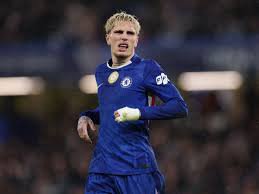
The Lion That Roared… Then Went Mute
We saw the latest chapter in this ongoing saga unfold just days ago. Ahead of a crucial Premier League run-in, Garnacho took to social media. The image? A mature lion, face bloodied, with a menacing glare. The intent was clear: a show of strength, a declaration that he was ready to tear apart the opposition. But in the current climate, it backfired spectacularly.
Instead of fear, it drew ridicule. The reaction from the Chelsea faithful and neutrals alike was swift and brutal: "All fur and no roar." It’s a harsh summary, but it cuts to the heart of the issue. For a player who built his reputation on searing pace and fearless directness at Old Trafford, the output at Stamford Bridge has been staggeringly low. We’re talking about a single Premier League goal. One. In a season where Chelsea have often laboured for creativity, their big-money signing from United has been a peripheral figure.
A Misfit in the Machine
To understand the 'why', you have to look beyond the player and at the system. When Liam Rosenior took over from Enzo Maresca in January, the tactical brief changed. Rosenior demands his wingers do more than just run at defenders. His system requires them to drop deep, involve themselves in the central progression, and play short, sharp passes in congested areas.
This is not Garnacho’s game. Never has been. He is a vertical threat, a player who wants the ball in space to isolate a full-back. Under Rosenior, he’s found himself competing for minutes on the left not just with Pedro Neto, but with central midfielder Enzo Fernandez. That tells you everything. The manager is prioritising ball retention and tactical discipline over the unpredictable, high-risk style that Garnacho offers. The numbers are damning: a staggeringly low percentage of his passes go forward, often preferring to check back or take a speculative shot that kills an attack.
The disconnect has been so stark that even the fans’ chants have turned. You know things are bad when the old terrace favourite 'Doner Kebab Nacho Alejandro Garnacho'—a ridiculous pun that used to be sung with affection—now gets a sarcastic airing whenever he misplaces a simple five-yard pass. That’s the sound of patience wearing thin.
Let’s break down exactly where the 21-year-old is falling short:
- Goal contributions: Just one league goal and two assists in 22 appearances. For a winger bought for his output, that’s not just a dry spell; it’s a drought.
- Tactical discipline: Repeatedly caught out of position, failing to track his full-back, and often ignoring the manager’s instructions to stay wide or come short.
- Confidence on the ball: He’s stopped taking on his man. The fearlessness that defined him at United has been replaced by safe, backwards passes. As one source inside Cobham put it, "He looks like a kid who’s forgotten how to play."
The 'Boomerang' and the United Shadow
What makes this even more painful for the player is the ghost of his former club. Remember that Carabao Cup semi-final against Arsenal? Before the second leg, Garnacho tried to motivate his new teammates by pointing at United’s recent win at the Emirates. "If Manchester United can win there, then we can absolutely do it," he declared.
It was meant as a rallying cry, but it became a boomerang. Chelsea lost. They were knocked out. And the footage of his comments was gleefully reposted by United fans, highlighting that, at that very moment, their team was on an upward trajectory while their former prodigy was watching from the bench.
Gary Neville, never one to mince words, put his finger on it after a particularly disastrous 45 minutes against West Ham where Garnacho was hooked at half-time. The concern, Neville argued, wasn't the technical execution. It was that his 'confidence looked completely eroded'. You can’t coach confidence, and in the pressure cooker of a Chelsea side desperate for consistency, its absence is fatal.
The Business of a 'Clear-Out'
Which brings us to the cold, hard business reality. We all know the model at Chelsea by now. Buy young, tie them down to seven-year deals, and keep the assembly line moving. If a player isn't performing, the machine doesn't stop; it simply prepares to replace the part. Word around Stamford Bridge is that the hierarchy are already willing to listen to offers for both Garnacho and Liam Delap, another big-money summer signing.
If they do decide to pull the trigger, here’s the twist that will make Old Trafford smile: Manchester United were smart enough to insert a 10 per cent sell-on clause into the original £40m deal. Given Garnacho came through the United academy, that initial fee was pure profit for them. If Chelsea sell him for, say, £35m, United are due another £3.5m—more pure profit on a player who, frankly, wasn't fitting into Ruben Amorim's plans either.
The irony is delicious. The same fanbase that mocked his "lion" post could end up financially benefiting from his failure at Stamford Bridge. But for Chelsea, the math is trickier. Do they cut their losses on a 21-year-old who clearly has talent, admitting the tactical fit was wrong? Or do they trust Rosenior to rediscover the player who once tore City apart in an FA Cup final?
The Verdict
Right now, the smart money is on a summer parting of ways. The market is unforgiving. If a player looks low on confidence and is being outperformed by a midfielder on the wing, his value plummets. Chelsea would be lucky to recoup the full £40m. But in their world, sometimes a £5m-£10m loss is acceptable if it frees up wages and squad space for a player who fits the manager's vision.
Alejandro Garnacho's rise was meteoric. He was the prodigy who redefined United's attack. But his time at Chelsea is shaping up to be a cautionary tale: a reminder that talent without the right tactical environment, and confidence without the results to back it up, is a luxury a club with Chelsea's churn rate cannot afford. The lion's roar has faded to a whimper, and the transfer window is listening.