Claude AI: The day Dario Amodei said no to the Pentagon (and why it changes everything)
There are moments in a career when you feel the tectonic plates shift beneath your feet. This Friday, February 27th, 2026, will go down as one of those earthquakes. I've spent the week talking to sources in Silicon Valley, dissecting statements on Truth Social, and watching the markets sway. And I can tell you this: what's happening to Claude AI isn't just a story about a lost contract. It's the end of an era.
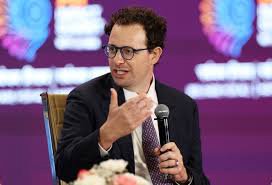
The man who said no to war
Picture the scene. Dario Amodei, the head of Anthropic, a former OpenAI employee with the calm gaze of a philosopher rather than a startup founder, comes face-to-face with Pete Hegseth, Trump's Secretary of Defense. The stakes? A $200 million contract, but more importantly, access to the Pentagon's classified networks for Claude AI. Hegseth is clear: lift all restrictions, or get out. No quarter given. What Washington wants is use for "lawful purposes" — meaning, without hindrance for mass surveillance or integration into lethal autonomous weapons systems. The ultimatum expires at 5:01 PM local time. Amodei doesn't budge. His position? "In a limited number of cases, we believe AI can harm democratic values, rather than defend them." He reiterates his two unwavering red lines: no domestic surveillance of American citizens, and no autonomous weapons deciding to kill without human oversight. It's a firm, polite, but unshakeable "no". For what it's worth, some whisper that this tension was exacerbated after the alleged use of Claude AI during an operation targeting Nicolás Maduro in January, a scenario that sent a chill down the spines of the Anthropic teams.
Trump's thunderbolt and the "ban"
The response wasn't long in coming. And it bears the branding iron of the Trump era. On Truth Social, the US president posts a vengeful message: "We don't need it, we don't want it, and we won't work with them anymore." He accuses the company of being "radical left and woke" for wanting "to dictate to our great army how to fight and win wars." But the most devastating part isn't the insult. It's the Pentagon's decision to designate Anthropic as a "supply chain risk." Translation: any company — from Lockheed Martin to the smallest Defence startup — that uses Claude AI will be automatically excluded from public contracts. It's commercial death. Pete Hegseth himself talks outright of "betrayal." Meanwhile, and it's not a small irony, Sam Altman was announcing on X that OpenAI was taking Anthropic's place in the classified networks, while swearing blind that it would respect the same "red lines." The timing is, shall we say... interesting.
The "SaaSpocalypse" and the billion-dollar waltz
But make no mistake. If Washington is turning its back on Claude AI, Wall Street, on the other hand, is absolutely crazy about it. In four weeks, Anthropic triggered five seismic shocks in the markets, a phenomenon traders have dubbed the "SaaSpocalypse."
- Early February: The launch of legal tools sends Thomson Reuters plunging 16% and LegalZoom 20% in a single day. The fear is palpable: what if Claude AI replaces lawyers?
- Mid-February: Claude Opus 4.6 brings down financial data giants like FactSet.
- The final blow: Claude Code Security and its announcement of COBOL language modernisation costs IBM 13.2% in one session. Unseen since the bursting of the dot-com bubble. IBM, the dinosaur, gets its ankle bitten by a virtual coder.
Simply put, the startup valued at $380 billion after a recent $30 billion fundraise is redrawing the map of global tech, whether Washington likes it or not.
OpenAI, the embarrassed winner and the killer T-shirt
While Dario Amodei plays the lone ranger, Sam Altman attempts a balancing act. He signs with the Devil, but insists he wants to "defuse tensions" and asks the department to offer the same conditions to all AI companies. A bit like borrowing your neighbour's car after reporting them to the taxman. On the communications front, it's a disaster. On Saturday, the Claude AI app surpassed ChatGPT on the US App Store. A powerful symbol.
And that's where popular culture gets involved. In Silicon Valley, black hoodies and T-shirts are the new battlefields. You already see developers proudly sporting the famous "You are absolutely correct" Claude AI Funny Programmer Gift T-shirt, an ironic reference to the AI's overly polite responses. The Boxy Anthropic Claude AI Artificial Intelligence T-Shirt is becoming the uniform of those who refuse to "sell their soul to the military-industrial complex." It's a movement. It's bigger than just a product.
The shadow of Jean-Claude, Brigitte and the culture war
For us here in Ireland, this psychodrama has a particular resonance. We watch it with a mix of fascination and dread. On one hand, you have a philosophical debate worthy of a human rights commission: how far can technology serve the state without threatening it? When I hear Trump call Anthropic "woke," I can't help but think of certain figures closer to home. These archetypes cross the Atlantic. Looking at France, with its Ministry of Armed Forces and its own startups, they watch this American precedent with anxiety: what if tomorrow, we're asked to choose between values and contracts?
The business of conscience
So, what lesson to draw from this chaos? Just one, but it's crucial for investors and decision-makers. The era when ethics was a PR department is over. Today, Anthropic's "Constitution," the document guiding Claude AI, has market value. Refusing to create erotic "AI companions," refusing ads, refusing autonomous weapons... all of this builds invaluable brand capital. Yes, Anthropic had to loosen some of its safety rules in the face of competition, that's market reality. But on the essentials, they hold firm. And this "Silicon Valley conscience" positioning attracts talent, retains clients (8 out of the top 10 largest US companies use Claude AI), and ultimately, justifies a $380 billion valuation. It's a risky bet, but a devilishly profitable one.
Meanwhile, the Pentagon has to manage a costly transition to other models, and OpenAI has to prove it can be both the government's darling and the guardian of liberties. Good luck, Sam. You're going to need it.
I'm keeping an eye on those engineers signing open letters, on those ironic T-shirts, and on that guy, Dario Amodei, who preferred to lose a $200 million contract rather than lose his soul. In the temple of technology, that's what you call, I believe, a prophetic gesture.