The March Jobs Report Is In: What 4.4% Unemployment Actually Means for Your Wallet and Your Weekend Reading
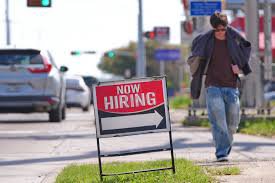
Friday morning brought the kind of news that makes you double-check your coffee strength. The latest jobs report dropped, and if you blinked, you almost missed the headline: unemployment held steady at 4.4%. But steady doesn't mean stable, and anyone who's been job hunting lately knows the difference.
Let me break down what actually happened. After a brutal February that saw the economy shed 92,000 jobs—yeah, you read that right, negative ninety-two thousand—March clawed back with a gain of 51,000 positions. That's like watching your team lose the Super Bowl by a field goal, then show up for preseason training camp acting like nothing happened. The unemployment rate didn't budge, which sounds fine until you realize it's sitting a tick higher than last year's 4.2%.
Here's where it gets personal. Insiders who track these numbers like their lives depend on it point to what jumps out: it's not the averages—it's who's getting left behind. Take a look at these core demographic breakdowns from the latest labor data:
- Black or African American workers saw unemployment hit 7.7% in February, up sharply from 6% a year ago. That's a gut punch any way you slice it.
- Asian unemployment climbed to 4.8% from 3.2% twelve months prior.
- Hispanic or Latino unemployment sits at 5.2%, basically flat year-over-year but still above the national average.
- Workers without a high school diploma are facing a 5.6% rate, while those with a bachelor's degree or higher are cruising at just 3%.
That last stat tells you everything about the two-speed economy we're living in. If you've got a college degree and a couple of years of experience, you're probably still getting LinkedIn DMs from recruiters. If you don't? The pavement's getting mighty crowded out there.
The Benefits Picture: What You're Actually Owed
If you're one of the folks caught in this numbers game, you're probably less interested in statistical nuances and more concerned with whether that unemployment benefits check is going to cover your rent. The Department of Labor just put out guidance for Disaster Unemployment Assistance covering April through June 2026. It's the kind of bureaucratic document that could put an insomniac to sleep, but the takeaway is simple: the feds are recalculating minimum weekly amounts for declared disaster areas. If your state got hit by something—floods, storms, you name it—check in with your workforce agency. You might qualify for more than the standard UI.
Of course, navigating the unemployment system right now is like trying to assemble IKEA furniture with no instructions and a missing Allen wrench. Some states are still running on decades-old COBOL systems that crash if you look at them wrong. Others have streamlined the process to the point where you can actually get a human on the phone within an hour. Your mileage will vary dramatically depending on whether you're filing in Florida or Minnesota.
What You Should Be Reading While You Wait
Here's the thing about economic uncertainty: it makes you want to escape. Or understand. Or both. And wouldn't you know it, the current moment has produced some incredible books that speak directly to where we're at—even if they don't all have "unemployment" splashed across the cover.
Take The Little Liar: A Novel, Mitch Albom's latest gut-wrencher. On the surface, it's a Holocaust story about an eleven-year-old boy named Nico who never tells a lie—until a Nazi officer weaponizes his honesty to send an entire Jewish community to their deaths. But dig deeper, and it's a novel about what happens when trust collapses. When the systems you believed in turn out to be built on sand. Sound familiar? Albom, who's been cranking out bestsellers since Tuesdays with Morrie, knows something about how ordinary people cope with extraordinary betrayal. The book landed on the bestseller list for a reason. It's not light reading, but neither is checking your bank account right now.
For the wonks among us—the ones who need to understand the machinery of why things are broken—there's Communities in Action: Pathways to Health Equity. Yeah, that title sounds like it was workshopped by a committee of academics. Don't let it scare you off. This national-level report lays out in plain terms what we all feel in our bones: that unemployment isn't just an economic statistic. It's a health crisis. The report connects the dots between joblessness, housing instability, poor nutrition, and the kind of chronic stress that takes years off your life. It argues—convincingly—that communities themselves hold the solutions, not some distant bureaucrats in Washington. If you want to feel slightly less helpless about the state of things, give this one a shot.
And then there's Under Locke. Mariana Zapata's romance novel might seem like the odd one out here, but hear me out. The heroine, Iris Taylor, moves to Austin after six months of unemployment back home. She's broke, she's sleeping on her brother's floor, and she takes a job at a tattoo shop owned by a member of her estranged father's motorcycle club. The boss, Dex Locke, is "rude, impatient and doesn't know how to tell time." Sound like any hiring managers you've met? What makes Under Locke resonate is its unflinching look at the humiliation and hustle of starting over. Iris doesn't have the luxury of being picky. She takes the gig because the alternative is the strip club. And slowly, messily, she builds something resembling a life. Sometimes the most honest writing about work isn't in the business section. It's in the romance aisle, where people still believe that a crappy job doesn't have to be the end of your story.
So that's where we are, folks. The economy added 51,000 jobs in March, which sounds like progress until you remember we lost nearly twice that many in February. The Federal Reserve is watching these numbers like a hawk, trying to figure out whether to cut rates or hold the line. And millions of Americans are just trying to make it to next month without burning through their savings.
The April jobs report drops on the first Friday of May. Until then, keep your resume updated, lean on your people, and maybe pick up one of these books. Sometimes the best thing you can do while you're waiting for the economy to figure itself out is to remember that you're not alone in the waiting.