Adama Traoré: Why the Premier League’s Most Fascinating Athlete Remains an Unsolved Puzzle at West Ham
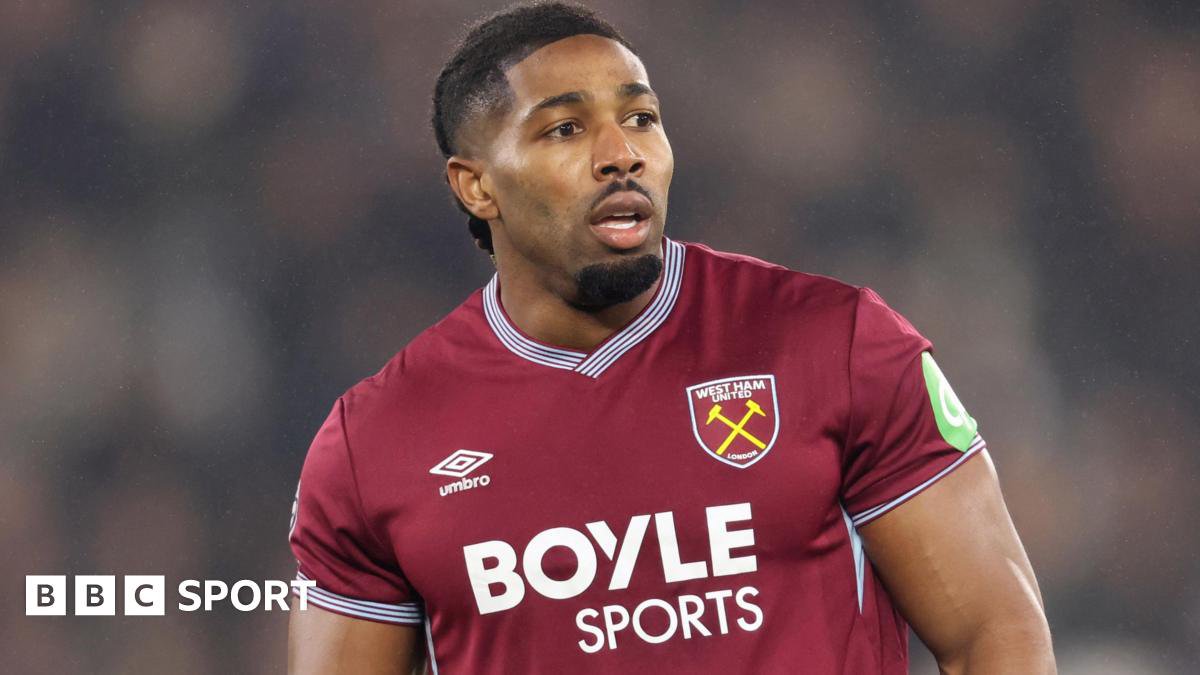
Every few weeks, like clockwork, a clip surfaces on social media that breaks the football internet. It's not a goal, nor a moment of intricate skill. It's simply Adama Traoré running—or, more specifically, a close-up of his torso. The latest footage from West Ham's training ground, featuring the winger in a sleeveless gym top, has reignited the familiar debate: how can a man built like a heavyweight boxer move with the acceleration of an Olympic sprinter? But beneath the awe, a more pressing question lingers for those of us who follow the Premier League closely: why does such a freakishly gifted athlete so often find himself on the fringes?
The Wolves Blueprint and the Nuno Factor
To understand the enigma of Adama Traoré, you have to rewind to his heyday at Molineux under Nuno Espirito Santo. It was there, in the black and gold of Wolves, that the paradox was temporarily solved. Nuno, a manager who understands the value of a specialist tool, built a system that both unleashed and protected his battering ram. He stationed Traoré high and wide, gave him license to isolate full-backs, and crucially, had the midfield cover to compensate when possession was turned over. The numbers from that era—the assists for Raúl Jiménez, the shredded defensive lines—aren't a distant memory; they're a tactical blueprint that subsequent coaches have curiously ignored. Nuno himself hinted at this years ago, noting that Adama needs to see the game in front of him, not clutter his mind with complex rotations. It was a masterclass in man-management, turning raw talent into a match-winner.
The West Ham Conundrum: A Square Peg in a Possession-Based System
Fast forward to the London Stadium, and the picture is frustratingly familiar. Julen Lopetegui, a coach with a meticulous, positional-play philosophy, is the latest to wrestle with the Traoré dilemma. It's not a question of effort or professionalism—those who share a dressing room with him describe a humble, dedicated pro. The issue is tactical fit. In a system that demands wide players tuck in, combine in tight spaces, and track runners for 90 minutes, Adama's game becomes a series of compromises. He's a straight-line devastator in a sport that increasingly prizes multi-directional technicians. His reduced playing time this season isn't a mystery; it's the logical outcome of a stylistic mismatch. He remains an impact weapon, a second-half grenade to lob at tiring defences, but the modern game's obsession with 'control' often leaves such weapons on the bench.
The Blessing and Curse of the Genetic Lottery
Let's talk frankly about the physique. The sheer muscle mass that makes Adama Traoré a marketing department's dream is also a physiological double-edged sword. This isn't the product of a standard Premier League weights program; it's a genetic marvel, a fast-twitch fibre composition most bodybuilders would envy. But that extreme musculature, particularly in the upper body, comes with a metabolic cost. Maintaining that power over a 38-game season is a Herculean task; muscle fatigue and minor tears are an occupational hazard. Furthermore, that bulk can subtly hinder the fluid change of direction needed to be a true top-tier dribbler in congested areas. He's a Bugatti Veyron on a straight autobahn, but the Premier League is increasingly a series of narrow, winding country lanes. We marvel at the engineering, but sometimes forget to check the fuel gauge.
The Untapped Commercial Colossus
Here's where the conversation shifts from pure tactics to boardroom strategy—and it's a shift clubs ignore at their peril. Adama Traoré isn't just a footballer; he's a walking, breathing piece of content that transcends the traditional football audience. His marketability sits at the intersection of sports science, fitness culture, and sheer human incredulity. In an era where 'athleticism' is a global currency, his image resonates far beyond the match-going fan.
- Brand Synergy: He's the perfect ambassador for any brand in the performance, nutrition, or automotive sectors. A collaboration with a sportswear giant on a signature 'power' boot line would be an obvious goldmine.
- Social Currency: His Instagram engagement rates on posts featuring his training regime dwarf those of many players with double his followers. The 'how does he do it?' factor is a perpetual engagement loop.
- Diverse Appeal: With his Malian heritage and Spanish upbringing, he holds significant sway with diverse demographics across Europe and Africa—a key target for global brands seeking authentic connection.
Yet, from a commercial standpoint, his current underutilisation at West Ham represents a depreciation of a significant asset. A player who isn't regularly seen on the pitch is a player whose highlight reel grows stale. The club that learns to harness his on-field impact will simultaneously unlock a revenue stream that most of his peers simply can't match.
The Verdict: Evolution or Exodus?
So, what's next for Adama Traoré? He turns thirty this year, entering what should be the peak phase for a player who relies on physical prowess. He can no longer be a project; he must be a solution. For a team like Aston Villa under Unai Emery, who thrive on transition, or a Fulham side that uses width masterfully, he could be the final piece. A move to Serie A, where tactical discipline can cover his flaws and space is slightly more generous, isn't unthinkable. Or, Lopetegui could yet find a way to deploy him as a flying wing-back, though that demands a defensive rigour that's never been his forte.
The narrative around Adama Traoré has always been too simplistic. He's not a 'wasted talent' nor a mere 'physical freak.' He's a specialised artist in a sport that often demands generalists. For the savvy club—and the savvy commercial partner—he represents a high-reward opportunity to own a niche that no one else can fill. The raw materials for greatness are all there; they just need the right architect to draw up the plans.