Supreme Court Rules on Scheduled Caste Status: What the 2026 Conversion Verdict Means for Dalit Christians
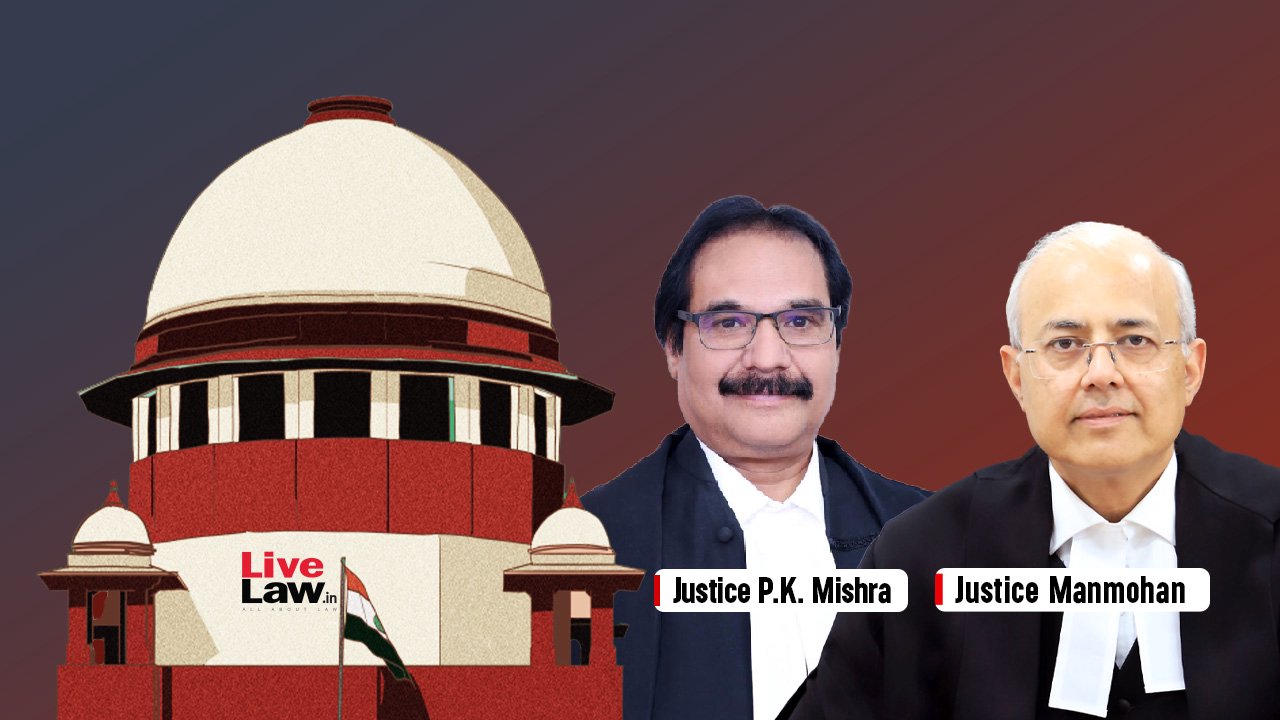
In any constitutional democracy, there comes a moment when a single judgment makes you stop and go back to the fine print of the founding document. For those of us tracking the progress of social justice in India, Tuesday, March 24, 2026, was one of those days. A Division Bench of the Supreme Court—comprising Justices Prashant Kumar Mishra and Manmohan—delivered a ruling in the case of Chinthada Anand v. State of Andhra Pradesh that has sent ripples through legal circles and Dalit communities alike. This wasn't just about one pastor from Andhra Pradesh. It cut to the heart of a fundamental question about scheduled caste status in modern India: what happens to your constitutional protections when you change your faith?
The Pastor, the Complaint, and the Legal Crossroads
Here's the human story behind the headline. Chinthada Anand is from the Madiga community—a notified Scheduled Caste in Andhra Pradesh—and had been working as a pastor for over a decade, running Sunday prayer meetings. In January 2021, he alleged that he was assaulted, threatened, and subjected to caste-based slurs during one such gathering. An FIR was filed under the SC/ST (Prevention of Atrocities) Act, 1989, along with sections of the IPC. The accused, however, went to the Andhra Pradesh High Court with a simple but powerful argument: Anand, by openly practising Christianity, had ceased to be a member of a Scheduled Caste under the law. In May 2025, the High Court agreed and threw out the proceedings. Anand appealed to the Supreme Court. And now, for this particular case at least, we have the final word.
What the Bench Held: A Straightforward Legal Position
The Supreme Court's reasoning was rooted in a document that, in spirit, predates the Republic itself: the Constitution (Scheduled Castes) Order, 1950. More specifically, Clause 3. If you haven't read it lately, here's the key point: no person who professes a religion other than Hinduism, Sikhism, or Buddhism shall be deemed to be a member of a Scheduled Caste. Christianity, Islam, Judaism—none of these get a mention. The Bench held that Anand's conversion to Christianity was clear; he had been a pastor for years, leading Christian worship, and had not returned to Hinduism. Therefore, his SC status was extinguished. And if the status is gone, so is the protective umbrella of the Atrocities Act.
The Court laid down some principles worth noting:
- Conversion takes effect immediately. The moment you convert to a religion not recognised under Clause 3, you lose your SC status. You don't need a formal cancellation certificate.
- State orders don't override the Constitution. Even if you hold a caste certificate issued earlier, it doesn't grant you rights if your religious identity no longer fits the Presidential Order.
- Reconversion requires proof, not just a statement. If you return to Hinduism, Sikhism, or Buddhism, you need to show genuine acceptance by the community. A simple self-declaration isn't enough.
The Bench cited a long line of precedents—C.M. Arumugam, Guntur Medical College, K.P. Manu—to underline that the law has been consistent on this point for decades. As the Court put it, the 1950 Order uses religion as a constitutionally valid criterion for determining who is eligible for reservation benefits and statutory protections.
The Bigger Picture: These Seats Are Reserved
If you've spent any time reading about India's affirmative action framework, you know this isn't a new debate. Abhinav Chandrachud's 2023 book, These Seats Are Reserved: Caste, Quotas and the Constitution of India, traces precisely this tension—how the terms "depressed classes" and "backward classes" from British India evolved into the constitutional categories of Scheduled Castes, Scheduled Tribes, and Other Backward Classes. Chandrachud walks us through the intellectual battles in the Constituent Assembly, the parliamentary amendments, and the judicial interventions that shaped reservation policy. One of the recurring questions he explores is whether "merit" can be neutrally defined and whether the religion-based limitation on SC status still serves the constitutional vision of substantive equality. That book feels particularly urgent right now.
Because here's where it gets more complex. The Chinthada Anand verdict, for all its clarity on the existing law, is not the final word on the larger constitutional challenge.
Why This Verdict Isn't the End of the Story
As social activists pointed out in conversations this week, many are misreading this judgment as a final death knell for Dalit Christian rights. It isn't. The broader question—whether Clause 3 of the 1950 Order itself violates the fundamental rights to equality and religious freedom—is still pending before the Supreme Court. Multiple petitions filed by organisations like the National Council of Dalit Christians (NCDC), the Catholic Bishops' Conference of India (CBCI), and the National Council of Churches in India (NCCI) are awaiting a hearing. They argue that restricting SC status to only Hindu, Sikh, and Buddhist converts is ultra vires the Constitution. That matter remains open. The government has also received the report of the K.G. Balakrishnan Commission, which studied the extension of SC status to Dalit Christians and Muslims. That report, however, has been met with objections from certain groups, and no final policy decision has been made.
So what we have on March 26, 2026, is a two-part legal landscape. On one hand, the existing law—the 1950 Order—continues to operate, and the Court has faithfully applied it. On the other hand, the constitutionality of that very provision is being tested in a separate set of proceedings. The Chinthada Anand verdict is a reminder of the law as it stands, not necessarily as it will remain.
Sub-Classification, Creamy Layer, and the Expanding Equality Code
If you're wondering where the Supreme Court stands more broadly on caste reservation, you need to look at another landmark: the August 1, 2024, decision in State of Punjab v. Davinder Singh. A seven-judge Constitution Bench, by a 6:1 majority, held that states have the power to sub-classify Scheduled Castes. The reasoning, authored by then Chief Justice D.Y. Chandrachud, extracted what it called an "Equality Code" from Articles 14, 15, and 16. The Court recognised that SCs are not a monolithic, homogeneous class; within them, there are varying degrees of social and educational disadvantage. Sub-classification, the Court held, is a valid tool to ensure that the most marginalised get the benefits intended for them. The creamy layer principle—long applied to OBCs—was also extended to SCs and STs, meaning that affluent members within these categories can be excluded from reservation benefits.
This evolution matters. It shows that the Court is actively rethinking how reservation operates, moving toward what legal scholars call "transformative equality." But the Davinder Singh framework and the Chinthada Anand framework operate on different axes: one deals with internal differentiation within SCs; the other deals with the religious boundary around who qualifies as SC in the first place. Until the larger constitutional challenge is decided, that boundary holds firm.
Reactions and the Road Ahead
Unsurprisingly, the verdict has drawn sharp reactions. Christian organisations and civil rights activists have criticised the ruling as a blow to constitutional equality. K. Babu Rao of the Civil Rights Initiative Internationale pointed out that the 1950 Order doesn't reflect current social realities—caste discrimination, he argued, persists regardless of religion. The Karamchedu massacre, where most victims were Christians, was cited as evidence that the social stigma of caste doesn't vanish with conversion. On the other side, Telangana BJP president N. Ramchander Rao welcomed the verdict, calling it a "historic victory for the spirit of the Constitution" and arguing that Ambedkar's vision of reservation was designed for communities within the Hindu fold.
Where does that leave us? If you're a Dalit Christian today, your SC status under the current law is not enforceable for protections under the Atrocities Act or for reservation benefits in education and employment. That's the immediate, practical effect of the March 24 ruling. But if you're following the bigger constitutional battle, the Supreme Court has yet to decide whether Clause 3 itself survives constitutional scrutiny. And that decision—when it comes—will reshape the relationship between faith, caste, and constitutional protection in ways we haven't seen in seventy-five years.
For now, the law is clear. But as anyone who has tracked Indian constitutional jurisprudence knows, clarity is often just the prelude to contestation. The questions raised in These Seats Are Reserved—about equality, about merit, about who gets counted and who gets left behind—remain as urgent as ever. We'll be watching the next chapter closely.