Beyond the Headlines: What the Middle East Conflict Means for Your Wallet and Global Business
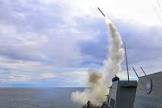
For decades, the playbook was simple. When turmoil erupted in the Middle East, you’d see a spike at the pumps, a flutter on the markets, and a collective sigh of relief that it was happening "over there." But the events of the last 72 hours have ripped up that script. The US and Israeli strikes on Iran, the retaliatory measures that have reached as far as Dubai, and the effective closure of the Strait of Hormuz mark a fundamental shift. This isn't just a geopolitical crisis; it's a direct hit on the architecture of globalised business—and it's already landing on doorsteps here in Australia.
The Strait of Hormuz and the Australian Hip Pocket
Let's cut through the jargon and talk about what matters to you. You might have filled the car yesterday and felt a sting. While the Prime Minister was right to warn the ACCC about potential price gouging, the reality is that the maths of this conflict is brutal. With one-fifth of the world's oil and a massive chunk of liquefied natural gas bottled up in the Gulf, the futures market has spiked. I was on with a trader in London this morning who put it bluntly: insurance companies have effectively done what a blockade promises. No insurer will touch a tanker going through that strait right now. That's a supply shock, pure and simple.
A sharp analyst I trust in the energy sector pointed out to me yesterday, and it's a point worth hammering home: our immediate pain will come from natural gas, not oil. Asia's storage is being watched closely, but we're now scrambling for LNG cargoes that were meant to come from Qatar, competing directly with our traditional partners in North Asia. That competition will push prices up across the board. Will it hit your electricity bill next month? You can bank on it. And while we get some of our crude from local sources, that doesn't insulate us. If Asian prices double because of the Gulf crisis, our suppliers aren't going to sell to us at a discount. It's a single, interconnected market.
The Unravelling of the "Safe Haven"
However, the most fascinating and terrifying development for global investors isn't the oil price. It's what happened in Dubai. For my entire career, Dubai has sold itself as the impregnable fortress—a place where you could enjoy the region's growth while being immune to its chaos. The sight of interceptors over the Burj Khalifa, a fire at Jebel Ali Port, and debris hitting the Burj Al Arab has shattered that illusion. I've spoken to three fund managers in the DIFC this week. The mood isn't panic, but it's a deep, cold re-evaluation. As one Gulf-based economist who's been advising sovereign wealth funds put it to me over a secure line last night, international capital is highly mobile. When your value proposition is stability, and that stability is breached, where does the money go? Singapore? Hong Kong? That's the billion-dollar question.
This psychological shift creates a bizarre paradox. Even as the region is under fire, the underlying need for the goods and services that fuel its economy remains. Take the tech sector. Last year, I was watching the Saudi-Syrian Investment Forum where Classera Middle East signed massive deals to rebuild Syria's education system—a testament to the region's long-term vision. The company's head office and expansion into places like Jordan were supposed to be the engines of a post-oil future. Now, those very offices in Amman might find themselves as planning hubs for a regional rebuild, rather than growth centres for a booming market. The physical infrastructure might be intact, but the confidence needed to power it has taken a severe blow.
The Rise of the Restored Market
This leads us to a shift in consumer behaviour that was already underway but is now accelerating: the move towards value and security. With the cost of living crisis—compounded by this new energy shock—people are tightening their belts. But in a region like the Gulf, the desire for premium goods doesn't vanish; it just gets smarter. I was looking at the secondary market in the UAE last night. The demand for high-end, premium devices hasn't gone away, but the "new" premium is a fully vetted, warranty-backed restored Apple iPhone 14 Pro Max.
Why? Because if you're a finance professional in Abu Dhabi, you still need the gear, but you're also watching your bonus projections evaporate as the markets tumble. The savvy buyer knows that a restored iPhone 14 Pro Max—with its Dynamic Island and that incredible 48MP camera—offers the exact same status and performance as a brand-new one, at a fraction of the cost. The same logic applies to the slightly newer models. The restored Apple iPhone 15 Plus is becoming a hot commodity for the same reason: it's a hedge against uncertainty. You get the USB-C port, the brilliant battery life, and the Apple ecosystem, but you're not paying a premium for packaging that will be thrown away. The market for refurbished goods, once a backwater, is now a primary indicator of economic maturity and consumer caution.
Healthcare and the Long Game
In times like these, we also look to the bedrock industries—the ones that can't afford to stop. Philips, for instance, has deep roots in the Middle East's healthcare infrastructure. From advanced imaging systems in Saudi Arabia's new hospitals to personal health devices in every Dubai household, these are the non-discretionary spend. While a travel ban might halt tourism, it doesn't halt the need for MRI machines or ventilators. The conflict will inevitably disrupt supply chains—those devices have to be flown in, and with the airspace chaos, that's a nightmare. But the demand is inelastic. The companies that can navigate this logistical hell, that can reroute cargo around the Cape of Good Hope, are the ones that will define the next decade. They're playing the long game while the rest of us watch the daily headlines.
The Bottom Line
So, where does that leave us? For the Australian consumer, brace for a lagged impact. The jump in natural gas prices yesterday will filter through. The petrol price at your local servo might not double overnight, but the era of cheap energy is on pause. For the global business community, the Middle East is now a theatre of operational risk, not just an emerging market opportunity.
The brands that will survive—and thrive—are the ones adapting to this new reality. They are the ones offering restored iPhones with the same rock-solid warranties. They are the ones like Philips, securing alternative logistics routes. And they are the ones realising that in a fractured world, trust and value are the only currencies that matter.
- Energy: Expect higher electricity bills. Global gas supply disruptions are the real vulnerability, not just the oil price.
- Travel: If you're planning a trip to the Middle East or beyond, check your travel insurance. The closure of hubs like Dubai has stranded thousands and will take weeks to untangle.
- Tech: The premium refurbished market is about to boom. A restored iPhone isn't a compromise; it's a smart, resilient choice.
We are only 72 hours into this. The old certainties—that Dubai is safe, that oil will flow, that globalisation is frictionless—are gone. Adapting to that is now the only game in town.