Google Maps in Australia: Immersive navigation and smarter routes, powered by AI
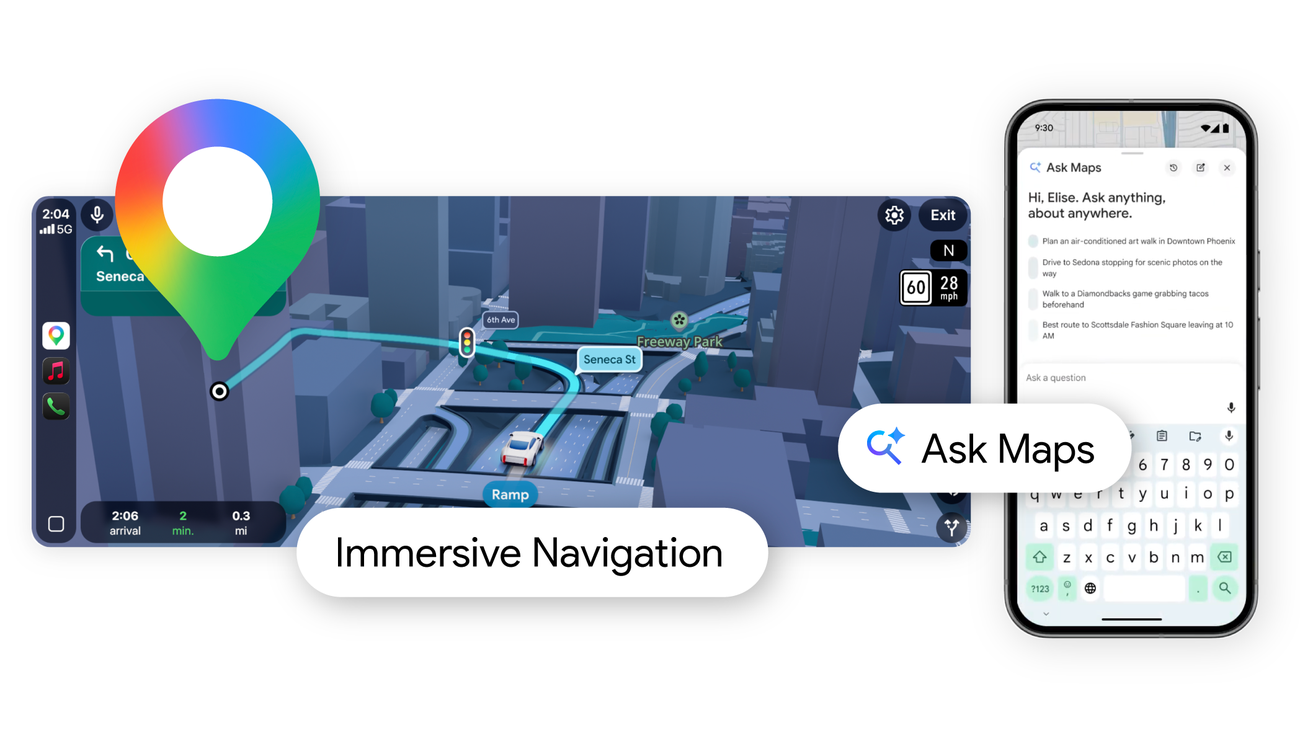
If there's one thing I've learned in the last decade as an editor, it's this: most of us use Google Maps every day, but hardly anyone stops to think about what's actually going on behind that blue line. Until now. The mapping service that reliably guides us from Sydney to Perth, or through the laneways of Melbourne, is getting an update that will fundamentally change how we get around. We're not talking about minor tweaks here; this is a genuine quantum leap – and it's driven by AI.
From silent sidekick to smart co-pilot
You know the feeling? You're stuck in traffic on the M1, but you have no idea why. Or you're looking for a specific cafe in Brisbane that's supposed to be just around the corner, but you can't seem to find the door. This is exactly where the new Google Maps navigation steps in. Over the years, the development teams haven't just collected a mountain of data; they're finally bringing the intelligence to make that data work for us. The feature is called "Ask Maps" – and it does exactly what it says on the tin.
Instead of tediously swiping through menus or hunting for reviews, you'll soon be able to simply ask in natural language: "Hey Google, where can I grab a quiet pot of tea around here that's not absolutely packed?" Or, "Show me the route with the fewest sets of traffic lights." The AI understands the context, checks live data, opening hours, and community reviews, and serves up an answer that feels like a mate giving you a tip. No more fiddling with a tiny Google Maps pin to painstakingly dig up info – the map becomes a conversation partner.
The pin gets smart
Speaking of pins: who among us hasn't dropped hundreds of red pins on the map to remember restaurants, car parks, or those secret surf spots along the Great Ocean Road? The humble pin has, up to now, been more of a passive marker. With this update, it springs to life. Now when you mark a spot, Maps won't just suggest a route; it'll also show you how busy it typically is at that time, if there's an event on, or whether the coffee there is actually as good as some influencers reckon. It's this fusion of personal notes and global data that makes all the difference.
Immersive navigation: When the street comes alive
The absolute ripper, the one the tech world has been buzzing about for a while, is the immersive view. Picture this: you're driving through Sydney, Google Maps navigation is running, but instead of a flat, 2D map, your screen shows a life-like view of the street with lane markings, street numbers, and even landmarks drawn right onto it. This isn't just a gimmick; it's a massive boost for safety. You know exactly, "In 200 metres, I need to get into the left lane for sure" – and you can see it visually. Your eyes stay on the road, not on the screen. This is the future of in-car navigation, the way I always imagined it.
- "Ask Maps" voice search: Ask complex questions and get smart, context-aware answers.
- Immersive navigation: A photorealistic view of your route with lane guidance and landmarks.
- Smart pins: Saved places are enriched with real-time data and reviews.
- Enhanced Live View: Arrows and directions are overlaid directly onto the camera view using AR – perfect for those final metres on foot.
My Maps and Google Maps Go: The unsung heroes
While the big AI news hogs the headlines, we shouldn't forget the trusty sidekicks. For anyone who loves creating their own maps – whether it's for an upcoming road trip through the Yarra Valley or to collect the best photo spots in the Blue Mountains – My Maps remains the go-to tool. You can create layers, colour-code points, and share the map with your mates. Perfect for trip planning. And for those with an older phone or who just need the absolute basics, there's still Google Maps Go. This stripped-back version runs smoothly on any device and delivers the essential info without chewing through your data. It's ideal for a quick squiz at the map when you don't need the full AI experience.
What does this mean for us in Australia?
Let's be honest: Aussies love their local area, their shortcuts, and their hidden gems. No algorithm on earth will replace the local who shows you the sneaky parking spot behind the pub. But what the new AI can do is make the knowledge of millions of users available to all of us. It learns that the Pacific Highway can be a nightmare at peak hour, that the car park at the beach is always full on a public holiday, and that the little street in the city is actually a pedestrian mall – even if the map previously thought otherwise.
I'm keen to see how quickly these new features catch on here. The first trials are already underway, and from the early leaked images floating around online, one thing's for sure: the future of Google Maps isn't flat; it's alive, it's immersive, and it adapts to us – not the other way around. So, keep your eyes peeled when the next update hits your phone. And remember: that little pin you drop will soon be more than just a dot on the map. It'll be your digital anchor in an increasingly smart world.