The Francisca Cadenas Case: The UCO tightens the net in Hornachos eight years on
Some disappearances become mere statistics, while others become etched into the soul of a town. The disappearance of Francisca Cadenas, the 59-year-old woman everyone called Francis, is definitely one of the latter. Eight years after that 9th of May in 2017, Hornachos is still casting wary glances towards a 50-metre passageway. But this time, the wind has changed. The arrival of the Guardia Civil's Central Operative Unit (UCO) has injected a dose of reality, and yes, a glimmer of guarded hope, into a case that seemed destined for the dusty archives. This isn't just another news story; this feels like the final stretch of a mystery that has remained unsolved for far too long.
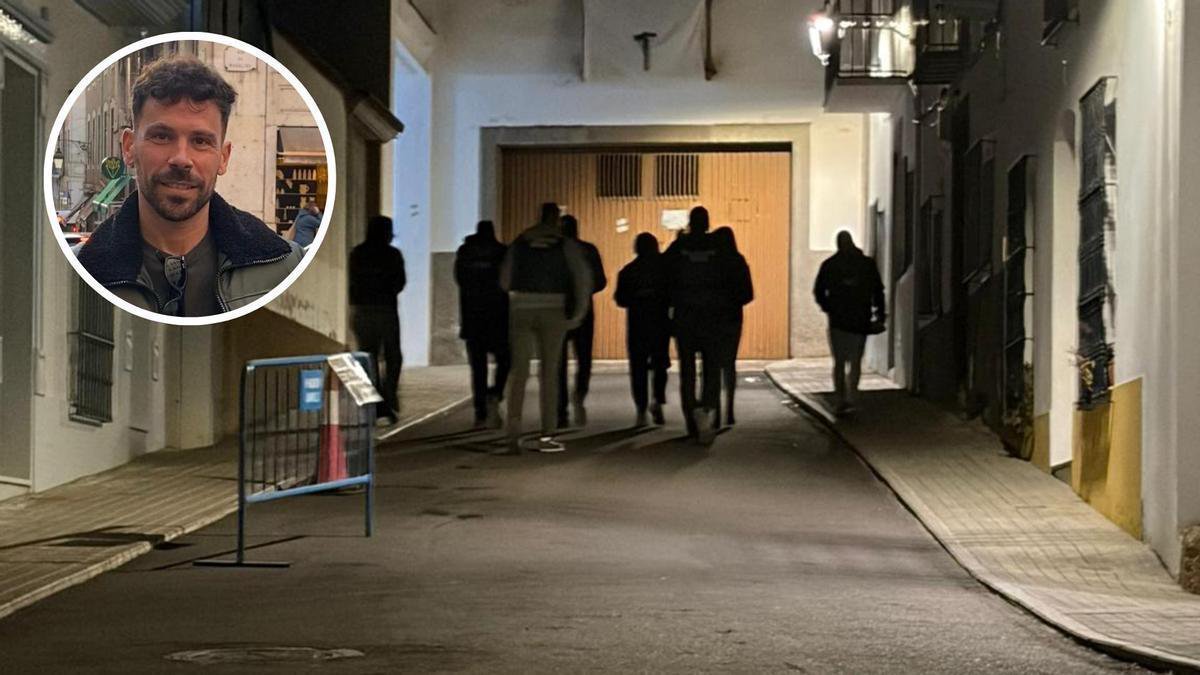
The geometry of a crime: 50 metres and three ghost witnesses
Francis' case isn't just a case; it's an impossible equation. She left her home on Calle Nueva just after eleven at night. She'd gone to see off a married couple, friends of hers named Antonio and Adelaida, who had visited her with their young daughter. Their car was parked 50 metres away on Calle Hernán Cortés, on the other side of a passageway. Francis walked the couple to their car, said her goodbyes, and, by all accounts, started heading back. She must have crossed that well-lit passage, walking the final 15 metres to her door. But she never made it.
What makes this case so terribly compelling for any analyst, and so agonising for the family, is the combination of factors: a tiny distance, a town of 3,000 people where everyone knows everyone, and three witnesses who saw Francis alive. And here's the first major roadblock, the one any investigator with half a brain would immediately flag: the common denominator among these witnesses is that none of them live in Hornachos anymore. The couple left shortly after, and the neighbour who crossed paths with her, a seasonal worker from the Dominican Republic named Carlos Guzmán, also moved away. Coincidence? In my book, coincidences don't exist, only alibis do.
The documentary that stirred consciences: the echo of the truth
The case had its ups and downs in the media, but it took a sharp turn in 2024 thanks to an independent investigative piece, a documentary called 'Where are you, Francis?' which spread widely on social media. It wasn't just a simple rehash of events, but a proper piece of gritty journalism, the kind that digs into the wound and isn't satisfied with the official line. Featuring a dozen testimonies, it laid bare what the family had been quietly denouncing for years: the major blunders in the first hours of the search and the strangely intense relationship Francis had with the couple.
It brought to light a devastating testimony from a neighbour, Maribel Caballero, who didn't hesitate to describe that relationship as "toxic". And that's a strong word for a reason. We're talking about a woman who cared for the couple's daughter as if she were her own granddaughter, a total devotion that, in hindsight, raised more than a few eyebrows around town. The documentary, which has clocked up around 60,000 views on various platforms, achieved something fundamental: it turned the case from pub gossip into a topic of national debate and, in all likelihood, forced the long-awaited move everyone was hoping for.
The UCO enters the scene: the beginning of the end
If there's a clear turning point in this labyrinth, it's November 2024. After years of requests from the family, the UCO took over the investigation. And when the UCO gets to work, things change. They don't just look; they dig. Just a few weeks ago, they were in Hornachos conducting a new reconstruction of the events. That means one thing: they have solid leads, hypotheses to test, and probably new information that wasn't available at the time.
I'll admit it, I've followed dozens of missing person cases, and the arrival of the UCO is often a sign that an end is in sight. They have the resources, the experience in complex crimes—the Manuela Chavero case, also in Extremadura and solved by them, is a clear precedent the family has in mind—and, crucially, they aren't swayed by local loyalties or pressure. In a small town, that's vital. They won't accept an "I didn't see anything" if the evidence points the other way.
The unwritten guide to solving a crime: listening to the town
I always say that to understand a case like this, you need to do your own francisca cadenas case review, an analysis that goes beyond the police report. You have to read between the lines of what people are saying. And in Hornachos, people talk, albeit quietly. They mention that Champions League night, the Juventus-Monaco match, which left the streets emptier than usual, but they also mention that the pubs were open and so were the windows. How is it possible that no one heard anything?
The key, as the family rightly points out, lies in those few metres. Francis' son, José Antonio, puts it plainly: "There is one person who made her disappear." And that person, logically, was there, at that moment, in that passage. That's why the UCO is now combing the area, asking the same questions over and over, and why an anonymous tip-off line has been set up for anyone with a piece of information, no matter how small, to come forward. Fear, in small towns, is a silence that weighs a tonne. But fear also fades when justice really starts to bear down.
The business of pain and truth: a case with high media value
Beyond the human drama, we can't ignore the phenomenon this case has become. Don't get me wrong, I'm not talking about cashing in, but about its high editorial value. A good true crime story, with all the elements of a psychological thriller—witnesses who flee, dark relationships, a town on edge—is pure gold for any platform. It was for YouTube with that independent documentary, it is for the national papers sending correspondents to Hornachos, and it will be for television when, finally, an arrest is made.
There's a lesson here for those of us who tell stories for a living: audiences are no longer satisfied with cheap sensationalism. They want context, they want to understand how to view the francisca cadenas case as an example of what not to do in an investigation. They want a guide, a manual to understand how a woman can vanish in 15 minutes without a trace. And that sustained interest creates the necessary pressure to keep cases from being shelved. It's proof that sometimes, well-managed media attention can be an ally of justice.
The key points you shouldn't lose sight of
As an executive summary, here's what anyone following this legal saga should keep in mind:
- The location: The focus is on the passageway and the surrounding houses. The UCO's reconstruction centred on that area. The truth is buried within that 100-metre radius.
- The witnesses: The last three people to see Francis (the couple and the neighbour) no longer live in the town. A fact the UCO will be squeezing for all it's worth.
- The relationship: The testimony about the "toxic relationship" with the couple she went to see off opens an investigative avenue beyond robbery or accident. It points to something personal, something driven by emotion.
- The will: The family has always insisted it wasn't a voluntary disappearance. Francis left her door ajar, without her keys or phone. She was coming back for dinner.
We've been talking about this case for years, but I assure you, the conclusion is closer than ever. The UCO didn't travel to Hornachos for a rural getaway. They've come to close the loop. And when they do, this town, and all of Extremadura, will breathe a sigh of relief that will be heard in every corner of the country. The truth about Francis is about to come out. And we'll be right here to tell that story.